
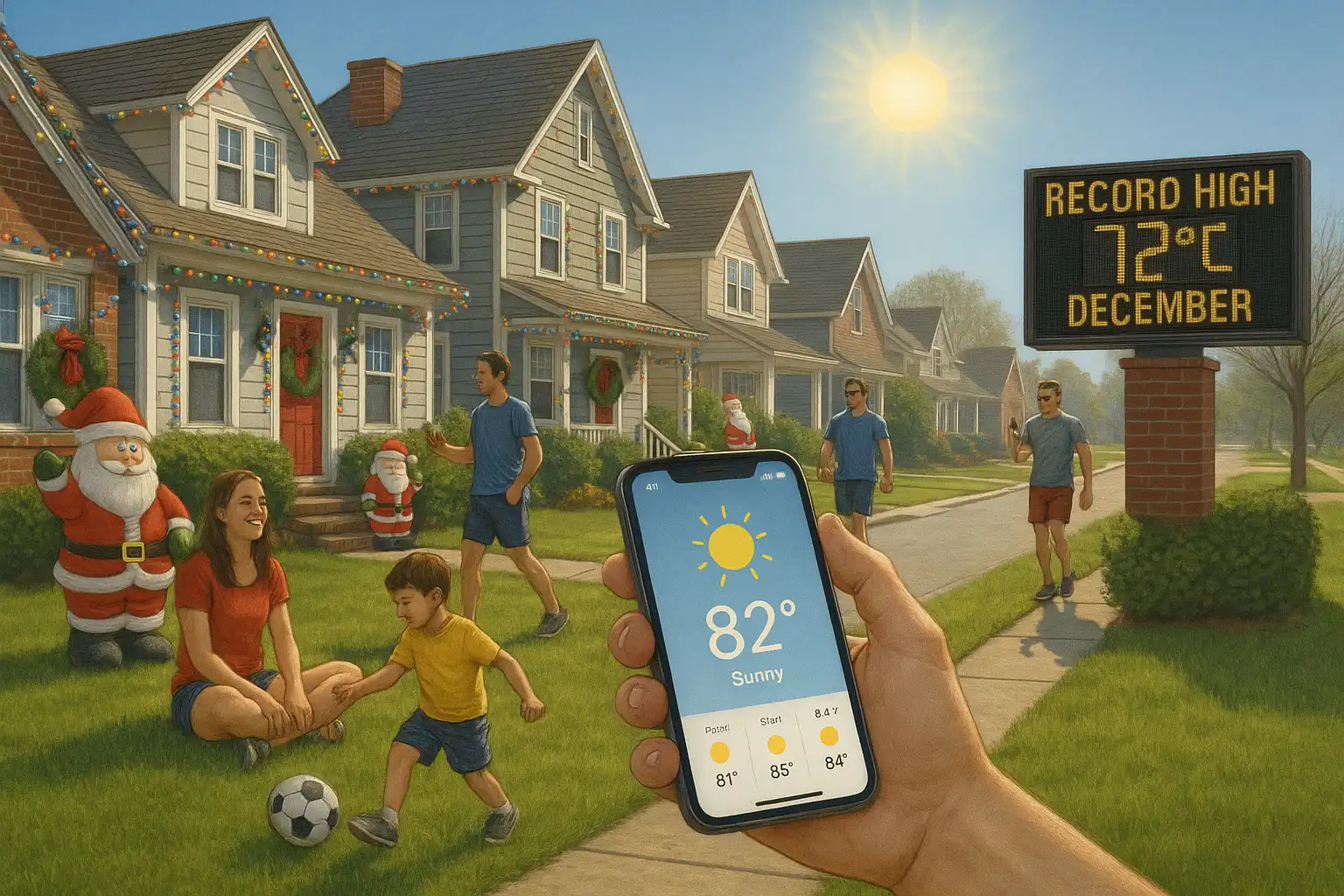
For many across the United States, Christmas conjures images of frosty air, snow-dusted landscapes, and bundled-up traditions. Not this year. In December 2025, an unseasonable heat dome has settled across much of the country, pushing temperatures to record-breaking highs in more than three dozen cities—from Denver and Des Moines to Tulsa and Wichita. This extraordinary heat wave is not just breaking holiday records; it’s rewriting the way we understand winter weather in a rapidly changing climate.
A Heat Wave Like No Other

According to NOAA’s Climate Prediction Center, upwards of 38 cities are projected to shatter their all-time December and Christmas Day temperature records—some dating back to the late 1800s. Highs are expected to soar into the 50s and 60s °F (about 10–20 °C) over much of the Midwest and Intermountain West and climb into the low 80s °F (27–32 °C) in parts of the Southern Plains Gizmodo. Denver, Colorado, for example, is forecast to reach unseasonably warm, sunny conditions, threatening previous December heat records CBS News Colorado.
Why Is This Happening?
This event is being driven by a resilient ridge of high pressure (a “heat dome”) trapping warm air mass over the central United States. While such patterns are not unheard of in winter, the intensity and permanence of this one stand out. Climate scientists point to the backdrop of accelerating global warming: 2025 is on track to be one of the planet’s warmest years ever recorded, with on-land and ocean temperatures shattering previous norms LisboaTV.
The Human Side: Disruptions and Adaptation
Unseasonable warmth during winter holidays has clashing effects. While some enjoy outdoor gatherings, others miss snowfall and worry about the underlying consequences. Airport operations, already stretched during peak travel, have faced new hurdles as high winds and abnormal weather patterns interact. Denver International Airport, for instance, saw major delays as changing wind patterns—linked to this odd December warmth—forced flights to divert CBS News Colorado.
More fundamentally, this heat spell is part of a pattern of increasingly extreme and volatile weather events. In the last decade alone, the United States has suffered over $1.1 trillion in weather-related damage—floods, droughts, wildfires, wind, and hail making up the bulk of the toll PropertyCasualty360. Experts underscore that weather unpredictability—fluctuating between record warmth and severe cold—will likely keep increasing with changing climate conditions.
Adapting for Safety and Resilience
As communities grapple with weather extremes, new strategies will be essential for safeguarding people and property. Homeowners can invest in preparations ranging from storm-resistant roofing and improved drainage to backup power supplies and smart weather alert systems PropertyCasualty360. On a broader scale, city planners are increasingly looking to cooling centers, shade infrastructure, flexible energy grids, and updated building codes to withstand both record heat and sudden severe storms LisboaTV.
Looking Ahead: A New Winter Reality
This Christmas heat episode is more than a holiday oddity—it’s a hallmark of our new weather reality. For communities, the key will be flexibility: planning for both the odd balmy December day and the possibility of the winter chill snapping back just as quickly. Keeping an eye on updated forecasts, knowing local emergency plans, and investing in home resilience are smart steps for navigating an era where, increasingly, the only certainty is change.

Leave a Reply