
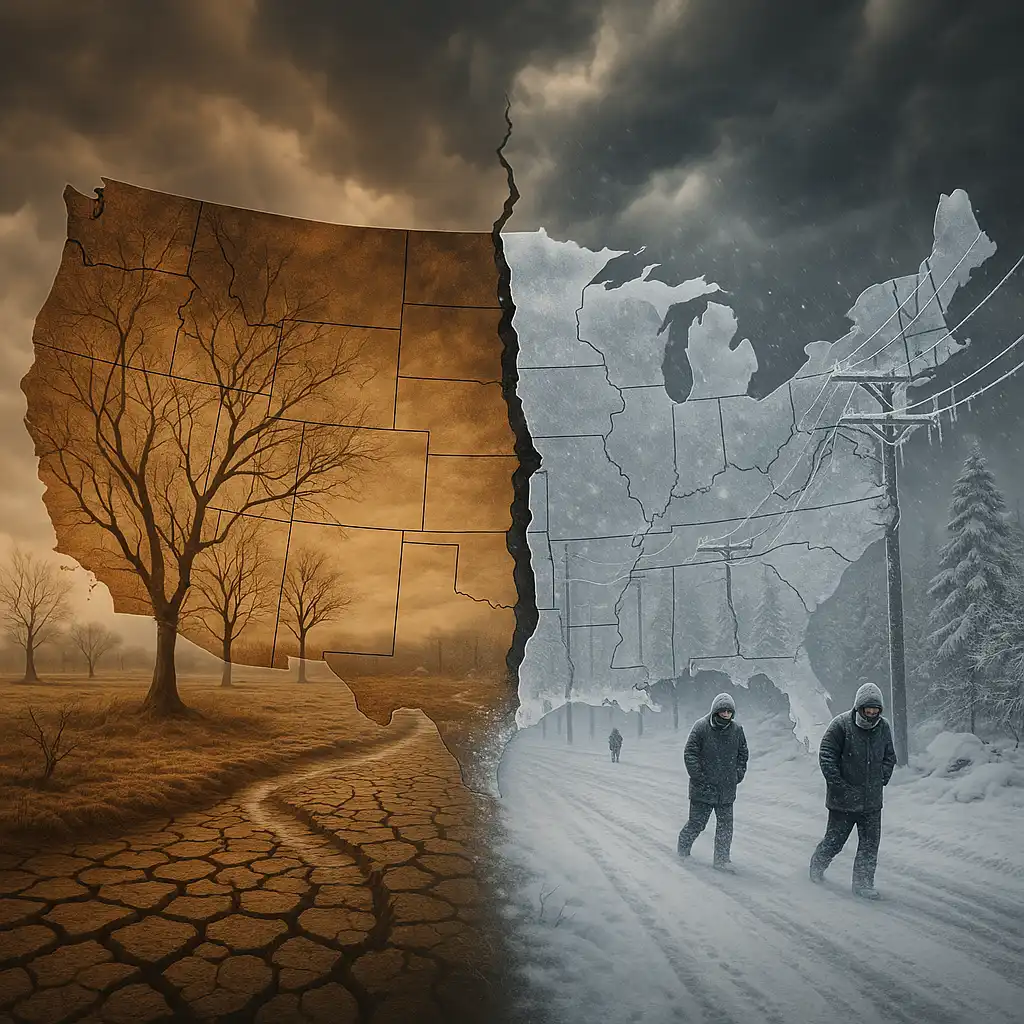
For many Americans, January is a time for snow-covered fields, icy commutes, and, all too often, complaints about the cold. But as 2026 gets underway, much of the United States is gripped by an unusual and deeply concerning climate pattern: widespread drought in the heart of winter, while Arctic blasts and winter storms intermittently strike across the country.
Unprecedented Drought in Winter
Historically, drought is a word more often associated with hot summer months. However, as of January 2026, a staggering 39 states from Maine to Hawaii are experiencing drought conditions ranging from severe to exceptional — impacting over 130 million Americans[2]. Dryness isn’t limited to the western states known for their water struggles; it stretches across the East and South, regions where winter rainfall is typically abundant[1].
Several factors are at play. Unseasonable warmth continued into late 2025, with states like Idaho, Nevada, Oregon, Texas, and Utah recording record November temperatures[2]. Snowpack — often described as the nation’s winter water savings account — is well below normal across the West, further prolonging drought conditions and raising alarms for the months ahead.
California stands as an exception; recent storms have replenished its reservoirs, reducing abnormal dryness and temporarily lowering wildfire risk. Yet, for much of the rest of the country, dry conditions could set the stage for a volatile wildfire season, particularly as spring and summer approach[2].
Arctic Blasts and Fierce Winter Storms
If the news of a winter drought wasn’t strange enough, millions of Americans are simultaneously dealing with powerful Arctic blasts and disruptive winter storms. In fact, January has already seen much of the country blanketed by heavy snow and dangerously cold temperatures, with wind chills plummeting to -20°F in some places[3].
Now, forecasters warn of an even larger winter storm set to sweep from the Plains to the East Coast. This system will feed off bitter Arctic air and Gulf Coast moisture, bringing widespread snow, sleet, and freezing rain across a more than 1,000-mile swath from Oklahoma and Texas to the Carolinas and Virginia. Icing is a particular danger, especially in regions unaccustomed to such wintry threats — even a quarter to a half inch coating of ice can topple trees, pull down power lines, and snarl travel for days[4].
Travel disruptions, power outages, and the risk of cold-related health emergencies are real possibilities whenever such wintry weather collides with drought-altered landscapes. While residents in California may benefit temporarily from a break in fire risk, dry conditions elsewhere mean that fallen trees and brush from ice storms could later fuel fast-moving wildfires come spring.
Why Is This Happening? Climate Change’s Fingerprints
Dry winters and erratic stratospheric weather patterns aren’t only an anomaly — they’re a sign of a changing climate. Recent years have brought a chorus of record-breaking events: devastating wildfires, monster hurricanes, and costly hailstorms. In 2025, insured losses from extreme weather in the U.S. topped $88 billion, fueled by destructive hurricanes, hail, tornadoes, and wildfires[5]. Scientists warn that climate change is lengthening drought recovery time, increasing the intensity and duration of rainfall when it does arrive, as well as fueling more frequent and intense extreme events.
The Human and Economic Toll
Communities face compounding weather extremes: parched soils and empty reservoirs, punctuated by ice storms and deep freezes. Agriculture, public health, and local economies are all at risk. Last summer, parts of New England received less than 50% of normal rain, leading to severe or extreme drought in about one-third of the region by September[2]. Across the South and Central Plains, ranchers worry about parched grazing land for livestock, while city residents face potential water restrictions and elevated wildfire risk.
Preparing for the Unpredictable
With such wild swings between drought and storms, preparedness is essential. Residents should:
- Stay informed: Monitor water levels, drought status, and storm forecasts via local weather services and Drought.gov
- Prepare for power outages: Ice storms can down power lines; have flashlights, blankets, and non-perishable food on hand
- Minimize wildfire risk: Maintain defensible space around homes, especially in the West and South where dry brush accumulates
- Protect pipes and pets: Extended cold in drought-weakened areas increases freeze risk for plumbing and outdoor animals
The take-home message? The U.S. is entering a new era of weather uncertainty, where even the dead of winter offers little relief from the force of climate extremes.
References:
- It’s the middle of winter, but drought covers the U.S. That’s concerning. – The Washington Post
- Map Reveals Bizarre January Drought Hitting 130 Million Americans – Gizmodo
- Millions battle brutal arctic blast and snow – NBC News
- A major winter storm is brewing. It’s likely to unleash dangerous ice and snow from the Plains to the East Coast – CNN
- 2025 wildfires, flooding and severe storms lead to insured losses of $88B – InsuranceNewsNet

Leave a Reply