
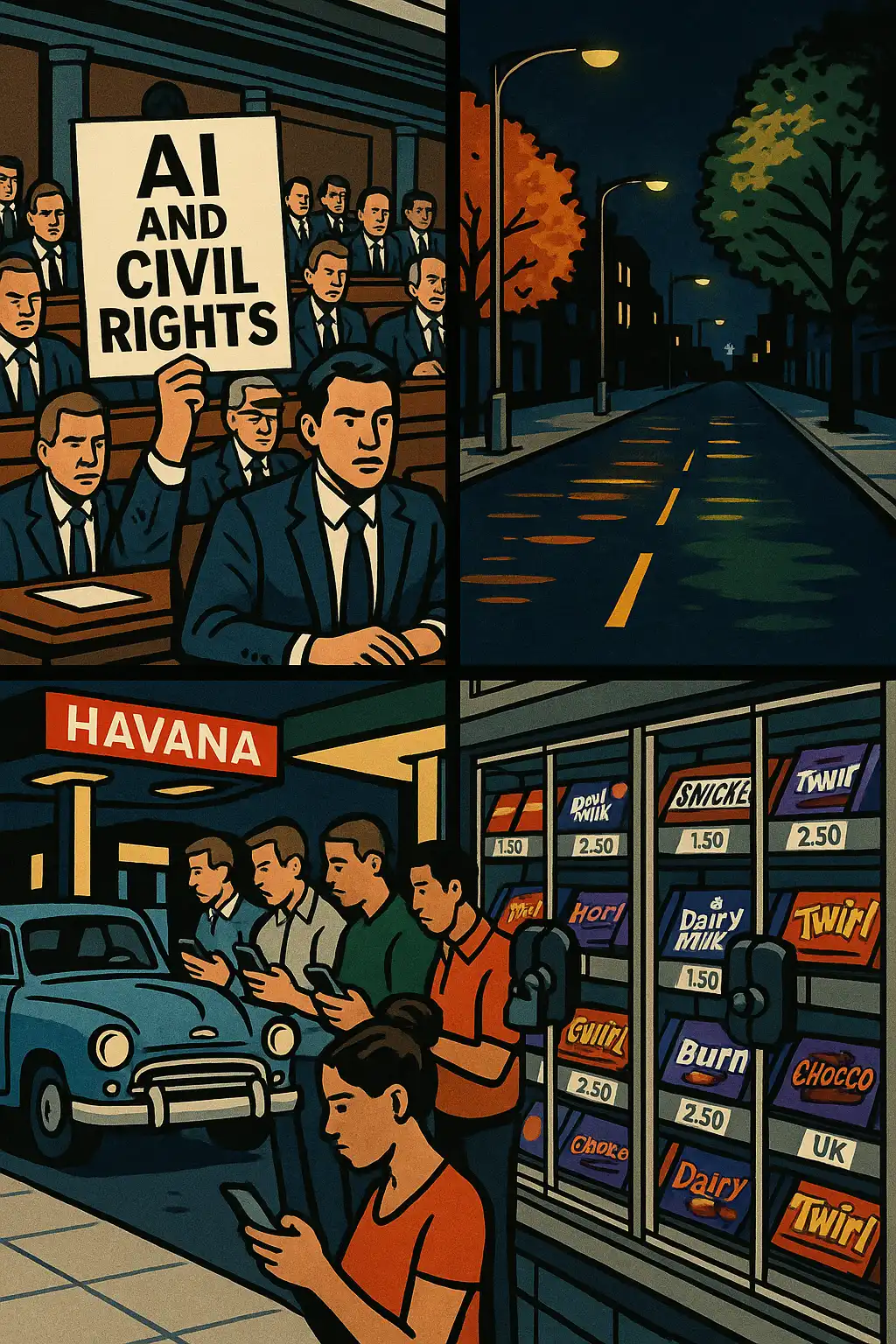
A raucous State of the Union moment, a science finding with real-world health stakes, and two snapshots of everyday scarcity—from Havana’s gas queues to Britain’s confectionery aisles—frame today’s headlines.
Capitol flashpoint: Al Green ejected over AI video protest
Rep. Al Green was escorted from the House chamber after raising a sign reading “Black People Aren’t Apes” as Donald Trump entered to deliver the State of the Union. Green said he was protesting a video Trump posted depicting Barack and Michelle Obama as apes—an example, critics say, of AI-fueled dehumanization crossing into mainstream politics. House Majority Leader Steve Scalise appeared to try to rip the sign before security intervened. The episode underscores how synthetic media is colliding with high politics in 2026, with norms—and tempers—tested in real time [1].
Science meets streetlight: Artificial night light may stretch allergy season
NASA-backed research is sharpening the picture of how artificial light at night can shift plant cycles and potentially worsen allergies. Satellite data and ground observations show trees near bright streetlights keep leaves longer, altering local phenology and likely extending or intensifying pollen seasons. A striking Vanderbilt University image contrasts a tree in near-darkness that shed leaves normally with a streetlight-bathed neighbor that stayed green weeks longer—an urban planning clue with public-health implications as cities weigh lighting upgrades [2].
Havana’s long wait: Cuba moves gas rationing to a digital queue
Facing chronic fuel shortages, Cuba is steering drivers to a digital platform to request rationed gasoline—an effort to replace hours-long lines with virtual ones. But the country’s supply squeeze is so acute that the wait list can stretch for months, according to the Associated Press, reflecting how scarcity is being managed by software rather than solved at the pump [3].
Sweet tooth, sour trend: UK shops lock up chocolate amid theft surge
Across the United Kingdom, retailers are increasingly putting chocolate behind locks to deter shoplifters—a small but telling sign of rising retail crime pressures and thin margins in the grocery sector. The upshot for customers: impulse buys now require a keyholder. It’s a tabloid-ready headline with a real economic backdrop [4].
Why it matters
- Governance and AI: The SOTU clash spotlights how fast-moving synthetic media is testing institutional guardrails.
- Public health: Lighting policy isn’t just about safety and energy—it may influence when and how hard allergy season hits.
- Global scarcity: Digital tools can triage shortages, but they can’t refill empty tanks—or shelves—on their own.
References
- Texas’ Rep Al Green Tossed Out Of Trump SOTU For Protest Over AI Video Attack Depicting Obamas As Apes
- NASA Satellites Show Where Outdoor Lights Worsen Allergy Season
- Cubans use digital platform to obtain rationed gasoline. Waiting times could take months – Associated Press News
- UK Has Become Overrun With Chocolate Thieves

Leave a Reply