
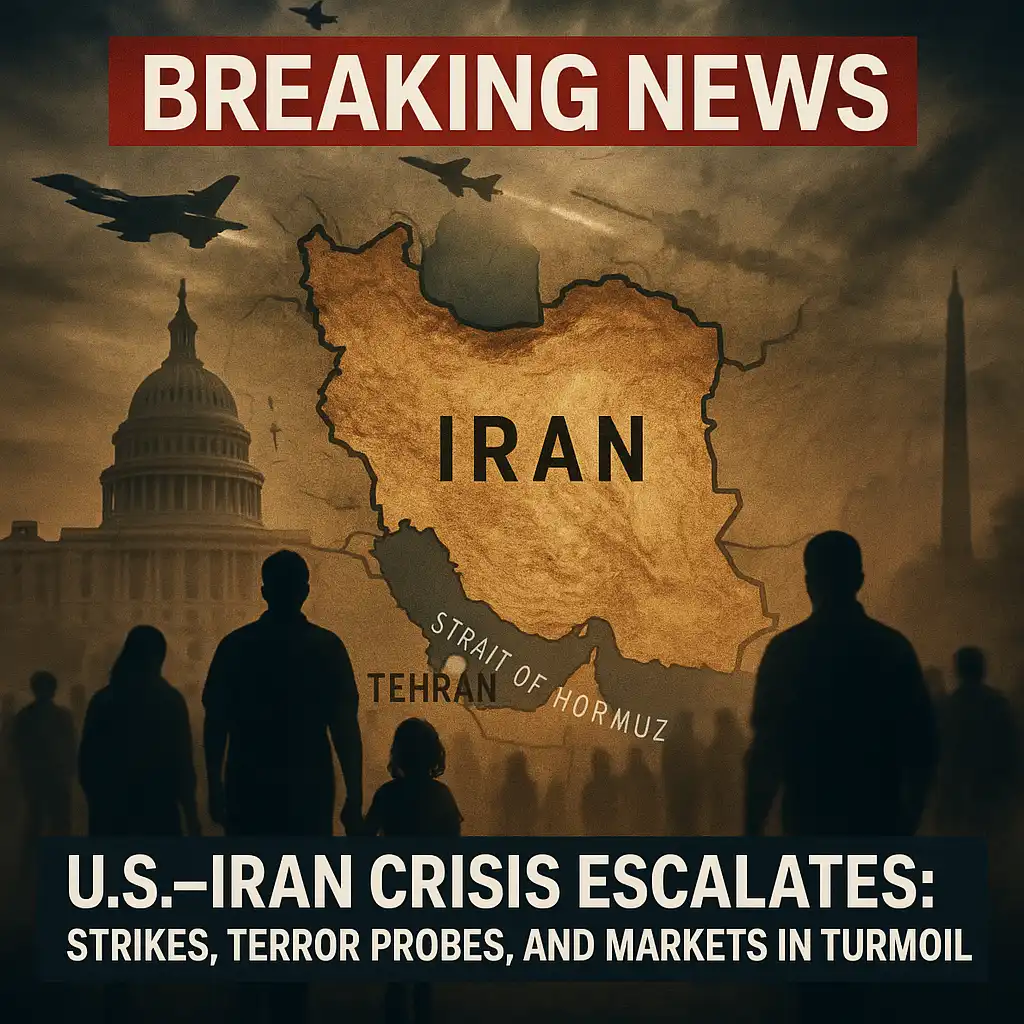
The first American casualties have been confirmed as the joint U.S.–Israeli operation in Iran intensifies: at least three U.S. service members were killed and five more seriously wounded, according to CENTCOM, as strikes continued across key Iranian targets [1] [3]. ABC’s broadcast also reported that Iran’s leadership ranks were shaken by the campaign and that former President Trump said the operation could last up to four weeks [1].
Tehran’s response is hardening. Iran’s foreign minister insisted the country has “every legitimate right to defend” itself, as officials threatened to close the Strait of Hormuz—a move that would rattle global energy flows and insurance markets [3] [1]. U.S. officials and analysts are also weighing the risk of retaliatory cyber activity while Americans in the region scramble to leave amid the widening strikes [3].
At home, the FBI is investigating whether a mass shooting outside an Austin bar was motivated by terrorism. Authorities say two people were killed and 14 wounded; federal agents are probing potential links as new footage shows police engaging the gunman [2] [1] [3].
In Washington, Republicans largely back the Iran strikes while Democrats press for briefings and a clearer endgame. Lawmakers on Capitol Hill demanded details on objectives, oversight, and the risks of escalation as the administration framed the strikes as necessary to blunt imminent threats [1] [3].
Inside Iran, anxiety is palpable. An Illinois family with relatives in Tehran described a “very bad situation” on the ground, a snapshot of mounting fear and disruption as ordinary Iranians brace for more turbulence [4].
The conflict’s economic ripples are being watched closely. With the Strait of Hormuz in play and crude prices sensitive to any maritime disruption, policymakers are tracking the potential hit to consumer gas prices and broader inflation dynamics [3]. Travel stocks also face crosswinds: Norwegian Cruise reported Q4 revenue of $2.244 billion, short of the $2.347 billion IBES estimate—an earnings miss landing just as investors reassess risk in leisure and fuel-exposed sectors [5].
Bottom line: With U.S. casualties acknowledged, Iranian retaliation threats escalating, and an FBI terror probe underway in Austin, the next 72 hours will test crisis management—from the Gulf’s shipping lanes to America’s domestic security posture and the resilience of jittery markets [1] [3].
References
- ABC World News Tonight with David Muir Full Broadcast – March 1, 2026 (Modern Ghana)
- AP News: Top stories including FBI probe of Texas bar shooting
- ABC News video hub: Latest on U.S.–Israel strikes on Iran and domestic security
- ‘Iranians experiencing a very bad situation’ in Tehran, family says (ABC News)
- BRIEF – Norwegian Cruise Q4 revenue $2.244B vs. $2.347B estimate (Reuters via TradingView)

Leave a Reply