
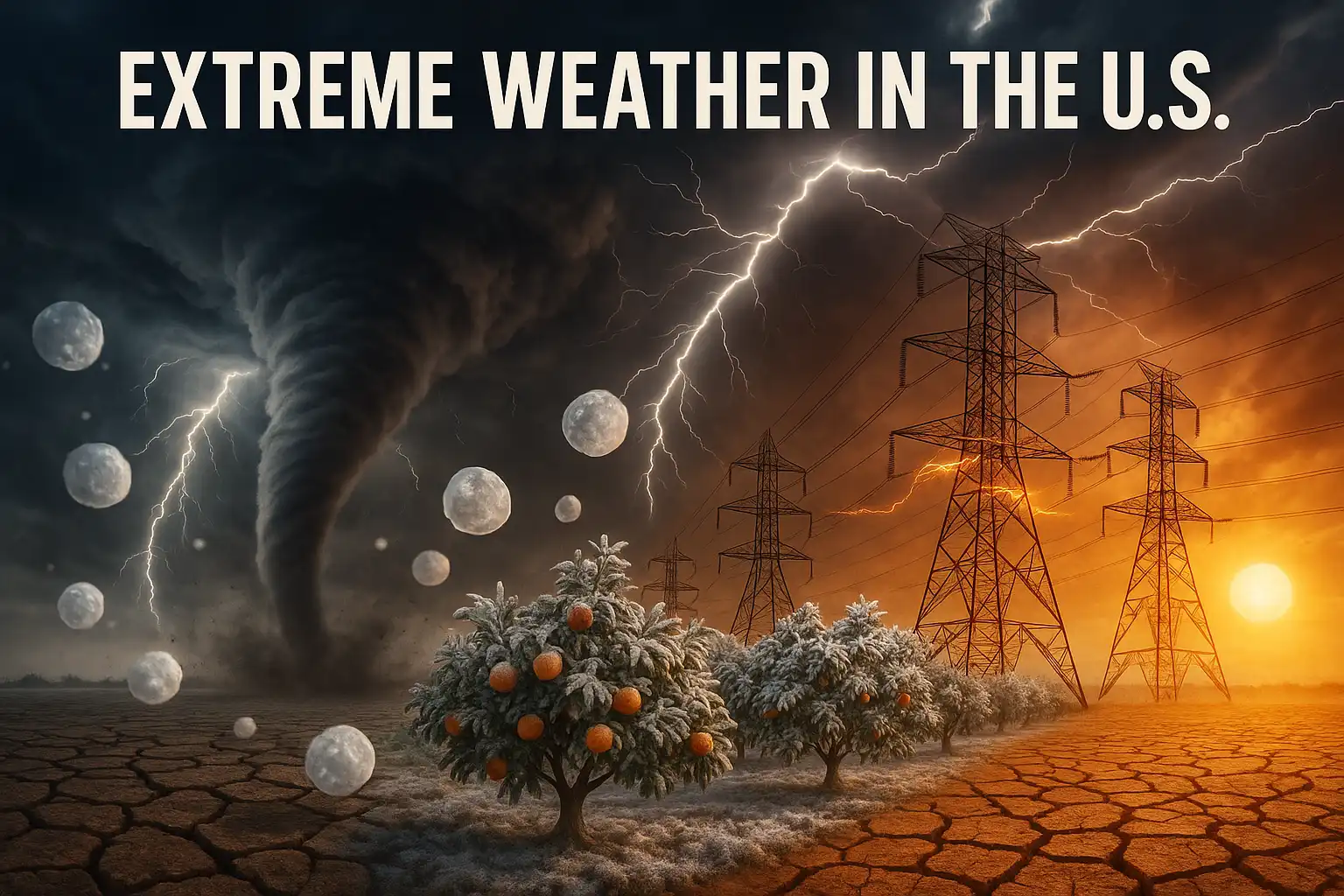
As we move further into 2026, extreme weather is pushing America’s communities and infrastructure to their limits, reinforcing just how high the stakes have become for weather resilience and climate adaptation. Over the past week, we’ve witnessed a confluence of severe weather threats: an outbreak of tornadoes and large hail across the Great Plains, unprecedented stress on the U.S. electric grid from back-to-back winter storms, federal disaster declarations for freeze damage in Florida, and new science warning of climate-driven compound heat and drought events ramping up worldwide. Let’s break down these developments, their impacts, and what they mean for the future.
Tornado and Hail Outbreak Threatens Millions Across the Central U.S.
A major severe weather event is unfolding in the Plains and Midwest, with over 63 million Americans from Texas to Michigan under threat of damaging winds, giant hail, and potentially strong tornadoes. The outbreak, peaking Friday afternoon and evening, is being driven by a powerful clash of warm, moist air from the south and colder, drier air surging in with a frontal boundary. Forecasters are particularly alarmed by the atmosphere’s ability to support “supercell” thunderstorms—giant rotating storms notorious for spawning the most dangerous tornadoes and hailstones larger than 3 inches in diameter.[2]
Cities most at risk for strong tornadoes include Kansas City, Wichita, and Oklahoma City. But as the cold front pushes east overnight, nearly the entire Central U.S.—from Illinois through Oklahoma and into northern Texas—faces renewed hazard from all forms of severe weather. This surge comes on the heels of recent storms that caused fatalities and destruction in the Texas Panhandle and western Oklahoma. As always, timely warnings from the National Weather Service, emergency alerts, and community preparedness are critical to saving lives.[3]
Electric Grid Reliability: Why Extreme Weather Is Forcing a Rethink
Extreme cold spells are colliding with the demands placed on America’s power grid. Utilities and regulators are warning that what were once considered “tail events”—like Texas’s infamous 2021 Winter Storm Uri—are now becoming the New Normal. Winter Storm Fern, which swept across the South and Midwest, demonstrated that reliability risk is about far more than just total generation capacity. Prolonged extreme weather can create compound challenges: fuel supply interruptions, mechanical breakdowns, and operational stresses.
There is good news: improvements in generator weatherization and stricter operational protocols have led to measurable progress since 2021. While Winter Storm Fern still tested Texas and the surrounding region, mandatory inspections, robust fuel-supply programs, and emergency protocols significantly reduced the scale of outages compared to the disasters of just a few years ago. The message from the North American Electric Reliability Corporation (NERC) is clear: the grid must be planned and managed for all-hours reliability, with special attention to back-to-back and compound extreme events—not just summer or winter peaks.[1]
Federal Disaster Aid for Florida’s Freeze-Battered Farmers
While much of the national focus is on tornadoes and winter storms, Florida is contending with a cold disaster of its own. Freezing temperatures during two separate winter storms hit an unprecedented 66 of Florida’s 67 counties between late December and early February. The damage to agriculture has been described as “heartbreaking,” with losses estimated at over $3 billion—citrus groves, vegetable fields, and other crops ravaged by hours of ice and frost.
On March 5, the U.S. Secretary of Agriculture declared an official disaster, unlocking critical aid for farmers and communities struggling to recover. For many, the economic and emotional toll will linger years, highlighting how even the Sunshine State is not immune to severe winter events in today’s changing climate.[5]
Compound Heatwaves and Droughts: The Next Escalating Risk
While much of this week’s news spotlights immediate storms or freezes, a just-released study adds a sobering long-term perspective: “compound extremes”—events where heatwaves cause drought conditions—are occurring faster and more frequently as the planet warms. In the 1980s, only 2.5% of Earth’s land experienced these one-two punch disasters in a typical year; by 2023, it had soared to 16.7%. The risk increases further during strong El Niño events, which warp global weather patterns.
We’ve already seen the devastation such heat-driven droughts can inflict—from the 2021 Pacific Northwest “heat dome” and wildfires that obliterated Lytton, British Columbia, to the 2023-24 Amazon drought. Scientists warn that this may signal a climate “tipping point,” meaning some changes could become irreversible within our lifetimes. Action on emissions, preparedness, and resilience is more crucial than ever.[4]
Staying Safe and Building Resilience
This week serves as a stark reminder that extreme weather is no longer the exception but the rule. Here’s what you can do to prepare:
- For tornado safety: Have multiple ways to receive warnings (NOAA Weather Radio, cell alerts), identify safe shelter (interior room/lowest floor), and ensure you, your family, and neighbors know the plan.
- For heatwaves and drought: Practice water conservation, stay informed during heat advisories, and help vulnerable neighbors.
- For power reliability: Prepare for outages by maintaining a backup power source if needed, keeping emergency kits ready, and following official guidance.
From the monster storms in the Midwest to the cold-stricken citrus groves of Florida and heat-primed droughts worldwide, extreme weather is testing our infrastructure and our communities. By investing in preparedness, supporting vulnerable people, and pushing for resilient systems, we can weather the storms—both literally and figuratively—that lie ahead.
References
- Reliability risk isn’t just about capacity anymore – Utility Dive
- Strong tornado threat brewing for millions across Oklahoma, Arkansas and Kansas with severe weather ramping up – FOX Weather
- A bout of severe weather peaks in the central region on Friday. What to know. – The Washington Post
- Heat waves that spark damaging droughts are happening more frequently, study finds – Greenwich Time
- Disaster declared: Feds approve winter freeze call for help – South Florida Reporter

Leave a Reply