
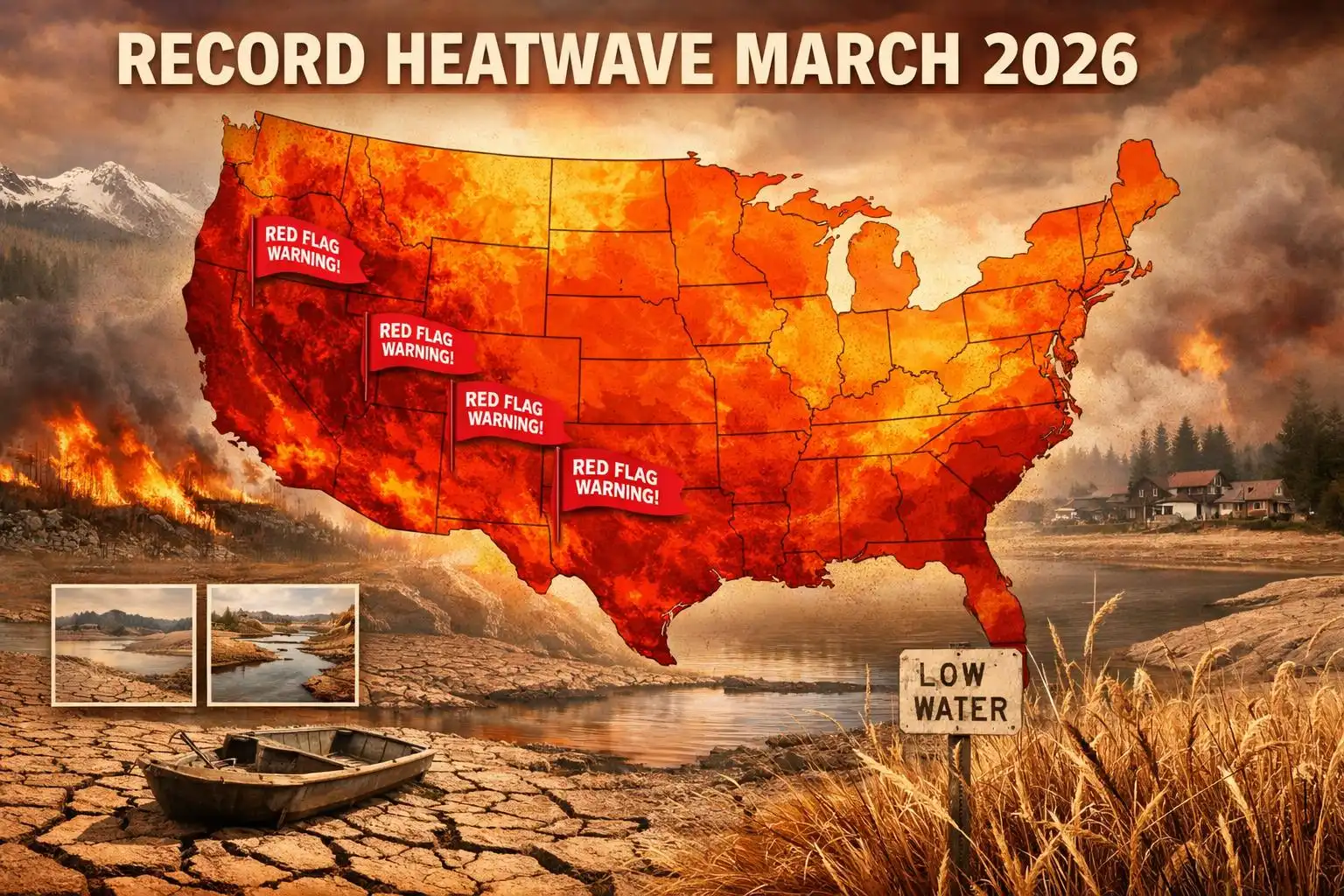
March 2026 will go down as a month of weather extremes across the United States, with over 180 cities—stretching from California to the Southeast—breaking March temperature records. At least 16 states are pending review for tying or setting all-time statewide March heat milestones, with shocking highs such as 112°F reported in parts of southeastern California and southwestern Arizona on March 20 [1]. The unseasonable, persistent heat has brought not only discomfort but also the earliest and most widespread critical fire threats in recent history.
How the Heat Wave Fueled Fire Danger
A heat dome—an area of high pressure trapping hot air beneath it—settled over the western U.S. for much of March, sending temperatures soaring well above normal from California through the southern Plains and into the Southeast as the month closed. This stagnant pattern caused hundreds of daily and monthly high-temperature records to fall, with some regions experiencing conditions typical of summer rather than spring [4].
These heat events coincided with strong, gusty winds and very low relative humidity—classic triggers for wildfire outbreaks. The National Weather Service issued numerous red flag warnings across the Plains and Southwest, alerting the public to the potential for fires to ignite easily and spread rapidly into grasslands, forests, and communities near wildland areas [1]. On-the-ground conditions—in particular, drought-dried grasses and brush—became dangerous tinder. This fire risk moved eastward as the heat dome shifted, putting the Southeast and even portions of the central U.S. on alert for early-season wildfire emergencies [3].
Dramatic Impacts on Western Water: Plummeting Snowpack and Drought Worries
The extreme warmth stretched even into the highest elevations of the West, such as the Sierra Nevada and the Colorado Rockies. There, historically important snowpack—crucial for summer water supply—collapsed at rates not observed in modern records. In the Colorado River Basin, where multi-decade drought already stresses water resources and communities, snow water equivalent (SWE) measurements nosedived, raising the likelihood of an historic early melt-out and worsening conflicts over already scarce water supplies [2].
Along California’s coastline, sea surface temperatures (SSTs) also hit records more typical of June, adding to the sense of a season gone haywire. While cooler and wetter interludes are forecast for early April, these are expected to be short-lived. The threat of renewed warmth and dryness looms large, suggesting the spring wildfire and drought crises may only be beginning [2], [4].
Communities Grapple With Early Fire Season and Water Strain
Early wildfires fueled by the heat and wind have already challenged local firefighting resources in the southern Plains and Southwest, even as residents in the Southeast brace for their own elevated risk. For many communities, the combination of ongoing drought, vanishing snowpack, sizzling temperatures, and red flag conditions brings high anxiety—and the urgent need for firewise practices: clearing brush, heeding evacuation warnings, and preparing go-kits ahead of rapidly changing fire conditions.
Water managers and farmers across the West are also watching river flows and reservoir levels anxiously, knowing that a truncated snowmelt season will tighten water supplies over the hot months to come. This may mean stricter water use restrictions, more wildfire fuel in drying forests and grasslands, and greater strain on rural and Indigenous communities that rely directly on the land for their livelihoods.
Looking Ahead: Relief or Just a Brief Pause?
As the heat dome moves eastward in early April, a brief spell of cooler, wetter weather will reach parts of the western U.S., with some mountain snow and rain bringing temporary relief. But forecasters expect the warmth and dryness to resume over much of the West, while Central and Eastern states brace for their own spate of summer-like days, thunderstorms, and—paradoxically—some localized flooding wherever tropical moisture meets the trailing edge of the departing dome [4], [3].
Fire Safety Tips for the Season Ahead
- Monitor National Weather Service alerts for Red Flag Warnings.
- Prepare for rapid evacuations: pack go-bags, review evacuation routes, and keep prescriptions and valuables handy.
- Practice defensible space: clear dried vegetation at least 30 feet from homes and outbuildings.
- Avoid all outdoor burning and use caution with machinery that could spark a fire.
- If drought conditions persist, conserve water where possible.
March 2026’s record-shattering heat is a stark warning of the compounding risks our communities now face as climate variability brings earlier and more intense wildfire seasons, stronger heat waves, and new water challenges even before summer’s arrival.
References
- Map Shows States at Critical Fire Risk as Over 100 Heat Records Broken – Newsweek
- As historic March heatwave finally fades, a brief cooler/wetter interlude will occur across the U.S. West in early April before warmth & dryness likely return – Weather West
- Persistent heat and dangerous wildfire conditions could impact these parts of the US this weekend – ABC News
- US Weather To See ‘Major Change’ in April – Newsweek

Leave a Reply