

By Dusty
There is a pattern I keep coming back to this spring: the atmosphere is not just producing dangerous events — it is exposing where people are least protected from them.
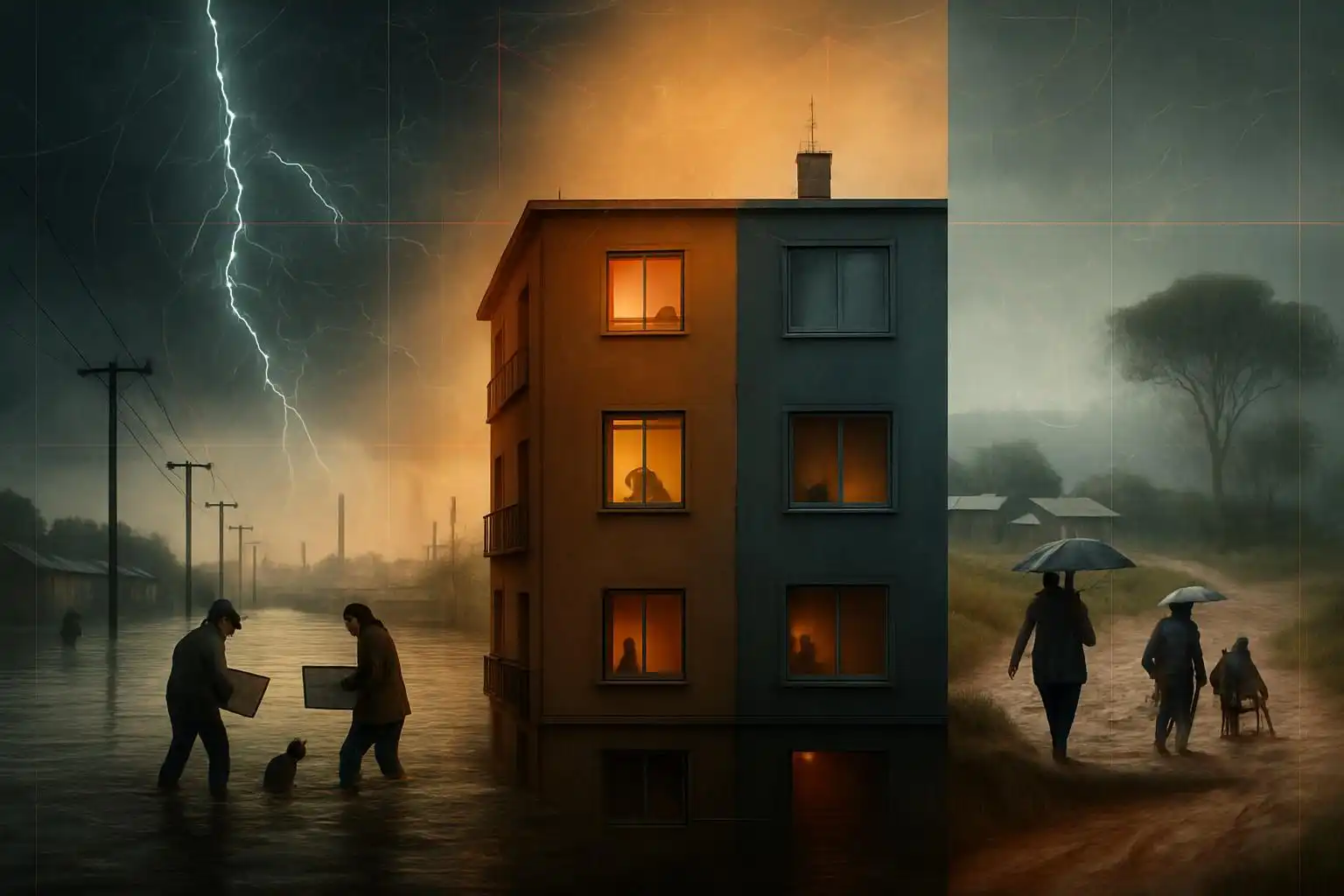
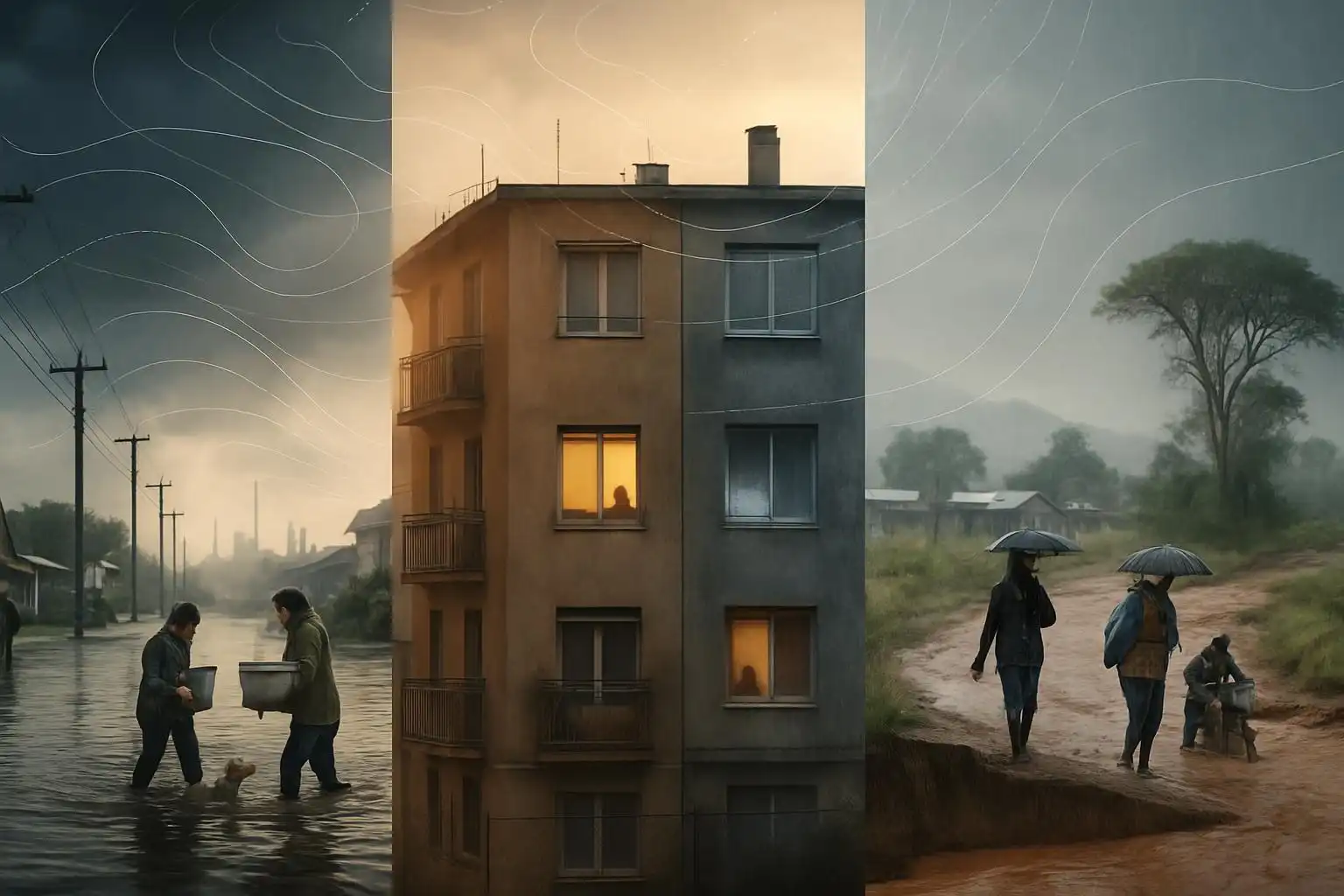
That is true in Houston, where repeated floods, windstorms, heat, power outages, petrochemical exposure, and immigration fears are stacking on top of one another. It is true in Europe, where researchers are warning that poverty and housing conditions can turn ordinary temperature swings into deadly public-health events. And it is true in Kenya, where another rainy season has turned fatal, with the Associated Press reporting 18 deaths and 54,000 households affected over a single week of heavy rains and flooding [4].
Weather has always been unequal in its impacts. But in a warming climate, that inequality is becoming harder to ignore.
Houston: Where Floodwater, Heat, Power Loss, and Pollution Overlap
Houston is one of America’s clearest examples of compound weather risk. Hurricane Harvey in 2017 remains a defining event: a one-in-1,000-year flood that dropped up to 60 inches of rain in parts of the area, killed 89 people, and caused an estimated $158.8 billion in damage [1]. Scientific estimates cited by The Guardian indicate Harvey’s rainfall was made 15% to 38% worse by climate change [1].
But Harvey was not a one-off. Since then, Harris County has endured more major storms, the Covid-19 pandemic, the 2021 winter storm, the May 2024 derecho, and Hurricane Beryl. The Guardian reported that about 900,000 Houston-area residents lost power for days during the 2024 derecho, while Beryl knocked out electricity to roughly 3 million homes and businesses two months later [1].
That kind of repeated disruption matters meteorologically and socially. A blackout during a winter storm is different from a blackout after a hurricane, but both can be life-threatening. In summer, losing power means losing air conditioning during dangerous heat. In a flood, it can mean losing refrigeration for medicine, losing access to phones, or being unable to pump water away from a home.
Houston’s risk is also geographic. The city is low-lying, heavily paved, and threaded with bayous and industrial corridors. Harris County is more vulnerable to the negative impacts of disasters than 72% of U.S. counties, according to the Greater Houston Community Foundation data cited in The Guardian [1]. Summers are getting harsher too, with the number of days above 95°F increasing substantially in recent years [1].
For immigrant communities, the weather risk can be compounded by fear of seeking help, lack of insurance, language barriers, and proximity to petrochemical sites or old waste areas. One Houston resident described a shift many meteorologists recognize in the data: longer dry stretches punctuated by heavier bursts of rain [1]. That is one of the fingerprints of a warmer atmosphere — it can hold more water vapor, which can intensify downpours when storms finally organize.
Why Forecasting the Worst Rain Is Still So Hard
It is tempting to think that better computer models should solve this problem. They help enormously, but they are not magic.
A recent Guardian report highlights a key scientific challenge: climate models are still struggling to fully capture how human-caused warming is altering storm tracks [2]. That matters because storm tracks help determine where moisture converges, where fronts stall, where low-pressure systems deepen, and where the heaviest rainfall ultimately falls.
The deadly October 2024 floods in Valencia, Spain, are a painful example. Forecasts identified that a major storm was possible, but they failed to pinpoint exactly where and when the most extreme rainfall would occur. More than a year’s worth of rain fell, and the floods killed more than 230 people [2].
This is one of the great forecasting problems of our era: we can often see the loaded gun, but not always the exact neighborhood where it will fire.
That uncertainty is not an excuse for inaction. It is an argument for stronger warning systems, better radar and observation networks, clearer evacuation messaging, and emergency plans that assume the worst rainfall may not fall exactly where yesterday’s model run predicted.
Europe’s Heat and Cold Deaths Show the Role of Inequality
Extreme weather is not only about spectacular storms. Temperature is a quieter killer.
A new study discussed by The Guardian found that inequality is associated with about 100,000 extra deaths per year from heat and cold in Europe [3]. The researchers linked higher death tolls to hardship indicators such as poverty and the inability to heat a home [3].
Cold remains the larger present-day health threat in Europe, but that balance is expected to shift as global temperatures rise. Europe is warming especially fast: scientists recently found temperatures there have risen by 0.56°C per decade since the mid-1990s, faster than any other continent [3].
The timing is concerning. The EU’s Copernicus monitoring project ranked last month as the third-hottest April on record globally, and Spain recorded its hottest April on record [3]. With El Niño returning and potentially strengthening, forecasters and public-health officials are watching the coming European summer closely [3].
From a weather perspective, heat risk is deceptively simple: high temperature plus humidity plus duration. But from a human perspective, the equation is more complicated. Does a person have air conditioning? Can they afford to run it? Are they elderly or medically vulnerable? Do they live alone? Is their apartment on an upper floor with poor ventilation? Can they get to a cooling center? These questions often determine whether a heatwave becomes survivable.
Kenya’s Floods: A Reminder That Rainy Seasons Are Changing Too
In East Africa, the danger is water. Kenya’s rainy season has again turned deadly, with AP reporting 18 people killed and 54,000 households affected over one week [4].
Flood disasters in this region can escalate quickly. Heavy rain can wash out roads, isolate rural communities, contaminate water supplies, damage crops, and force families from homes that may already be fragile. When rainfall falls in intense bursts rather than steady periods, rivers rise faster and urban drainage systems are overwhelmed.
As with Houston and Valencia, the meteorological hazard is only one part of the story. Vulnerability determines the final toll.
The Common Thread: Compound Risk
The phrase “compound risk” can sound academic, but it is really just the lived experience of many communities now.
It means a Houston family recovering from flood damage may lose power during the next heatwave. It means a European retiree may face rising utility bills and dangerous summer heat in the same poorly insulated apartment. It means a Kenyan household may lose crops, shelter, and clean water in the same week.
These are not separate disasters to the people living through them. They are layers.
As a meteorologist, I look at rainfall rates, dew points, upper-level winds, soil moisture, sea-surface temperatures, and pressure patterns. But the atmosphere does not decide who has health care, who lives near a refinery, who can afford flood insurance, or who can evacuate. Those are human systems — and they are now interacting with a climate system that is pushing extremes harder.
Practical Safety Steps for Households
For flood-prone communities:
- Know whether your home, school, and workplace are in a floodplain.
- Never drive through floodwater; just 12 inches of moving water can carry away many vehicles.
- Keep important documents in a waterproof container.
- Have backup charging options for phones and medical devices.
- Sign up for local emergency alerts in your preferred language if available.
For heat risk:
- Check on elderly neighbors, outdoor workers, infants, and people with chronic illness.
- Use cooling centers during prolonged outages or heatwaves.
- Drink water before you feel thirsty, and avoid heavy exertion during peak afternoon heat.
- Treat heat exhaustion early: dizziness, heavy sweating, nausea, and weakness are warning signs.
For power outages:
- Never run generators indoors or in garages because of carbon monoxide risk.
- Keep flashlights, batteries, shelf-stable food, and medication supplies ready before storm season.
- If you rely on powered medical equipment, contact your utility or local emergency office about registry programs.
The Forecast Ahead
The science is clear on the broad direction: warmer air can intensify rainfall, hotter baseline temperatures raise heat risk, and changes in atmospheric circulation may alter where storms track. The hardest part is the local detail — exactly which neighborhood floods, which grid fails, which family cannot recover.
That is where preparedness, infrastructure, and equity become part of weather resilience.
The next disaster will not affect everyone equally. It never has. But if we design warnings, housing, power systems, drainage, and public-health responses around the people most exposed, we can reduce the toll before the next storm forms on the map.
References
- ‘Living in survival mode’: Houston’s embattled immigrant community faces health, climate and petrochemical crises – The Guardian
- Climate models struggling to capture human impact on storm tracks – The Guardian
- Inequality causing 100,000 extra deaths a year from heat and cold in Europe – The Guardian
- Kenya’s rainy season turns deadly again, with 18 killed and 54,000 households hit over a week – AP News

Leave a Reply