

By Dusty
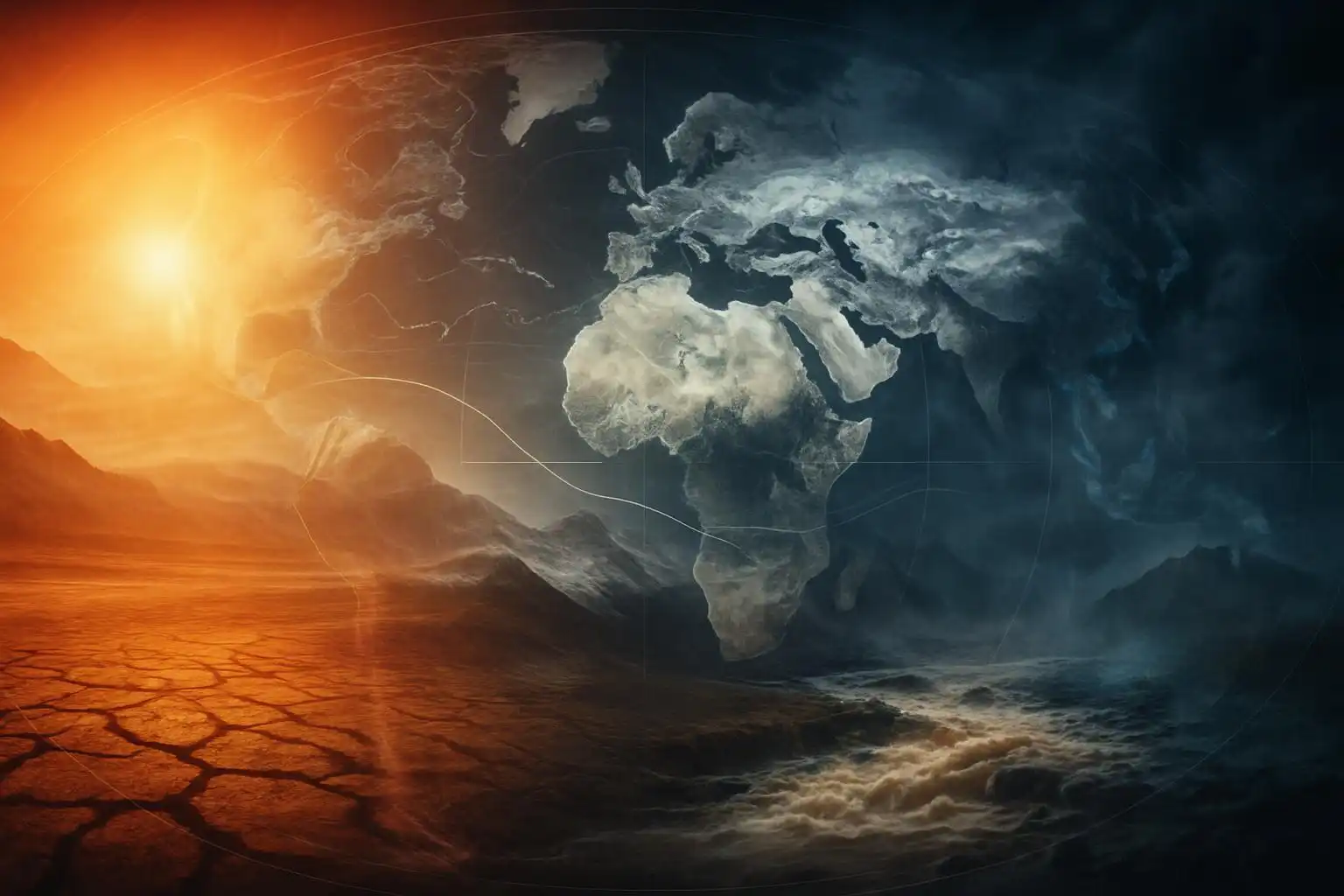
There are weeks when the atmosphere seems to speak in several dialects at once: desert heat, mountain snow drought, coastal flood risk, and global teleconnections all showing up on the weather map together. Mid-May 2026 is one of those weeks.
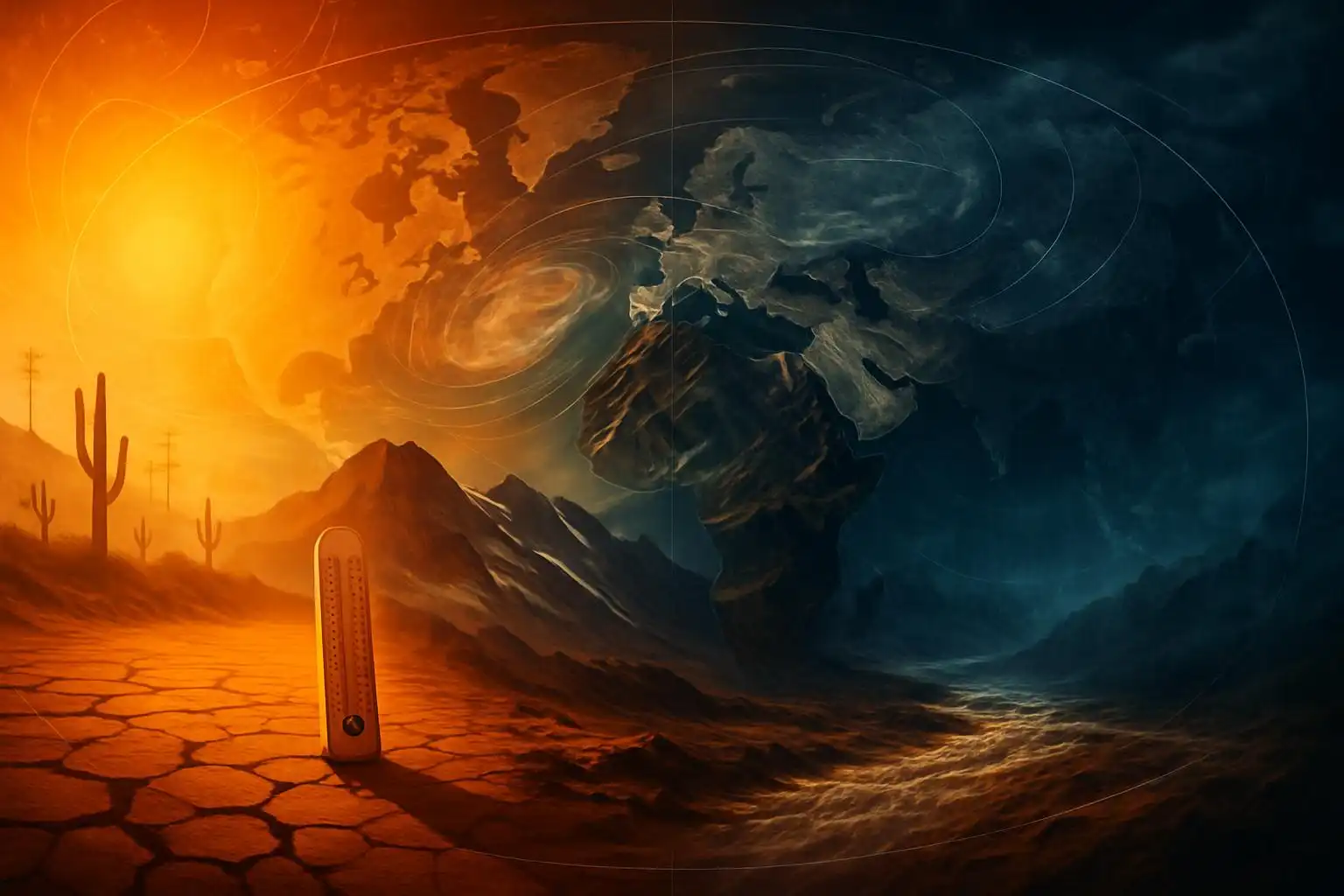
In the southwestern United States and northern Mexico, the warm season is arriving with teeth. The National Weather Service has issued heat advisories for parts of California and Arizona, with extreme heat warnings in places such as Palm Springs, where temperatures may reach 104–110°F early this week [1]. At the same time, South Africa’s Western and Eastern Cape are bracing for disruptive rainfall, damaging winds, flash flooding, mudslides, and rockfalls, with some mountain zones potentially approaching 300 mm of rain [1].
That contrast — scorching heat on one continent, dangerous flooding on another — is not unusual in a global sense. But the intensity, timing, and compounding nature of these hazards are increasingly central to how meteorologists, emergency managers, and communities think about risk.
The Southwest Heat Signal Is Arriving Early
Heat in the desert Southwest is not news by itself. Palm Springs, Phoenix, Yuma, and the lower Colorado River Valley are built around hot-weather realities. What matters is timing and persistence. When triple-digit heat arrives early in the season, bodies, power systems, crops, and outdoor work schedules may not yet be acclimated.
Early-season heat waves can be especially dangerous because people often underestimate them. A 108°F afternoon in May may not carry the same psychological alarm as a 115°F afternoon in July, but the health mechanics are similar: the body struggles to shed heat, dehydration accelerates, and nighttime temperatures may remain too warm for recovery.
The broader forecast pattern suggests heat building into the high 30s Celsius before shifting eastward toward the Midwest later in the week [1]. That eastward migration matters. Heat becomes a larger public-health problem when it moves into more humid regions, where sweat evaporates less efficiently and the heat index can climb rapidly.
For anyone in the affected areas, the safety message is straightforward: hydrate before thirst kicks in, limit strenuous outdoor work during peak heating, check on older neighbors and people without reliable air conditioning, and never leave children or pets in vehicles — even briefly.
The West’s Snowpack Problem Is a Summer Problem in Disguise
While the Southwest heats up, the western U.S. is also facing a quieter but deeply consequential hazard: missing mountain snow.
Snowpack is the West’s natural reservoir. It stores winter precipitation in the mountains and releases it gradually through spring and summer. But this year, that timing has been badly disrupted. California’s statewide snowpack stood at only 18% of average on April 1, and the broader western snowpack has suffered what researchers described as unprecedented loss after a record-warm winter and a March heatwave [2].
That creates two linked risks.
First, water supply suffers. Rivers and reservoirs that depend on slow snowmelt do not receive the same steady recharge. In the Colorado River Basin, where major reservoirs are already strained, a poor snow year can echo through agriculture, cities, hydropower, and interstate water negotiations.
Second, the landscape dries out early. When snow disappears weeks or months ahead of schedule, soils, grasses, shrubs, and forests enter the hottest part of the year with less moisture in reserve. That is a recipe for elevated wildfire potential, especially if summer lightning, wind events, or human ignitions line up with dry fuels.
This is one of the clearest examples of a compound climate hazard. The headline may be “low snowpack,” but the consequences include drought, wildfire, water restrictions, agricultural stress, and ecosystem damage.
El Niño May Add Another Layer
Adding to the complexity, seasonal models are pointing toward a potentially strong El Niño developing later this year. The World Meteorological Organization has indicated that El Niño conditions are expected to emerge around the middle of the year, though forecasters remain cautious because spring is a notoriously difficult season for long-range model accuracy [3].
El Niño is a warming of the central and eastern tropical Pacific that can shift global rainfall and temperature patterns. Its impacts vary by season and region, but strong events often influence tropical cyclone activity, winter storm tracks, drought patterns, and global temperature anomalies.
For the United States, forecasters are already watching the possibility of hotter-than-normal summer conditions and significant heat waves, along with more frequent daily thunderstorms in parts of the Southwest [3]. That does not mean every location will experience the same outcome. El Niño is not a weather forecast; it is a climate pattern that loads the dice. Local weather still depends on jet-stream placement, soil moisture, sea-surface temperatures, and day-to-day storm evolution.
But when El Niño develops on top of already warm oceans and a warmer atmosphere, the ceiling for extremes can rise.
South Africa’s Flood Threat Shows the Other Side of the Ledger
While North America focuses on heat and drought, parts of South Africa are facing a dangerous flood setup. Heavy rain moving in from the Atlantic has been affecting the Western and Northern Cape, with additional rainfall expected through midweek. Forecasts call for more than 200 mm in parts of Western Cape, with stronger totals possible in mountainous terrain [1].
The mountains are important here. When strong winds push moist air upslope, rainfall can intensify dramatically. Steep terrain also accelerates runoff, increasing the risk of flash flooding, mudslides, rockfalls, and infrastructure damage. The South African Weather Service has warned of exactly those hazards [1].
This is the flood version of the same broader challenge facing the West with drought: communities are being asked to manage hazards that are not isolated. Heavy rainfall can close roads, damage bridges, isolate rural areas, trigger slope failures, contaminate water supplies, and delay emergency response.
Forecasting Is Improving — But Storm Tracks Remain a Challenge
One reason these events remain so difficult to manage is that rainfall extremes depend not only on how much moisture the atmosphere can hold, but also on where storm systems actually go.
A recent study highlighted a key problem: climate models are doing a reasonable job representing the thermodynamic side of warming — warmer air holding more moisture — but they are struggling to capture human-driven shifts in large-scale atmospheric circulation patterns such as the jet stream [4]. Those circulation patterns help determine storm tracks, which in turn determine who gets heavy rain and who stays dry.
That distinction matters. A forecast can correctly identify that a major storm is possible but still miss the precise location of the heaviest rainfall. For emergency managers, that can be the difference between staging rescue crews in the right valley and being caught behind flooded roads.
As a meteorologist, I see this as one of the defining scientific challenges of the next decade: translating a strong understanding of atmospheric physics into sharper local risk guidance. Better radar, satellite data, aircraft observations, artificial intelligence tools, and high-resolution models will help — but uncertainty will never vanish entirely.
Disaster Response Is Part of the Weather Story
Weather does not become a disaster by meteorology alone. It becomes a disaster when a hazard intersects with vulnerable people, aging infrastructure, poor land-use decisions, limited warning access, or underfunded response systems.
That is why current debate over the future of the Federal Emergency Management Agency matters. Proposed changes to FEMA have raised concern among experts who warn that weakening federal disaster coordination could leave the United States less prepared at a time when extreme weather risks are increasing [5].
There is a legitimate conversation to be had about how disaster programs should be improved. The U.S. spends enormous sums after storms, floods, fires, and hurricanes. A smarter system would invest more heavily before disasters happen: stronger building codes, floodplain buyouts where appropriate, hardened power grids, urban cooling strategies, defensible space in fire-prone communities, and better warning communication.
But reducing coordination capacity without solving the underlying risk problem would be like removing smoke alarms because house fires are expensive.
The Bottom Line
This week’s weather map is a reminder that extremes are not waiting politely in separate categories. Heat affects drought. Drought affects fire. Snowpack affects water supply. Storm tracks affect flood risk. Emergency management affects survival and recovery.
The science is clear on one point: a warmer atmosphere increases the potential for more intense heat and heavier rainfall. The harder question is how those hazards arrange themselves region by region, season by season, and storm by storm.
For communities, the practical path forward is preparedness with humility. We should use the best forecasts available, understand their limits, and build systems that can bend without breaking. Whether the threat is 110°F desert heat, a vanishing snowpack, or a mountain flood halfway around the world, the atmosphere is testing more than our forecasts. It is testing our readiness.
References
- Weather tracker: US and Mexico brace for heatwave as deadly floods hit South Africa – The Guardian
- Lasers in the sky: hi-tech missions track record snowpack loss in US west – The Guardian
- What to know about the predictions for a potentially record-breaking El Nino – AP News
- Climate models struggling to capture human impact on storm tracks – The Guardian
- ‘Closing the chapter’ on Fema: Trump panel seeks to weaken disaster response amid climate crisis – The Guardian

Leave a Reply