
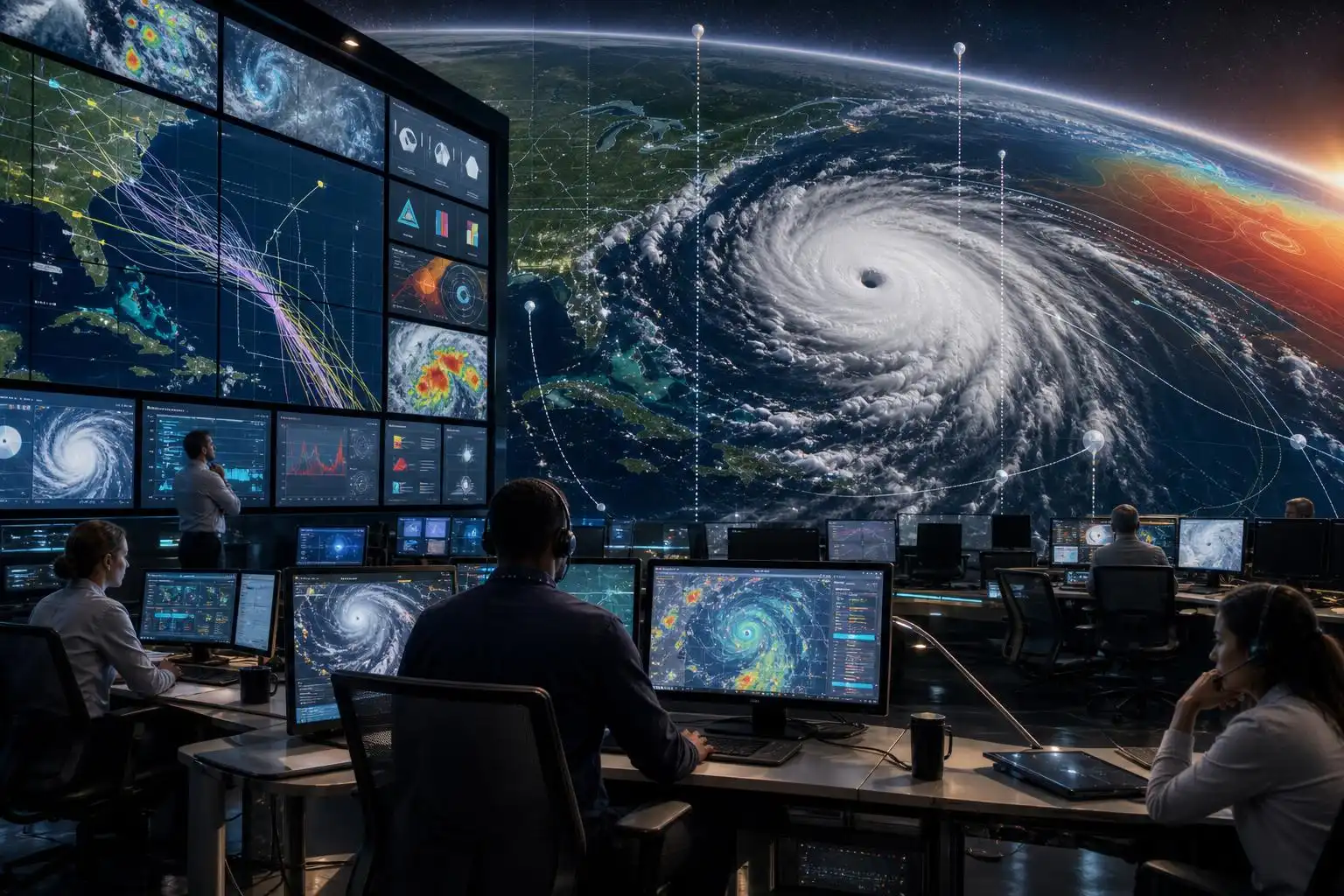

The Atlantic may get a relative break this year, but coastal communities should not mistake “below average” for “safe.” NOAA’s 2026 Atlantic hurricane outlook calls for 8 to 14 named storms, with 3 to 6 becoming hurricanes and 1 to 3 reaching major hurricane strength — Category 3 or higher, with winds of at least 111 mph [1]. That is not the kind of hyperactive forecast we have grown used to in some recent years, but it still leaves plenty of room for a storm that changes lives.
As meteorologists often say, it only takes one. The Associated Press made that point clearly in its reporting on the new seasonal outlook, noting that even in an El Niño year — when Atlantic storm counts are often suppressed — a single landfall can cause catastrophic damage [2]. Hurricane Andrew in 1992 is the classic warning: a quiet season overall, but one devastating strike in South Florida.

This year’s setup is a complicated one. A developing El Niño is expected to become a major player later in the season. NOAA officials cited a 98% chance of El Niño conditions developing and an 80% chance that the event becomes moderate to strong [1]. In the Atlantic basin, El Niño commonly increases upper-level winds over the tropics. That wind shear can tilt or tear apart developing tropical systems before they organize into hurricanes. In plain terms, El Niño can act like a lid on Atlantic hurricane activity.
But the atmosphere is rarely that simple. Warm ocean temperatures can still provide fuel for storms that manage to find pockets of lower shear. A season with fewer storms can still produce a dangerous hurricane if one forms in the wrong place at the wrong time. And while the Atlantic may be muted, NOAA is forecasting a much busier central and eastern Pacific season, with a 70% chance of above-normal activity and 15 to 22 named storms in the eastern Pacific [1]. Hawaii, Mexico’s Pacific coast, and shipping and fishing interests across the basin will need to pay attention.
There is another issue this year that has less to do with ocean temperatures and more to do with the nation’s weather infrastructure: confidence. Experts quoted by The Guardian warn that staffing cuts and reductions in weather balloon launches and satellite-related capacity have left NOAA and the National Weather Service stretched thin heading into hurricane season [1]. Meteorologist John Morales told the outlet that the country is entering the Atlantic and eastern Pacific hurricane seasons with reduced confidence in accurately forecasting tropical threats, and he pointed to a decline in skill in the American Global Forecast System [1].
That matters because hurricane forecasting is a chain. Satellites monitor storm structure over open water. Weather balloons sample temperature, moisture, wind, and pressure through the atmosphere. Ocean buoys, aircraft reconnaissance, radar, computer models, local forecast offices, and emergency managers all add pieces to the puzzle. Remove or weaken parts of that chain, and the final forecast can become less certain — especially for track shifts, rapid intensification, rainfall placement, and storm surge timing.
The timing could not be more challenging. The broader weather map is already acting like a stress test. In the western United States, late-spring cold air has been dropping south out of Canada, producing significant snowfall over higher terrain in Wyoming, northern Colorado, and northeast Utah. Forecast totals could reach up to 18 inches in the highest elevations, with winds up to 60 mph creating blizzard conditions in some areas [3]. Farther southwest, low humidity and gusty winds have triggered red-flag warnings, raising wildfire concerns [3]. Meanwhile, the clash between cold air to the west and warm, humid air over the central U.S. has supported severe thunderstorm development, including a Storm Prediction Center outlook with a 15% tornado probability across parts of four central states [3].
Europe is seeing its own atmospheric whiplash. After Arctic air drove temperatures 10 to 15°C below normal across parts of the continent, a building area of high pressure is expected to draw hot air north from Africa. France and England could see temperatures rise around 15°C from one week to the next, while Spain and Portugal may reach the mid- to upper-30s Celsius [3]. These rapid transitions are more than uncomfortable; they stress power grids, agriculture, transportation, and public health systems.
That same human cost is already painfully visible in South Asia. Karachi, Pakistan, has been struggling through dangerous heat, where humidity can make temperatures below 40°C feel far hotter. The World Weather Attribution group found that human-caused climate change roughly tripled the likelihood of the recent heat event affecting Pakistan and India, making it “no longer exceptional” in today’s climate [4]. India has also endured intense heatwave conditions, with several cities crossing 45°C and authorities issuing heat alerts across multiple states [4].
This is the world that modern forecasting must now serve: not just warmer on average, but sharper at the edges. More extreme rainfall. More intense heat. More dangerous fire weather. More rapid shifts from one hazard to another.
That is why the debate over artificial intelligence in weather prediction deserves a careful, clear-eyed look. AI weather models are promising. They can run quickly, use less computing power, and in some cases perform impressively well for broad weather patterns. But experts warn that many AI systems are trained on historical weather data — and that creates a problem when the atmosphere is producing events outside the range of the past. As meteorologist Chris Gloninger put it, these models were trained on “a climate that no longer exists” [5].
An April study in Science Advances, cited by The Guardian, found that AI-based models still tend to underperform when predicting extreme weather events because they often lean toward outcomes similar to past patterns [5]. That does not mean AI has no place in forecasting. It does mean AI should be used as a tool alongside physics-based models, observations, experienced forecasters, and local knowledge — not as a replacement for the entire system.
For people living along the coast, the practical message is straightforward: prepare for the storm you could get, not the seasonal average. A below-average Atlantic forecast should not delay hurricane planning. Now is the time to review evacuation zones, check insurance documents, photograph property for records, test generators safely outdoors only, and build a kit with water, medications, flashlights, batteries, pet supplies, and important paperwork.
For inland communities, hurricane season is not just a coastal issue. Some of the deadliest tropical cyclone impacts come from freshwater flooding hundreds of miles from landfall. If a tropical system moves inland and stalls, the name or category at landfall may matter less than how much rain falls over your watershed.
And for all of us, this season is a reminder that forecasting is public safety infrastructure. The difference between a good forecast and a great one can be the extra hours a hospital needs to move patients, the confidence an emergency manager needs to order evacuations, or the warning that gets a family out of a flood-prone home before water rises.
The 2026 Atlantic season may be quieter than recent years. Let’s hope it is. But with a strengthening El Niño, unusually warm oceans, an active Pacific, stretched forecasting resources, and a climate producing more extreme events, this is not a year for complacency. It is a year for preparation, investment, and respect for what the atmosphere can still do.
References
- US will see below-average 2026 hurricane season with up to 14 named storms, Noaa predicts
- Atlantic hurricane season forecast to be milder than normal thanks to El Nino
- Weather tracker: Europe braces for swing from Arctic chill to extreme heat
- ‘It’s no longer exceptional’: Karachi struggles under brutal new reality of extreme heat
- Trump cuts to weather data could make forecasts less reliable, warn experts

Leave a Reply