
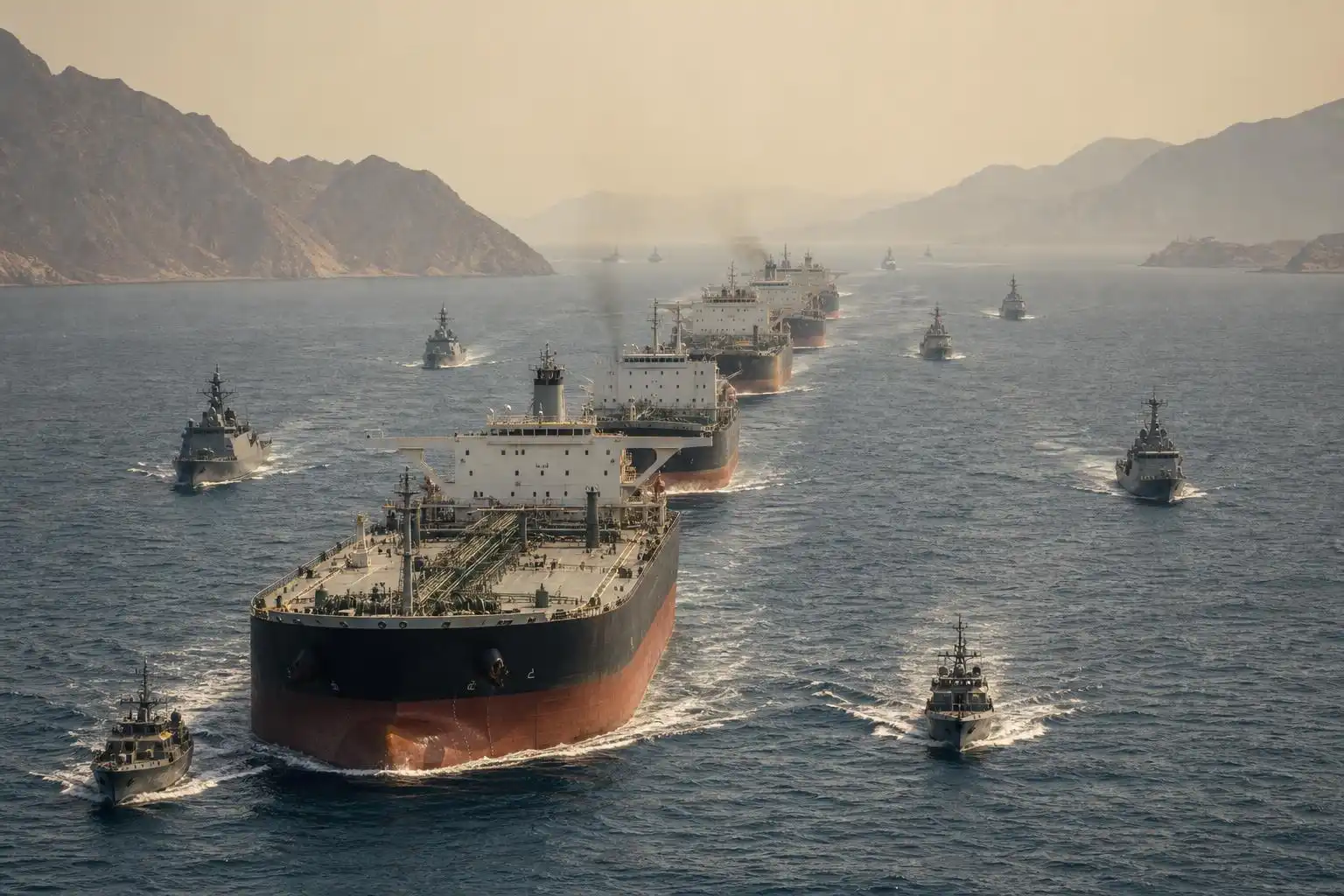

Economic pressure around Iran is intensifying — and widening. Washington is preparing more measures to isolate Tehran as the Strait of Hormuz standoff drags on, even as the Pentagon moves to boost missile interceptor production to harden U.S. and allied defenses[3]. The squeeze is biting inside Iran, where families are struggling to afford basics amid escalating U.S. economic warfare[1]. Tehran has cast the sanctions blitz as a “declaration of war” on all nations that trade with it — and Beijing publicly slammed what it called “illegal” unilateral U.S. measures, underscoring a hardening geopolitical split over the crisis[6][8].
Diplomatic channels are not entirely closed. Iran and Oman held talks on managing maritime risks in Hormuz — a sign regional players are still looking for practical off‑ramps to contain spillover even as Washington talks up more pressure[4][3]. The Trump administration’s emphasis on keeping gas prices stable is also feeding into its calculus, with officials balancing energy-market sensitivities against coercive aims, according to regional reporting[3].
North of the border, Ottawa has answered Washington with retaliatory tariffs, escalating a trade fight that is fast becoming a political stress test for the continent’s most important economic relationship[2]. In the UK press, the dispute is increasingly framed as a sovereignty moment galvanizing Canadians — a narrative that, if it sticks, could stiffen Ottawa’s resolve in any protracted showdown[5].
In the United States, fiscal and legal headlines added to the churn. America’s national debt has crossed $40 trillion for the first time, sharpening election‑year debates over interest costs and the room left for emergency spending if external shocks worsen[6]. Separately, TikTok agreed to a $400 million settlement with the Justice Department over alleged violations of children’s online privacy laws, a fresh reminder that tech‑platform scrutiny remains bipartisan even amid broader geopolitical rancor[6]. And the U.S. Supreme Court allowed, for now, the administration’s $400 million White House ballroom project to proceed, after officials argued it is needed for security — a decision likely to keep political optics and procurement questions simmering[6].
Across the Atlantic, Britain’s long‑running tabloid privacy saga delivered a costly turn: Prince Harry and six others were ordered to pay an initial $13 million in the failed invasion‑of‑privacy case — a ruling that reverberates through UK media and palace‑watch circles alike[1].
Beyond geopolitics, the climate drumbeat grew louder. A new assessment warns of extreme rainfall and flooding in East Africa linked to El Niño, with as many as three million people potentially displaced — another data point in a year of compounding weather risks[8].
Why it matters: The Iran sanctions spiral is bleeding into energy, shipping, and great‑power politics at once, with China’s rhetorical pushback signaling that enforcement will be contested far from the Gulf[8]. Canada’s tariff riposte raises the cost of brinkmanship for U.S. consumers and firms even as Washington juggles inflation optics at home[2]. And with U.S. debt now above $40 trillion, fiscal space to cushion overlapping shocks — war, trade, climate — is narrowing, heightening the stakes of each policy misstep[6].
References
- Trending News | What’s New Around the World — AP News — https://apnews.com/hub/trending-news
- Live updates: Canada strikes back at US with retaliatory tariffs – AP News — https://apnews.com/live/trump-canada-economy-tariffs-news-updates-08-26-2026
- Breaking News, World News and Video from Al Jazeera — https://www.aljazeera.com
- Iran war — AP News hub — https://apnews.com/hub/iran
- Donald Trump | US news | The Guardian — https://www.theguardian.com/us-news/donaldtrump/2026/aug/26/all
- US & Canada News | Today’s latest from Al Jazeera — https://www.aljazeera.com/us-canada
- China slams ‘illegal’ US sanctions on Iran — BBC Audio — https://www.bbc.com/audio/play/p0p67088


Leave a Reply