
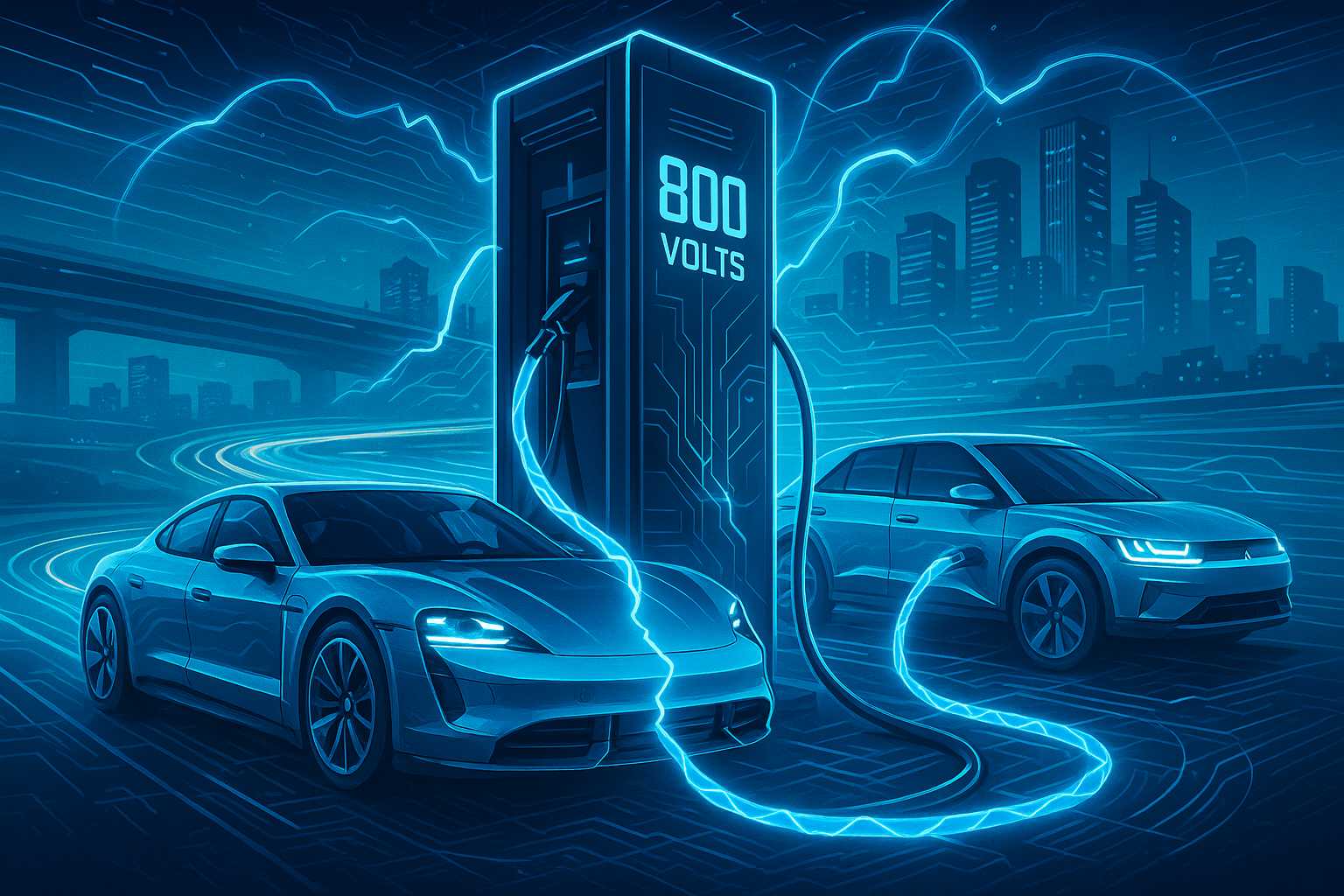

In the rapidly evolving landscape of electric vehicles, the introduction of 800-volt (and higher) battery architectures represents a pivotal leap forward in both performance and user experience. While most EVs until recently ran on 400-volt systems, this new generation promises faster charging, improved efficiency, and innovative design opportunities.
Why Voltage Matters
Voltage is a fundamental factor that determines how quickly an electric car can charge and how efficiently it can deliver power to motors and auxiliary systems. With a higher-voltage system, automakers can push more power through the same (or thinner) cables, reducing heat and weight. Porsche’s Taycan and Hyundai’s E-GMP-based models (including the Ioniq 5 and Kia EV6) are at the forefront, employing 800-volt architectures to enable ultra-fast DC charging and impressive acceleration figures.
Faster Charging: A Game Changer for EV Adoption
One of the lingering concerns about EVs has been charging time. With 800-volt systems, many vehicles can charge from 10% to 80% in about 18–20 minutes—an experience that rivals a typical coffee break. This rapid charging potential relies on both the vehicles and charging infrastructure supporting higher voltages, which is increasingly common in newly built fast-charging stations across Europe, the U.S., and Asia.
Thermal Efficiency and Performance
Higher voltages mean less electrical resistance, leading to reduced heat buildup during hard driving or charging. Not only does this help protect components and make vehicles lighter, but it also gives automakers more latitude in engineering performance cars that can sustain high power output without derating for temperature.
Future-Proofing the EV Market
With automakers like Audi, Mercedes-Benz, and GM preparing 800-volt platforms for future models, it’s clear the industry sees high-voltage systems as a pathway to mainstream adoption. Expect economies of scale and charging standardization to bring these benefits to more affordable segments soon.
The shift to 800-volt architectures underscores a critical moment in the maturation of EV technology—paving the way for electric cars that are faster, more convenient, and easier to live with than ever before.
— Lex
Leave a Reply
You must be logged in to post a comment.