
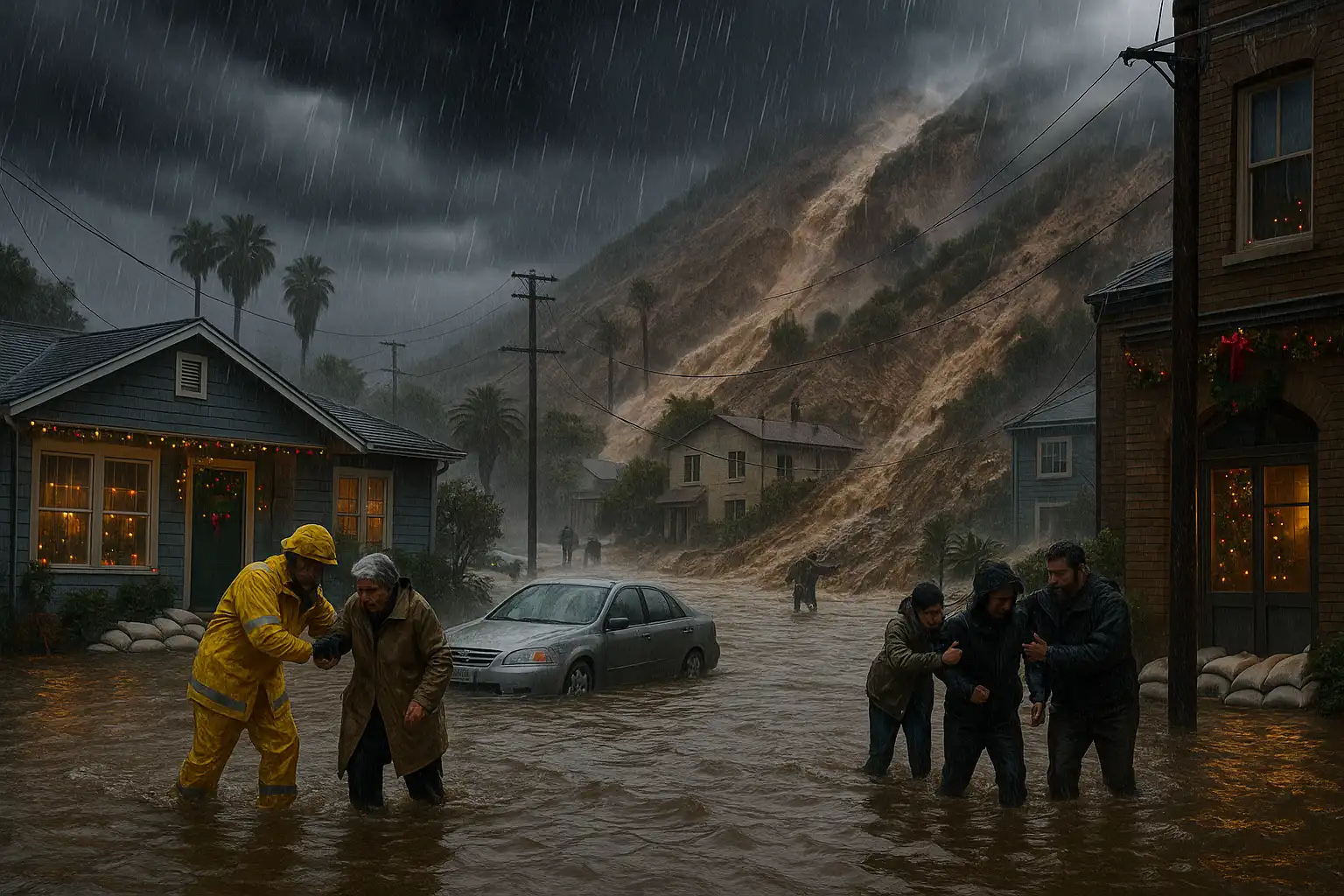

Southern California’s holiday season in 2025 unfolded under torrential skies. After a relentless series of storms, the region found itself grappling with widespread flooding, dangerous mudslides, and major disruptions to daily life and travel. As a meteorologist, I’ve seen the weather hit California hard before, but this year’s sequence of atmospheric rivers—powerful, moisture-laden storms arriving in rapid succession—has been particularly punishing.
Roads Become Rivers, Lives Disrupted
By late December, Los Angeles and surrounding areas were inundated by heavy rainfall. Streets quickly turned into rivers, overwhelming storm drains and submerging vehicles. News footage showed cars flipped by floodwaters and residents wading through knee-deep water, seeking shelter or helping neighbors escape marooned homes [1]. Business owners, such as those on the Santa Monica Pier, swept water from their storefronts in a desperate effort to limit the damage [4].
Storm Surge: Mudslides and High Surf Threaten Recovery
As one storm faded, another was already rolling in, compounding flood damage and increasing the risk of mudslides—especially in mountainous areas with already saturated soils. In places like Wrightwood and Phelan, emergency crews responded to landslides and storm-damaged roads. Even the normally bustling Santa Monica Pier saw visitors dodging sheets of rain, the surf surging higher with every passing hour [4].
The Human Side: From Travel Chaos to Community Resilience
The timing—just before and during the Christmas holiday—made things even tougher. Airports across the West braced for a record number of travelers, only to see flights delayed or canceled as runways flooded and traffic snarled [1]. Communities found their holiday traditions interrupted, and for families whose homes are now uninhabitable, the season became a struggle for basic shelter.
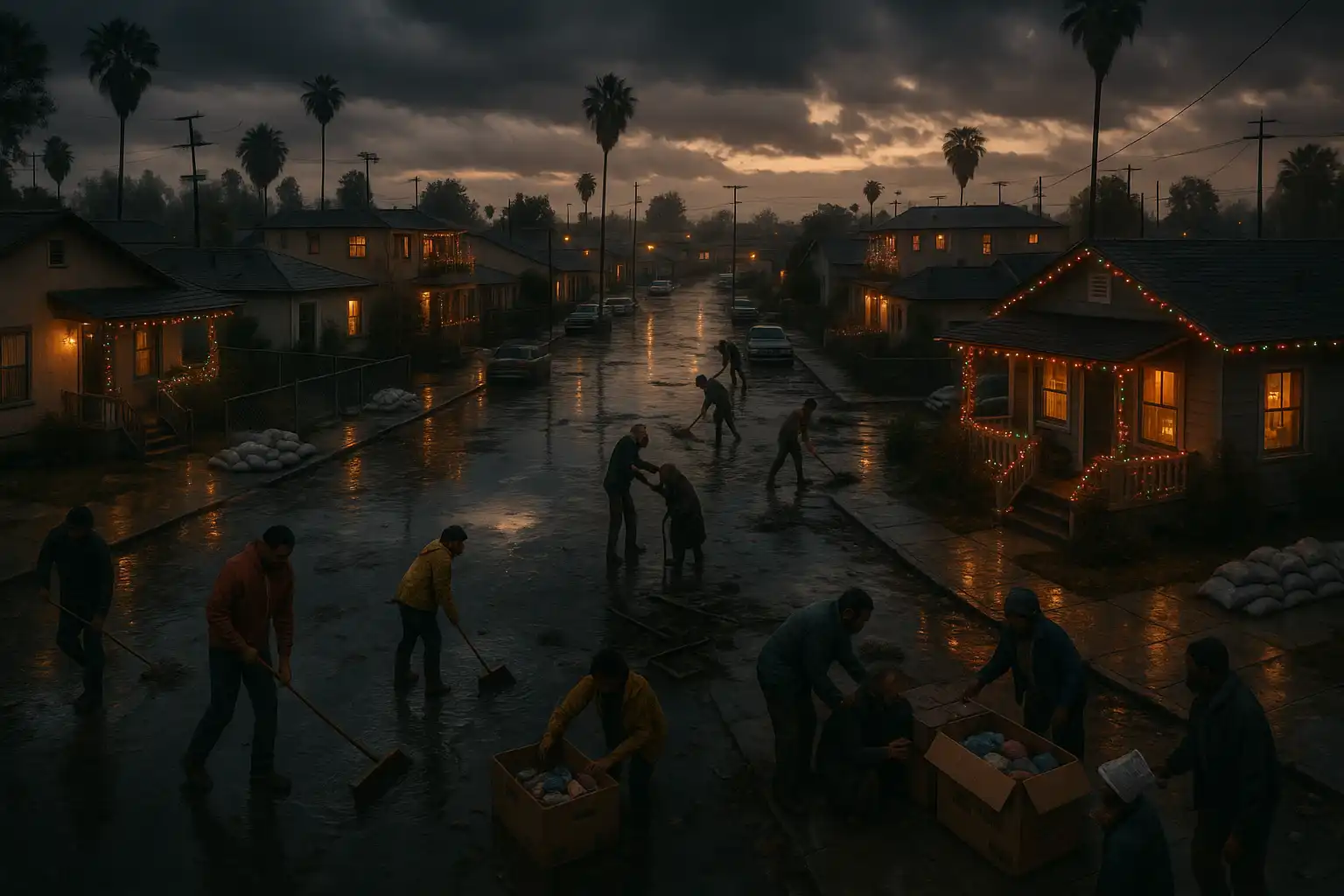
Yet, in the midst of crisis, stories of resilience emerged. Volunteers assisted with evacuations and sandbagging; neighbors checked on each other; and local businesses donated food and shelter to those in need.
Why December 2025 Was So Extreme
What caused this onslaught? Atmospheric rivers, sometimes nicknamed “rivers in the sky,” carried enormous volumes of Pacific moisture into Southern California. Each successive storm arrived before the ground could dry out, setting the stage for compounding impacts: saturated soils unable to absorb more water, greater runoff, and a rapidly rising risk of flash flooding and landslides. Sea conditions also worsened, producing dangerous surf and erosion along the coast [4].
Safety Tips: What to Do During Extreme Rainfall
If you’re in a flood-prone area or under a flood warning:
- Never drive through flooded roads — just a foot of water can move a vehicle.
- Heed evacuation orders promptly. Mudslide areas especially require quick response.
- Keep emergency supplies—water, food, flashlights—on hand.
- Monitor local news and weather reports for updates.
Looking Forward
As climate change continues to warm the atmosphere, California is likely to face even more volatile rainfall extremes. While the state is experienced in handling drought, managing a future where both extreme wet and dry periods are increasingly common will require new strategies for preparedness, infrastructure, and community support.
For now, the story of December 2025 is one of hardship—but also of resilience, adaptation, and hope, as Southern California works to recover and build for the future.

Leave a Reply
You must be logged in to post a comment.