
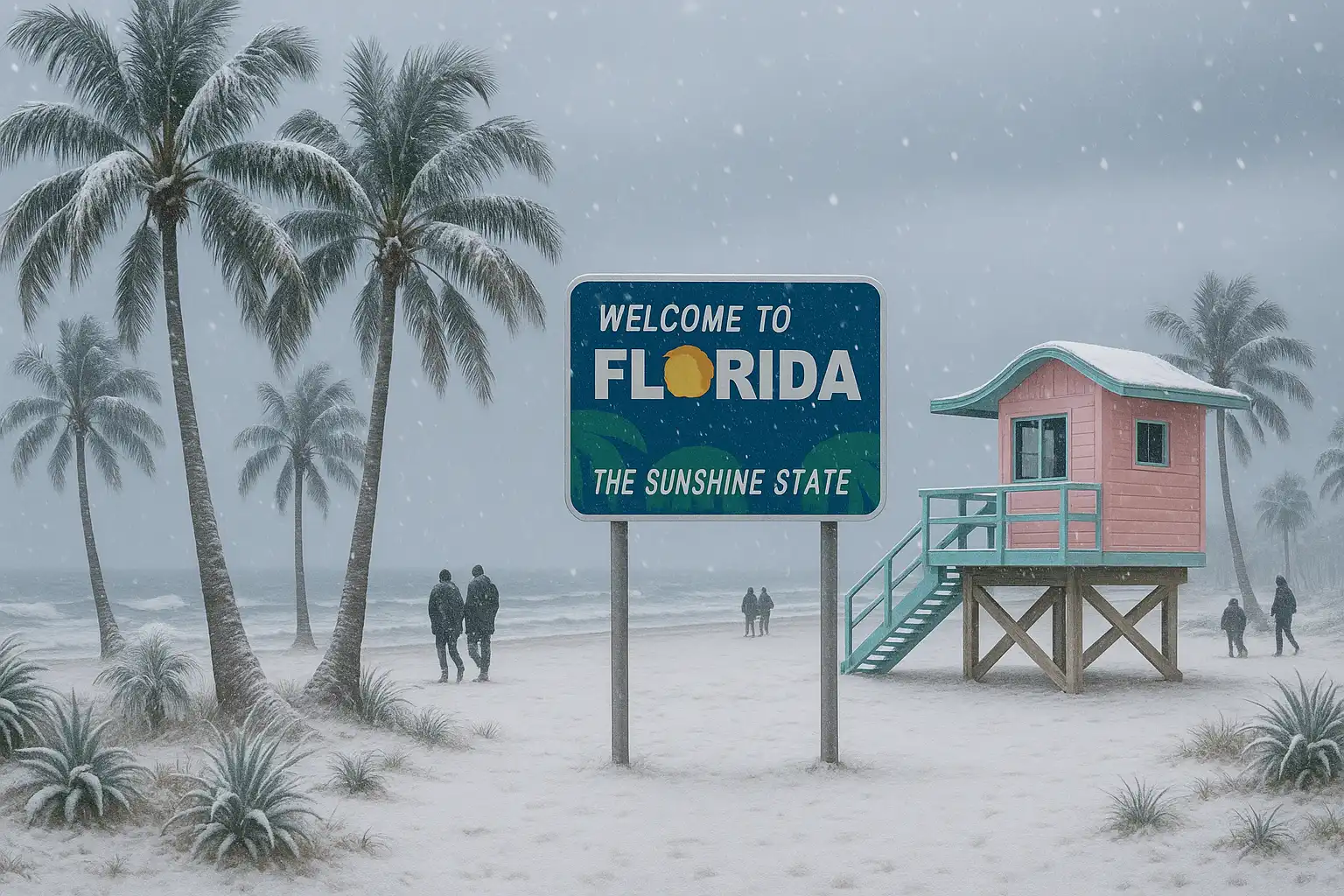

Most people associate Florida winters with palm trees, mild breezes, and the eternal optimism of sun-kissed beaches—not snowflakes. Yet, in January 2026, the unlikely could become reality, as Arctic air surges southward and meteorologists warn of a rare chance for snow in the Sunshine State’s Panhandle. Let’s break down what’s happening, how a weather pattern this extreme can develop, and what it means for Floridians and the broader U.S.
Shattering the Mold: Florida’s Brush with Winter Weather
Meteorologists are sounding the alarm about a remarkable drop in temperatures, propelled by a series of powerful Arctic cold fronts. This system has already sparked freeze watches across much of Florida, with model forecasts showing a nonzero chance for snow as far south as Pensacola and west of Tallahassee over the upcoming weekend [1].

David Berardelli, meteorologist, summed up the odds: “It’s definitely cold enough for flakes to fly, but ground temps should be above freezing, so very limited to no accumulation is likely in Florida. GA, AL and the Carolinas are a different story.” As of midweek, model ensembles put snow chances near Tallahassee at about 42%—extraordinary for this region [1].
The Return of the Polar Vortex
This cold snap is part of a larger meteorological event: the return of the polar vortex. After a brief reprieve when January warmth dominated headlines, the vortex is now funneling lobes of Arctic air deep into the Midwest and East, making below-average temperatures the new norm for Americans in the second half of the month [2]. The dramatic shift underscores the roller coaster that can define midwinter weather while providing textbook examples of how the polar jet stream wobbles under the influence of high-latitude atmospheric pressure shifts.
Record-Breaking Extremes Becoming the Norm
Such wild swings are no longer anomalies; in fact, 2025 tied with 2023 as the second-hottest year ever recorded globally, with 2024 taking the top spot. Climate change has made these patterns more severe and unpredictable. Rainfall might be average one week, but severe storms, flooding, or wildfires quickly follow—often in the same region [3], [4]. The insurance industry recorded a staggering $98 billion in losses tied to secondary weather perils—like thunderstorms, wildfires, and floods—in 2025, reflecting how expensive and disruptive these new weather extremes have become.
How Uncommon Is Florida Snow?
Snow in Florida is exceedingly rare. Most snowfall events in the Panhandle are light, with fleeting flurries rarely sticking to the ground. Surface temperatures—even amidst Arctic blasts—typically hover just above freezing. For comparison, only a handful of measurable snow events have affected the state since recordkeeping began, usually in conjunction with broader Gulf Coast snowstorms.
Community Preparation and Safety Tips
- Monitor local weather forecasts and heed freeze warnings—even mild freezes can damage crops and burst pipes in a region unaccustomed to cold.
- Protect pets and bring sensitive plants indoors if possible.
- Prepare for hazardous road conditions if snow or freezing rain develops—black ice is especially dangerous for drivers with limited experience.
The Bigger Picture
This cold spell, and the prospect of snow in Florida, may feel like novelty news. Yet, it fits a trend scientists are documenting globally: human-caused warming adds fuel to both ends of the weather spectrum, increasing both heat extremes and, paradoxically, making dramatic cold outbreaks more impactful when they occur [4].
This weekend, as Florida residents peer out their windows in search of snowflakes, they join a growing list of communities grappling with the consequences of an increasingly volatile climate.
References
- Florida Map Shows Cities That Could See Snow Amid Plunging Temperatures – Newsweek
- The polar vortex returns. Here’s how cold it’ll get where you are. – The Washington Post
- Insured losses from wildfire, storms and floods hit record high globally – Los Angeles Times
- Scientists Confirm 2025 Was Third-Hottest Year, Trailing 2024 and 2023 – Insurance Journal

Leave a Reply
You must be logged in to post a comment.