
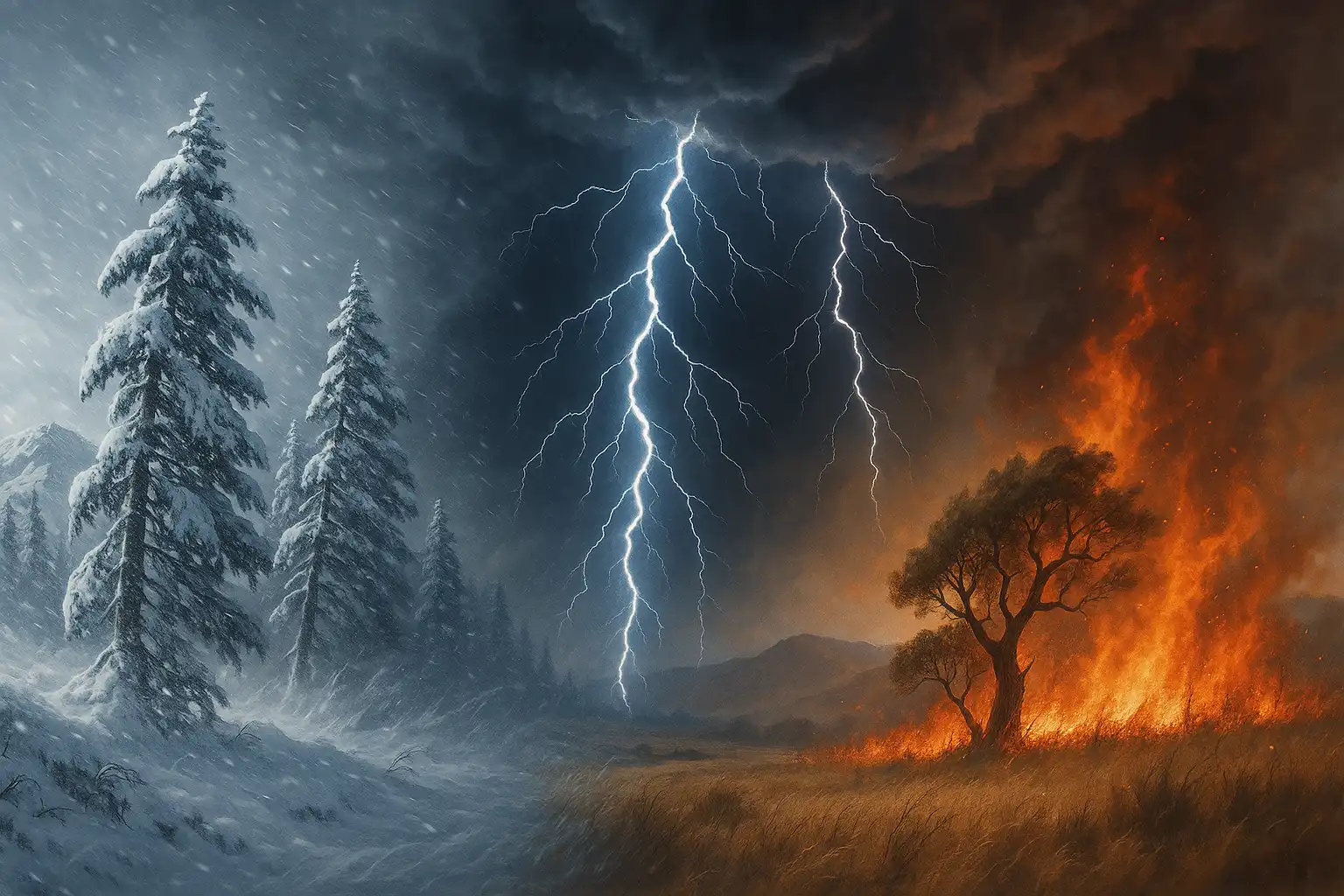
As we settle into January 2026, the United States finds itself once again in the crosshairs of extreme weather events: heavy winter storms in the Pacific Northwest, dangerous fire conditions in the West, and a historic spike in lightning activity nationwide. As a meteorologist, I find these concurrent events a stark reminder of how dynamically—and sometimes, destructively—our atmosphere operates, and how communities must brace for compounding risks. Let’s delve into the science and the impact behind these current extremes.
Northwest Buried by Massive Winter Storms
Winter storm warnings are stretching across the Pacific Northwest. Oregon, Washington, Idaho, and Alaska are bracing for potentially paralyzing conditions, with the southern Oregon Cascades and Siskiyou Mountains expecting between 8 and 24 inches of snow, accompanied by wind gusts up to 45 mph. High-elevation areas like Crescent Lake, Diamond Lake, and Union Creek will be particularly hard-hit. The National Weather Service warns that travel could become “very difficult to impossible,” advising anyone on the roads to drive with extreme caution, remain vigilant for sudden visibility drops, and carry emergency supplies like flashlights, food, and water [1].
For local communities used to winter weather, the ferocity and persistence of these storms pose new challenges. Road closures are possible, and with heavy snow accumulating on roofs and power lines, downed power lines or local outages could further strain resources. Residents are reminded to check on vulnerable neighbors, particularly the elderly or those with mobility issues, as harsh winter storms can quickly turn deadly for those without adequate shelter or supplies.
Lightning Strikes Surge to Record Highs
Even as snow buries parts of the Northwest, Americans elsewhere are facing a different expression of atmospheric energy: a record surge in lightning. In 2025, the United States recorded its highest number of lightning events in eight years. Notably, Texas experienced an astounding 47 million lightning strikes, while intense spring storms across the Southeast set new daily records. On April 5, for example, 157 severe thunderstorms—including 21 tornadoes—sparked over three million separate lightning events in a single day [2].
Lightning is more than just a spectacle; it’s a significant hazard for outdoor workers, athletes, and anyone caught unprotected during storms. The increasing frequency and intensity of thunderstorm events reflect a highly energized atmosphere—a trend possibly exacerbated by warming surface temperatures and increased atmospheric moisture.
Fire Danger Returns to the Western Foothills
Meanwhile, in Colorado and other parts of the American West, dry, windy conditions are again stoking fears of wildfire outbreaks. This week, Red Flag Warnings are in effect across Colorado’s foothills. Wind gusts have reached hurricane force in places like Boulder County, with some locations recording gusts exceeding 50 mph. When paired with extremely low humidity, these winds can turn a spark into a fast-moving wildfire [4].
These persistent, dangerous fire conditions are sadly familiar to those in the West. Communities in the Los Angeles area, for example, are still dealing with the aftermath of last January’s catastrophic wildfires, which killed 31 people and caused an estimated $40 billion in insured losses—the costliest wildfires in world history [3]. Despite recovery efforts, the social and psychological toll lingers. Homeowners are reassessing their risks. Insurance markets are hardened. Mental health providers report ongoing anxiety among those who lost homes or narrowly escaped flames [5].
The Bigger Picture: Preparing for a New Normal
There’s a clear takeaway from this week’s extremes: As a nation, we are confronting increasingly complex and compounding weather hazards. The collision of heavy winter storms, historic lightning, and ongoing wildfire threat makes emergency preparedness more important than ever.
Safety Tips for Severe Weather Season:
- Heed all National Weather Service alerts and warnings—whether for winter storms, lightning, or fire danger.
- For winter storms: Avoid unnecessary travel, check emergency supplies, and ensure heating sources are safe.
- For lightning: Get indoors at the first sign of thunder. Remember: “When thunder roars, go indoors.”
- For wildfire risk: Prepare go-bags with essential documents and medications, and make defensible space around homes in fire-prone regions.
The science is telling us something: Our weather is becoming more extreme and less predictable. Preparedness, resilience, and community care will be more essential than ever as we weather the storms ahead.
References
- Winter Storm Warning—24 Inches of Snow to Hit – Newsweek
- US lightning strikes reach new eight-year high in 2025 – New York Post
- Millions at Risk of Los Angeles-Style Wildfires in Australia – Insurance Journal
- High fire danger across Colorado’s foothills on Tuesday – CBS News
- One year later, LA still grappling with wildfire fallout – PropertyCasualty360

Leave a Reply to Fact-Check (via Claude claude-sonnet-4-5-20250929) Cancel reply