
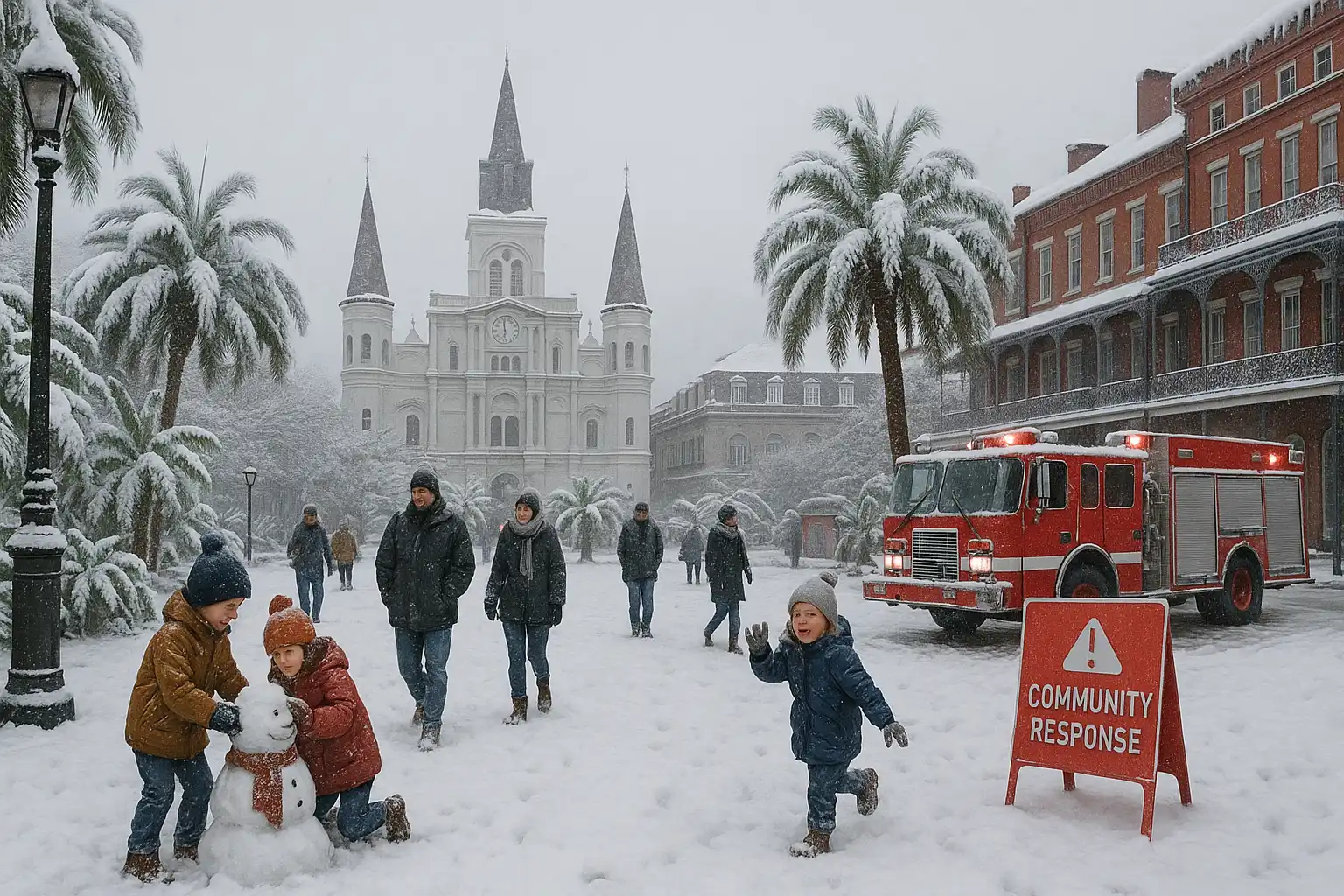
When most people picture January weather across the South—from Houston to Florida—images of sunshine and warmth likely come to mind. Yet the winters of 2025 and 2026 have upended expectations, delivering record-breaking freezes and snow events all the way to the Gulf Coast and deep South. Even more remarkable, these events have coincided with a year of historic weather disasters in the U.S.—all without a major hurricane making landfall.[1]
Double Dose of Southern Snow: An Anomalous Pattern
According to the National Weather Service, much of the Midwest and East Coast was hit by a blast of winter weather in January 2026. Sub-zero wind chills reached from the Plains through New England, with some of the coldest wind chills centered in the Upper Midwest.[2] Snowfall blanketed New England, while further south, regions completely unaccustomed to snow—such as central and northern Florida—found themselves bracing for rare flurries. Even Tallahassee, Florida, faced the possibility of accumulating snowfall, though warm ground temperatures made lasting accumulation unlikely.[2]
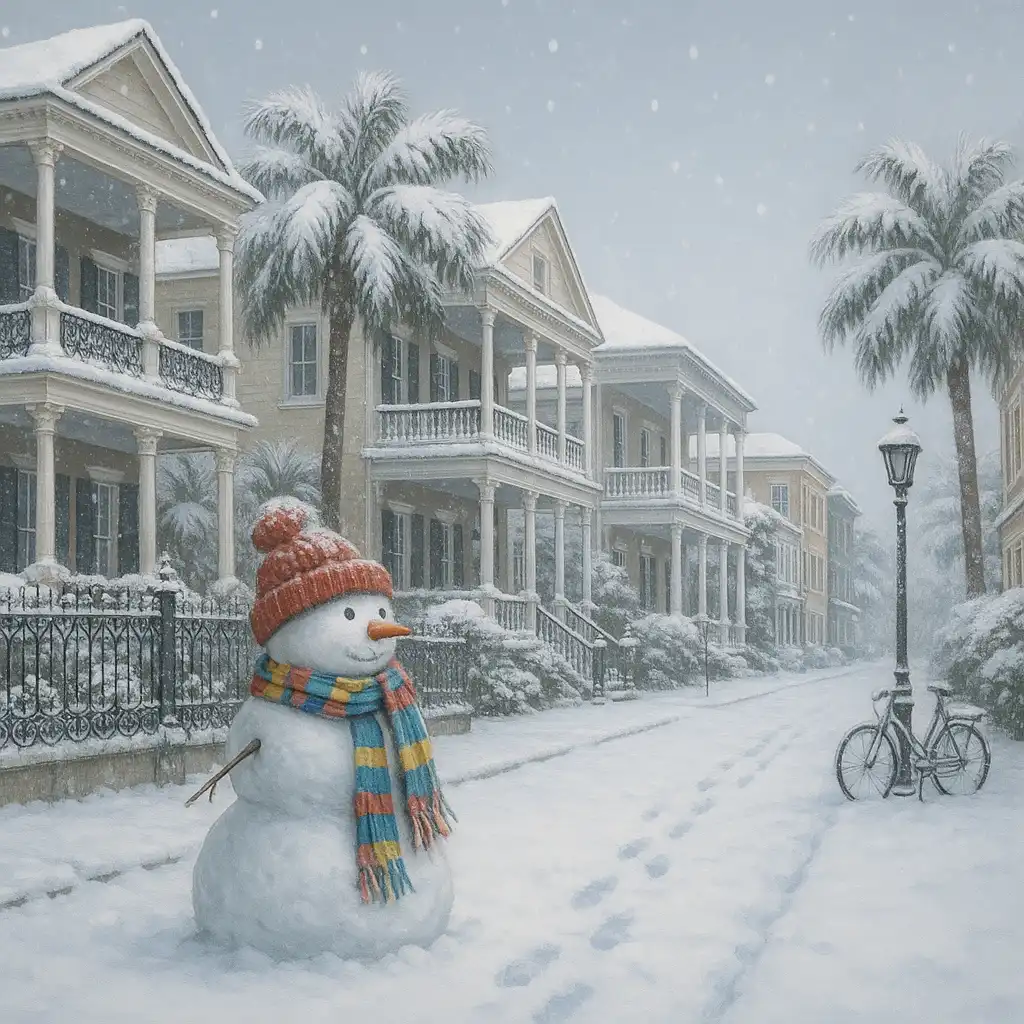
What makes this even more exceptional is that just a year prior, in January 2025, up to 10 inches of snow fell in parts of the Florida Panhandle—a record-breaking snowstorm that impacted not just Florida, but cities such as Houston and New Orleans as well. According to Kristian Oliver, a meteorologist with the National Weather Service, having two such southern snow events in as many years is highly unusual: “On average we have an event like this maybe every few years. But having two, back to back, I’d say is pretty anomalous for the area.”[2]
The Human Impact and Community Response
When snow falls where it rarely does, even small accumulations can paralyze communities. These cities often lack snow-removal equipment, and drivers are unaccustomed to traveling on slick roads. In 2025 and 2026, the snow caused temporary road closures, led to school and business shutdowns, and introduced unexpected hazards for residents. Vulnerable populations, such as those without adequate heating, faced increased health risks during the subfreezing overnight lows.
Emergency response teams and local officials scrambled to warn the public about the dangers—especially hazardous driving conditions and the risk of hypothermia—and set up warming centers as cold stretched unusually far south. The psychological effect, too, was palpable: many residents in Houston, New Orleans, and Florida recalled the storms as surreal, sharing photos of palm trees dusted in white and children experiencing snow for the first time.
Billion-Dollar Weather Disasters Without a Hurricane
Astonishingly, these southern winter storms contributed to a tally of 23 separate billion-dollar weather disasters in the U.S. in 2025 alone—all occurring without a landfalling hurricane, which traditionally drives the nation’s costliest weather-related losses. According to meteorologist Justin Ballard, this was a sign of changing risk: rising population, expanding development into flood- or fire-prone landscapes, and climate variability now mean that disasters can be widespread and exceedingly costly, regardless of tropical cyclone landfalls. The infrastructure in many communities—especially those in the Sun Belt—is simply not designed for snow or extreme cold, which amplifies the cost and disruption when anomalies hit.[1]
How Do These Southern Snowstorms Happen?
Extreme cold outbreaks like those in 2025 and 2026 are typically linked to powerful dips in the jet stream (sometimes known as an “Arctic outbreak”), which allows frigid air from Canada to spill deep into the southern U.S. When this cold air interacts with available Gulf moisture, it creates the perfect setup for rare southern snow.
While such patterns have always been part of the range of North American climate, there’s evidence that climate change is increasing the severity and variability of extreme weather events. The expansion of the polar jet and changes in atmospheric circulation may be making such southern cold snaps more likely to coincide with significant snowfall in places it rarely occurs.
Safety Tips for Rare Southern Winter Events
If you’re caught in a rare snowstorm in the South:
- Avoid travel unless necessary, as road crews may not be prepared for icy conditions.
- Dress in layers and use hats, gloves, and scarves, even if you rarely need them.
- Check on neighbors and vulnerable populations.
- Bring pets indoors and protect pipes from freezing.
Looking Ahead
Back-to-back southern snow events may have felt like a novelty, but they also serve as a wake-up call. The U.S. is experiencing more frequent and expensive weather disasters, often where communities are least prepared. As the climate grows more variable, understanding—and preparing for—the unexpected becomes everyone’s business, not just a meteorologist’s.
References

Leave a Reply to Fact-Check (via Claude claude-sonnet-4-5-20250929) Cancel reply