
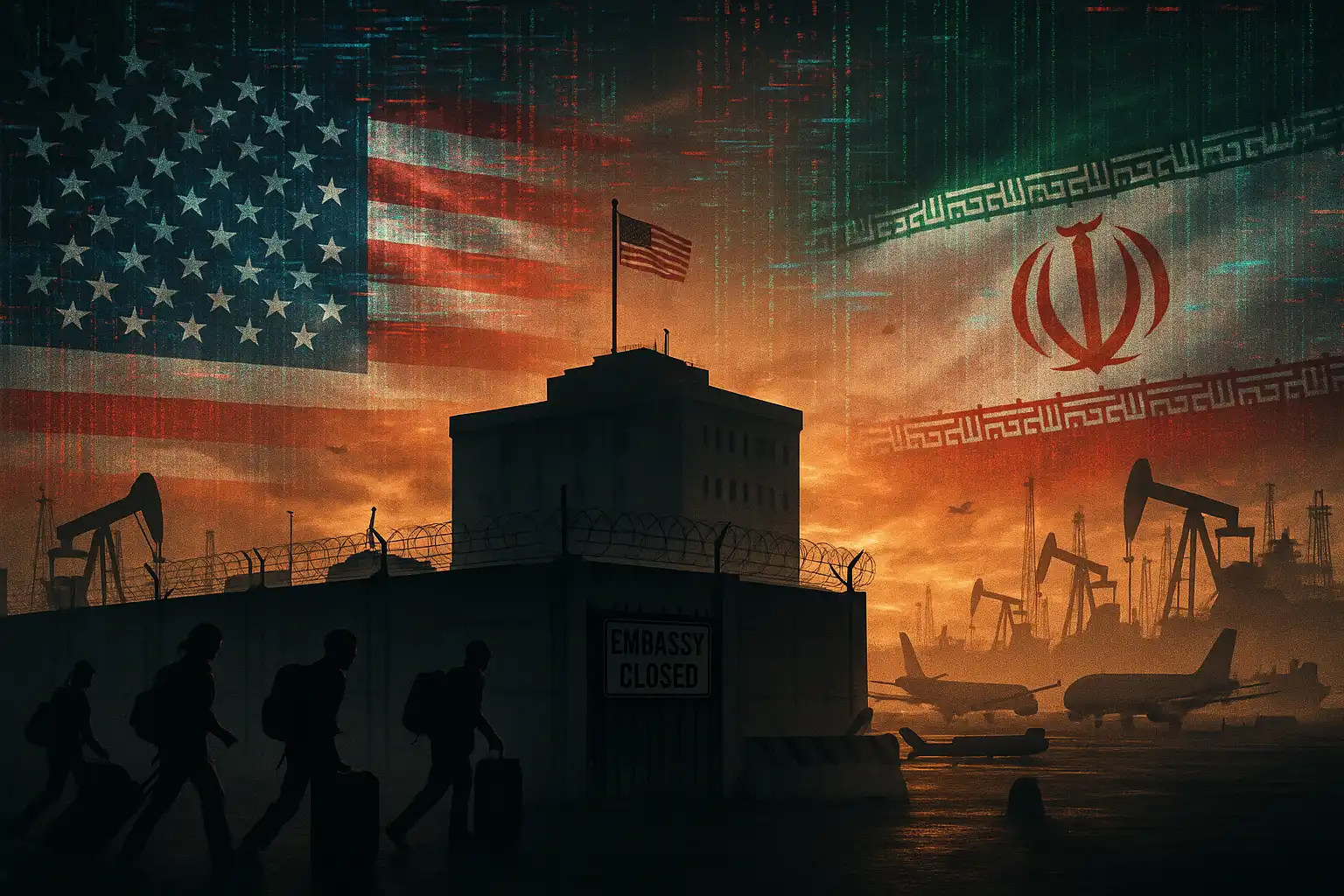
The U.S.–Iran confrontation entered a more perilous phase this week as Iranian strikes and cyberattacks targeted American embassies and consulates across multiple countries, prompting closures and security warnings while thousands of U.S. citizens scrambled to find a way out of the region. The U.S. Embassy in Saudi Arabia closed amid the escalating reprisals, and the Pentagon urged Americans across the broader Middle East to depart if they can [1].
On the ground and online
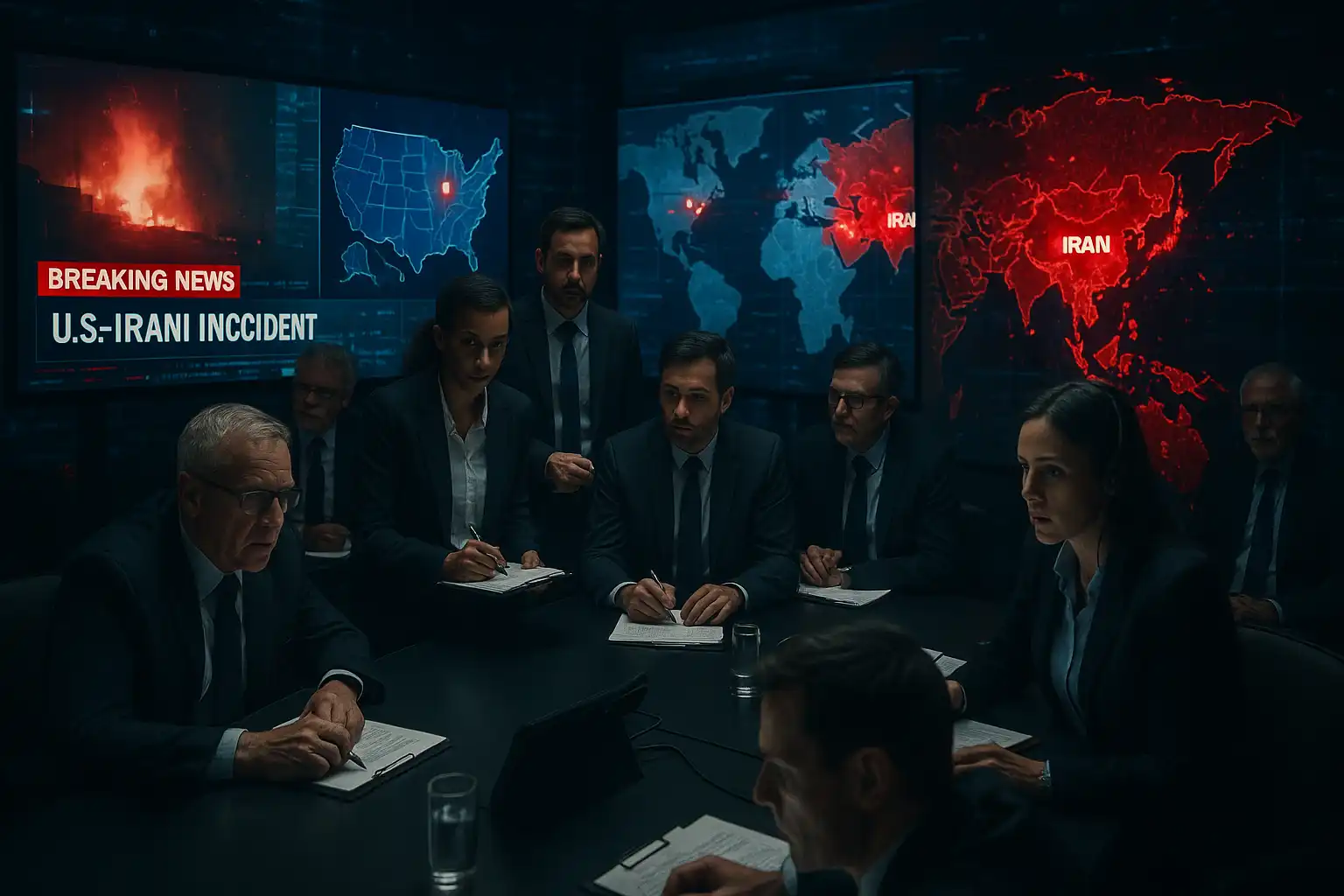
- U.S. embassies and consulates have come under attack as Iran widens the battlespace to American outposts and those of U.S. allies; officials say Americans in the region number in the thousands and many are now effectively trapped by grounded flights, shuttered crossings, and fast‑shifting security conditions [1]. A Nightline report captured the scramble of stranded travelers trying to piece together routes home as options narrow by the day [4].
- The Pentagon publicly identified four U.S. service members killed in Kuwait amid the crisis, underscoring the human cost of a conflict that is spilling across borders [1].
Washington’s message and the risks
- Former President Donald Trump defended the Iran strikes, saying “somebody had to do it,” a line that encapsulates the administration’s framing of the operation as necessary deterrence even as critics warn of blowback [1].
- A former U.S. energy secretary warned that a rapid collapse of Iran’s regime could pose distinct nuclear risks, a reminder that Tehran’s atomic program and security architecture complicate any endgame scenarios [1].
- Retired Gen. David Petraeus put it bluntly: “It’s all about hard power right now,” arguing that U.S. strategy must account for Iranian proxies, escalation management, and clear political objectives if Washington wants to avoid mission creep and a prolonged slog [3].
Americans abroad: ‘Any route that works’
- With commercial links disrupted and consular services curtailed, Americans are resorting to piecemeal options—where available—while awaiting guidance on safe corridors. Nightline’s reporting shows families triangulating between limited flights, regional detours, and waitlists as they weigh security risks against dwindling options [4]. The Pentagon’s advisory to leave if possible remains in effect [1].
Markets angle: Oil, tariffs and a policy backstop
- Treasury Secretary Scott Bessent signaled the administration will roll out “a series of announcements” to support oil trade in the Gulf—an implicit backstop aimed at keeping flows moving and tempering price spikes while naval and insurance risks remain elevated [2].
- Bessent also reaffirmed that the global 15% tariff framework starts this week, with a planned rollback to prior rates within five months—timelines investors will parse for inflation and growth impacts as supply chains adjust [2].
- The Wall Street Journal’s Greg Ip noted that removing threats from Venezuela and Iran would be a “game changer” for global oil markets—underscoring how much of today’s macro risk premium is geopolitical, not purely cyclical [2].
What I’m watching next
- Consular posture: Whether additional U.S. missions shutter or restrict services, and if Washington announces assisted departures or maritime/air corridors for citizens in high‑risk zones [1], [4].
- Escalation ladders: Signals from Tehran and proxy networks that could point to either a pause or a broader regional campaign; Petraeus’s “hard power” framing hints that credible deterrence and clear objectives will be pivotal to de‑escalation [3].
- Energy policy levers: The scope of Bessent’s oil‑trade support measures, market reaction in crude and shipping insurance, and how the temporary tariff regime intersects with supply‑side shocks [2].
And finally, in sports
- In New Orleans, the Saints hired former lineman Will Clapp as an offensive assistant under Kellen Moore—a familiar face returning to the building as the team pivots from combine evaluations to free agency and draft boards [5].
The bottom line: U.S. officials are racing to contain a multi‑front crisis—protecting personnel and citizens abroad while shoring up energy markets at home. The next 72 hours will tell us if quiet back‑channels and visible hard power can put guardrails on an escalatory spiral—or if the region is sliding toward a wider war.
References
- Video: Pentagon gives updates on operations in Iran — ABC News
- Market Open: March 4, 2026 — CNBC
- ‘It’s all about hard power right now’: Ret. Gen. David Petraeus on Trump’s Iran war — CNN
- Nightline Full Broadcast — Tuesday, March 3, 2026 — Modern Ghana
- Morning Break: Will Clapp hired as Saints Offensive Assistant — New Orleans Saints

Leave a Reply to Fact-Check (via Claude claude-sonnet-4-5-20250929) Cancel reply