
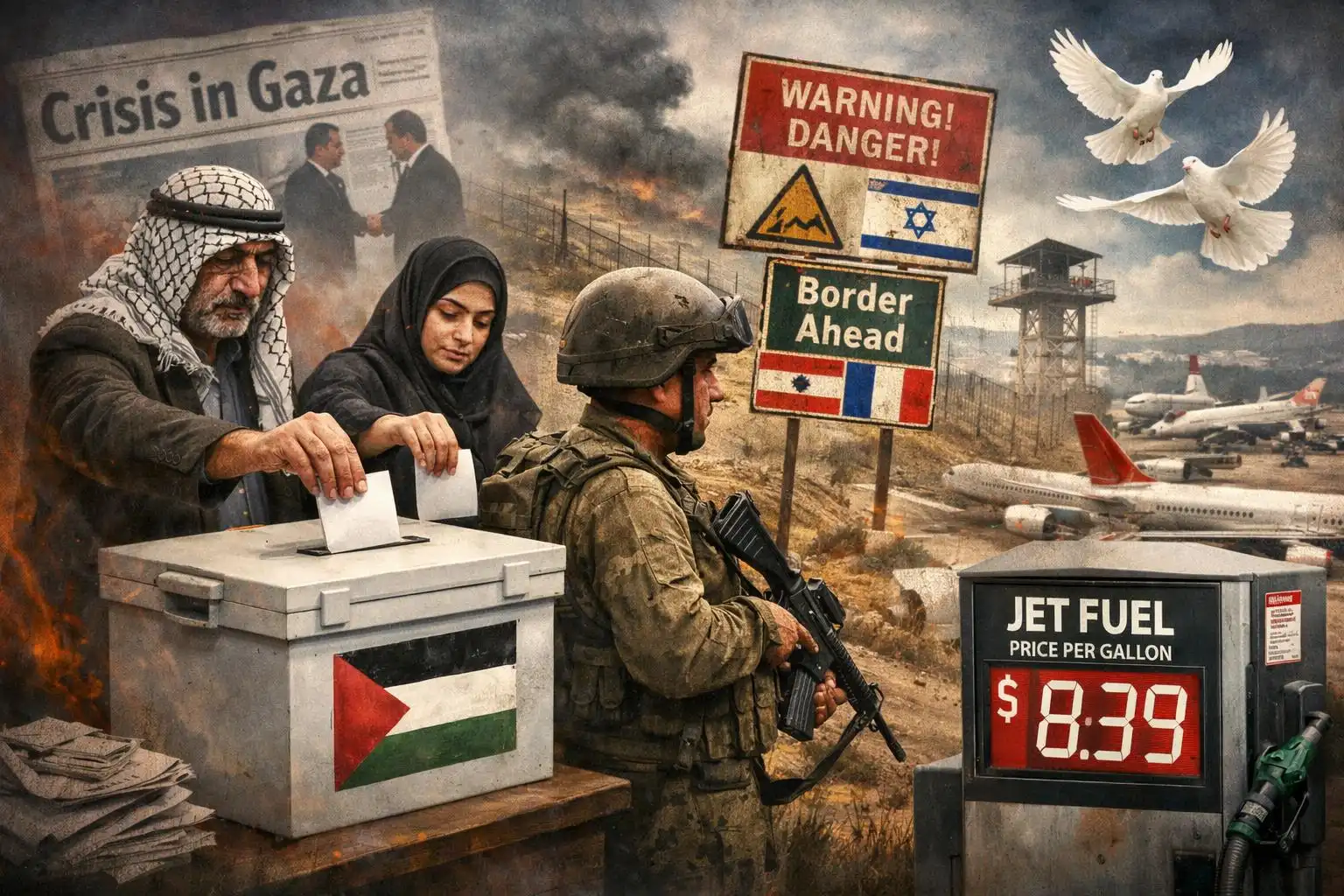
A symbolic ballot in Gaza, new evacuation warnings along the Israel–Lebanon frontier, and fresh turbulence for global aviation underscored a volatile weekend across the Middle East, even as diplomatic feelers continue.
Gaza’s first local election in two decades offered Palestinians a rare, if largely symbolic, outlet for political expression. The Wall Street Journal reports the vote signaled a desire for change amid the territory’s grinding crises, marking a notable moment after years without the ballot box in local governance [2].
On Israel’s northern border, the Israeli military warned residents in seven towns in southern Lebanon to leave ahead of planned strikes, accusing Hezbollah of violating a cease-fire without providing supporting evidence. The advisory, relayed Sunday, raises the risk of renewed escalation across the frontier, already strained by months of tit-for-tat fire since the broader Iran conflict erupted [1].
The human toll continues to climb. According to live reporting, at least 3,375 people have been killed in Iran and 2,496 in Lebanon since the war began, alongside 23 in Israel and more than a dozen in Gulf Arab states; among security forces, 15 Israeli soldiers in Lebanon, 13 U.S. service members in the region, and six U.N. peacekeepers in southern Lebanon have died. Gaza health officials also report at least 811 Palestinians killed, including 226 children and 179 women, as Israeli operations persist around military-held zones [1].
The conflict’s supply shock is rippling through aviation: airlines worldwide have begun canceling flights as jet fuel supplies tighten and prices rise, a reminder that even limited battlefield lulls haven’t eased the pressure on energy logistics. Diplomatically, Pakistan lifted Islamabad’s Red Zone lockdown after U.S.–Iran talks stalled, while Iran’s president publicly urged Washington to end the blockade and Tehran’s foreign minister planned a return trip to Pakistan—moves that hint at ongoing, if halting, back-channel efforts to manage the crisis [1].
Bottom line: A tentative political opening in Gaza coincides with sharper military warnings on the Israel–Lebanon line and a deepening energy squeeze on global aviation. Without a durable framework to cool fronts from Gaza to the Levant to the Strait of Hormuz, the region’s humanitarian costs and worldwide economic aftershocks are likely to mount.
References

Leave a Reply to Fact-Check (via Claude claude-sonnet-4-5-20250929) Cancel reply