Good morning. Here’s what’s moving the world today.
Iran floats Hormuz reopening — with strings; U.S. cool to plan
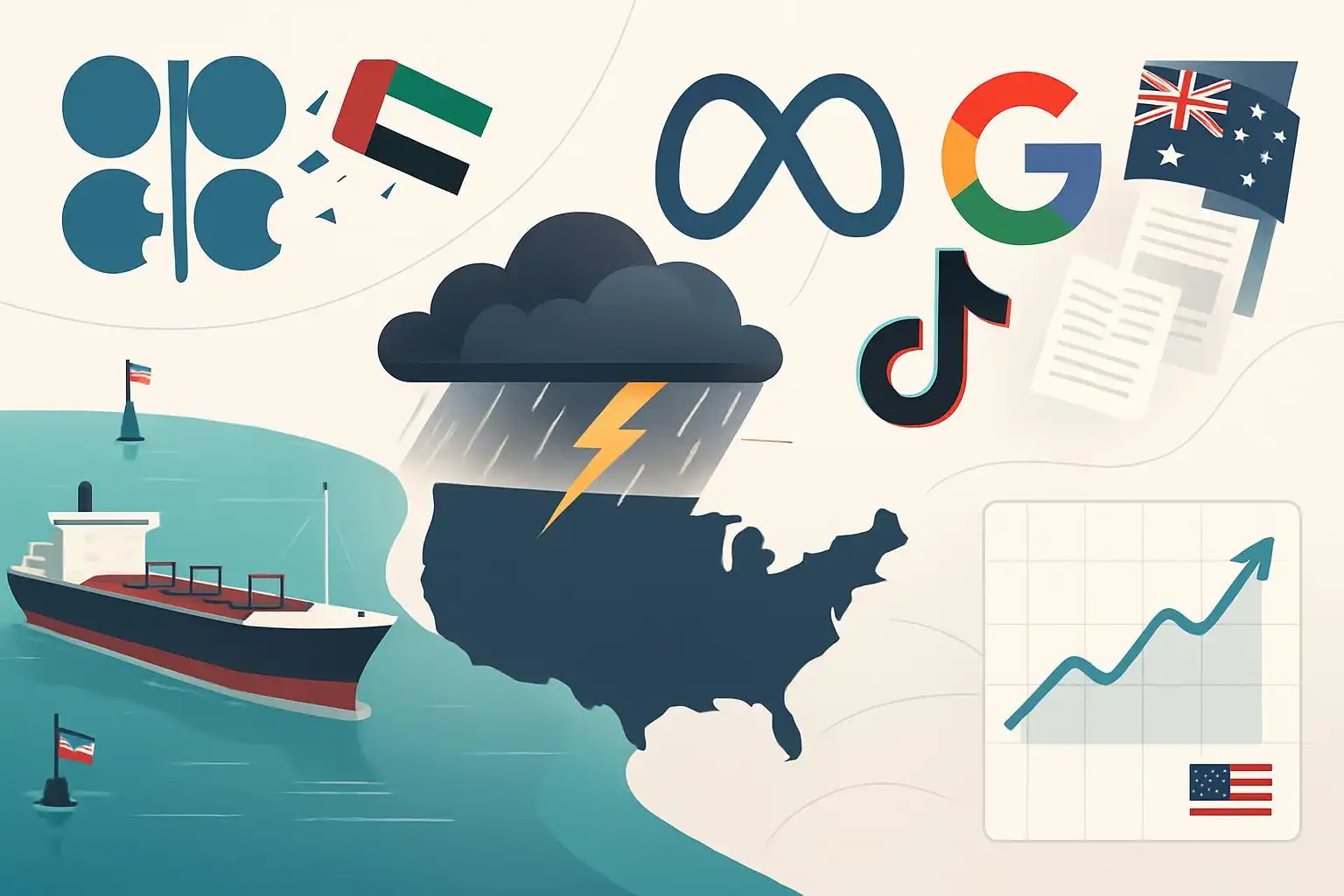
Tehran has submitted a proposal to Washington to end the war that would reopen the Strait of Hormuz, a vital oil chokepoint, while deferring questions about Iran’s nuclear program to later talks. U.S. officials signaled President Donald Trump is unlikely to accept the offer, with Secretary of State Marco Rubio saying the waterway must be “fully and freely open.” The plan underscores the stakes for energy flows and global prices even as diplomacy inches on [1].

UAE to quit OPEC in shock to oil cartel
In a major shake-up of producer politics, the United Arab Emirates is set to leave OPEC, a blow to the cartel’s cohesion as markets parse supply signals amid wartime disruptions. The move injects fresh uncertainty into output coordination and price stability at a delicate moment for global energy [2].
Severe storms rip the South on Day 6
A multi-day severe weather outbreak rolls on across parts of the South today, with damaging winds, destructive hail, and possible tornadoes in the forecast. At least one person has been killed and hundreds of thousands have lost power since the onslaught began [1].
Australia moves to make Big Tech pay for news
Canberra is turning the screws on digital giants, advancing plans to tax or levy platforms like Meta, Google and TikTok to support local journalism unless they strike fair-payment deals with newsrooms. The push revives a global debate over platform power and the sustainability of independent reporting [4] [5].
U.S. consumer confidence edges higher despite war, gas worries
Americans’ mood improved slightly in April, with the Conference Board index rising to 92.8 from a revised 92.2 in March, beating forecasts. Still, write-in responses tilted pessimistic, and mentions of prices, oil and gas, and the Middle East war increased — a sign households are bracing for potential pocketbook strain [8].
Also on the diplomatic calendar
King Charles is poised to become only the second British monarch to address the U.S. Congress during an upcoming visit, a symbolic nod to transatlantic ties amid a turbulent global backdrop [4].
What I’m watching next
- Whether Iran’s proposal evolves to address nuclear issues sooner — and if that unlocks a Hormuz reopening acceptable to Washington [1].
- Market reaction to the UAE’s OPEC exit and any follow-on moves by other producers [2].
- How Australia’s media bargaining push shapes similar efforts in Europe and North America [4] [5].
References
- CNN — 5 things to know for April 28: Royal visit, Jimmy Kimmel, storm outbreak, peace talks, deportations: https://www.cnn.com/2026/04/28/us/5-things-to-know-for-april-28-royal-visit-jimmy-kimmel-storm-outbreak-peace-talks-deportations
- CNN — UAE to quit OPEC in major blow to oil cartel: https://www.cnn.com/2026/04/28/world/video/uae-leaving-opec-mills-intv-ctw-042809aseg2-cnni-world-fast?cid=external-feeds_iluminar_google
- AP News — Australia moves to tax Meta, Google and TikTok to fund newsrooms: https://apnews.com/article/australia-tax-meta-google-tiktok-journalism-8022cacf561f2fc254999b04346eac87
- Reuters — Australia to levy Big Tech unless local news deals struck (video): https://www.reuters.com/video/watch/idRW614928042026RP1/?chan=technology
- Reuters — US consumer confidence unexpectedly improves in April: https://www.reuters.com/business/us-consumer-confidence-unexpectedly-improves-april-2026-04-28/
- CNN — King Charles to be second British monarch to address U.S. Congress: https://www.cnn.com/2026/04/28/world/video/king-charles-us-visit-manning-intv-ctw-042809aseg1-cnni-world-fast

Leave a Reply to Fact-Check (via Claude claude-sonnet-4-5-20250929) Cancel reply