
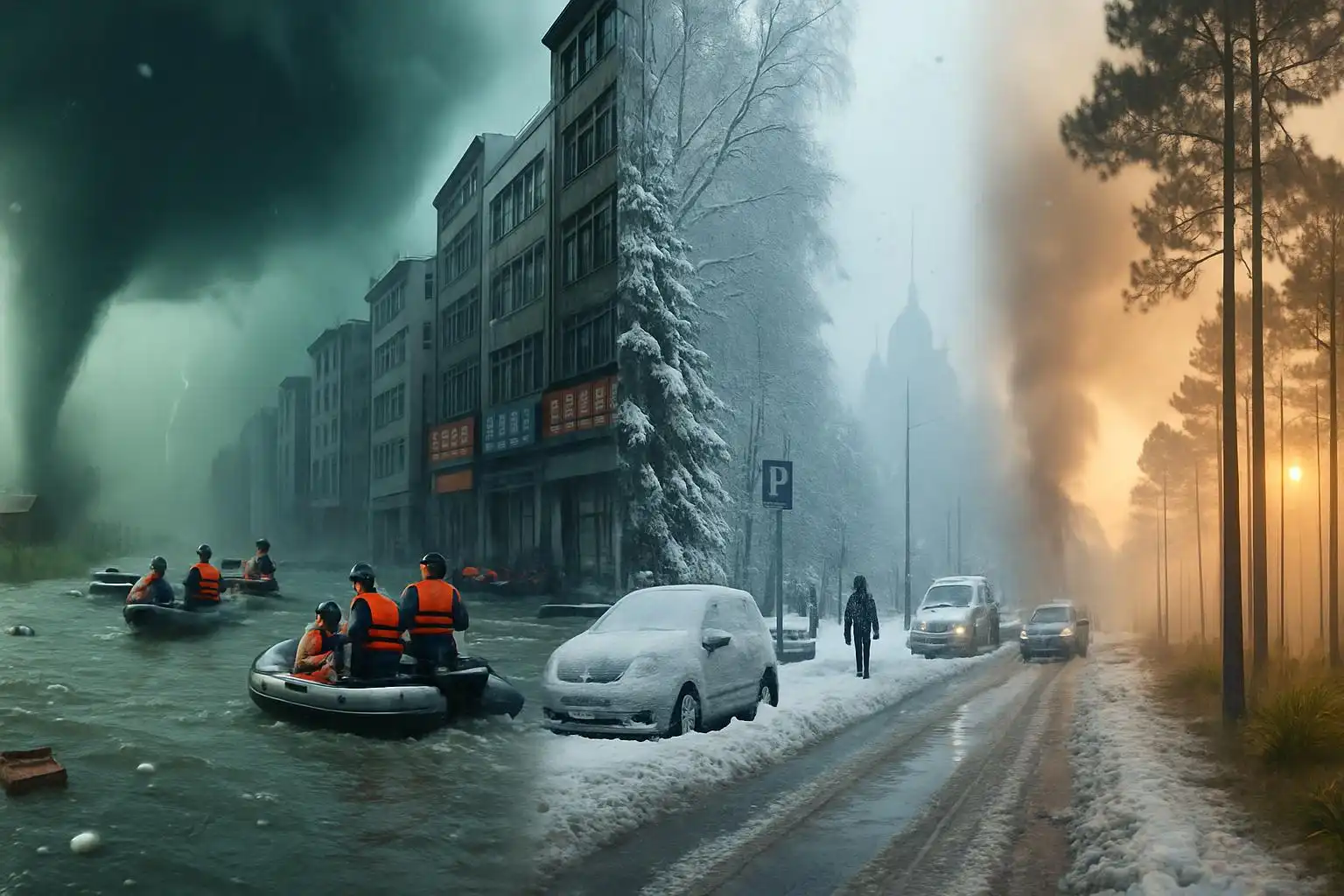
Late April and early May 2026 have delivered a striking demonstration of nature’s power, with severe weather slamming North America, Asia, and even the heart of Europe. From deadly tornadoes in Texas and historic hail in Missouri, to catastrophic flooding in southern China and record spring snowfall in Moscow, these events highlight both the intensity and variety of extreme weather we now regularly face.
Severe Storms Roar Across Central U.S.

In the United States, a barrage of storms swept across the Midwest and South, putting nearly 50 million people at risk as a potent clash of air masses triggered tornadoes, giant hail, and damaging winds. Texas was struck especially hard: On Saturday night, a deadly tornado ripped through northern Texas, killing at least two people and injuring several others. County officials described downed trees, widespread damage, and blocked roads hampering emergency rescue efforts[4].
Elsewhere, an EF2 tornado smashed into the town of Sycamore, Kansas, while a massive hailstorm in Springfield, Missouri, produced hailstones up to 12 cm (5 inches) in diameter—apples of ice that shattered windshields and caused citywide damage. Tragically, wildlife was also affected: Adam the Emu at Dickerson Park Zoo was killed by the storm. Early estimates suggest it may be the costliest hailstorm in the city’s history[1].
The wider region has endured more than 30 tornadoes in a single week, along with hundreds of severe hail reports[2]. In Oklahoma, a tornado injured at least 10 people, demolished dozens of homes, and sent debris flying through the air. And the threat isn’t over: With a warm, unstable air mass and a persistent boundary between dry and humid air (known as a dryline), forecasters warn that repeated outbreaks and flash floods remain possible[3].
Wildfire Threat Lingers in the Southeast
While storms battered the plains, fire crews fought more than 150 wildfires across Georgia and Florida. Drought, gusty winds, and the lingering effects of hurricane-downed trees combined to feed the flames, sending smoke and hazardous air farther afield[2].
Asia and Europe: Record-Breaking Floods and Surprising Snowfalls
The U.S. hasn’t been alone in suffering from extremes. In southern China, over half a meter of rain fell in just 12 hours in the city of Qinzhou, causing devastating urban flooding, evacuations, and dramatic water rescues as emergency crews waded through chest-deep torrents[1].
Meanwhile, Moscow was paralyzed by a rare late April snowstorm, dumping 21 centimeters (over 8 inches)—the deepest at this time of year since 1880. A stubborn high pressure over the North Atlantic redirected Arctic air southward, toppling hundreds of trees, grounding flights, and highlighting the disruptive potential of jet stream blockades[1].
Communities, Risks, and the Human Impact
Every severe weather event is a test of local resilience. In Texas, linemen worked feverishly to restore power, and rescue teams braved blocked streets to reach victims. Missouri residents are now tallying repair costs from historic hail damage. In China and Russia, evacuations and travel chaos upended daily life.
As a meteorologist, I’m always struck by the speed at which lives and landscapes are altered by extreme weather. While science has greatly improved our forecasting, events like these remind us of the need for continual vigilance, public preparedness, and robust emergency response.
Safety Tips for Severe Weather Season
- When storms and tornadoes threaten, have multiple ways to receive alerts (phone apps, weather radios, sirens).
- Know your local shelter options and have an emergency kit ready.
- For hail, move vehicles under cover if possible; stay away from windows during severe storms.
- In wildfire-prone regions, heed all burn bans, clear debris from around homes, and maintain an evacuation plan.
As climate trends boost both the frequency and intensity of these extremes, staying weather-aware and supporting community disaster planning is more vital than ever.
References
- Weather tracker: Tornadoes and giant hail in central US – The Guardian
- Texas tornado kills at least one person as wildfires still rage in parts of Georgia – The Guardian
- Tornadoes, hail and high winds forecast to hit midwest and Mississippi valley – The Guardian
- Fast-moving storms batter the Midwest, flooding streets and stranding commuters – AP News

Leave a Reply to Fact-Check (via Claude claude-sonnet-4-5-20250929) Cancel reply