
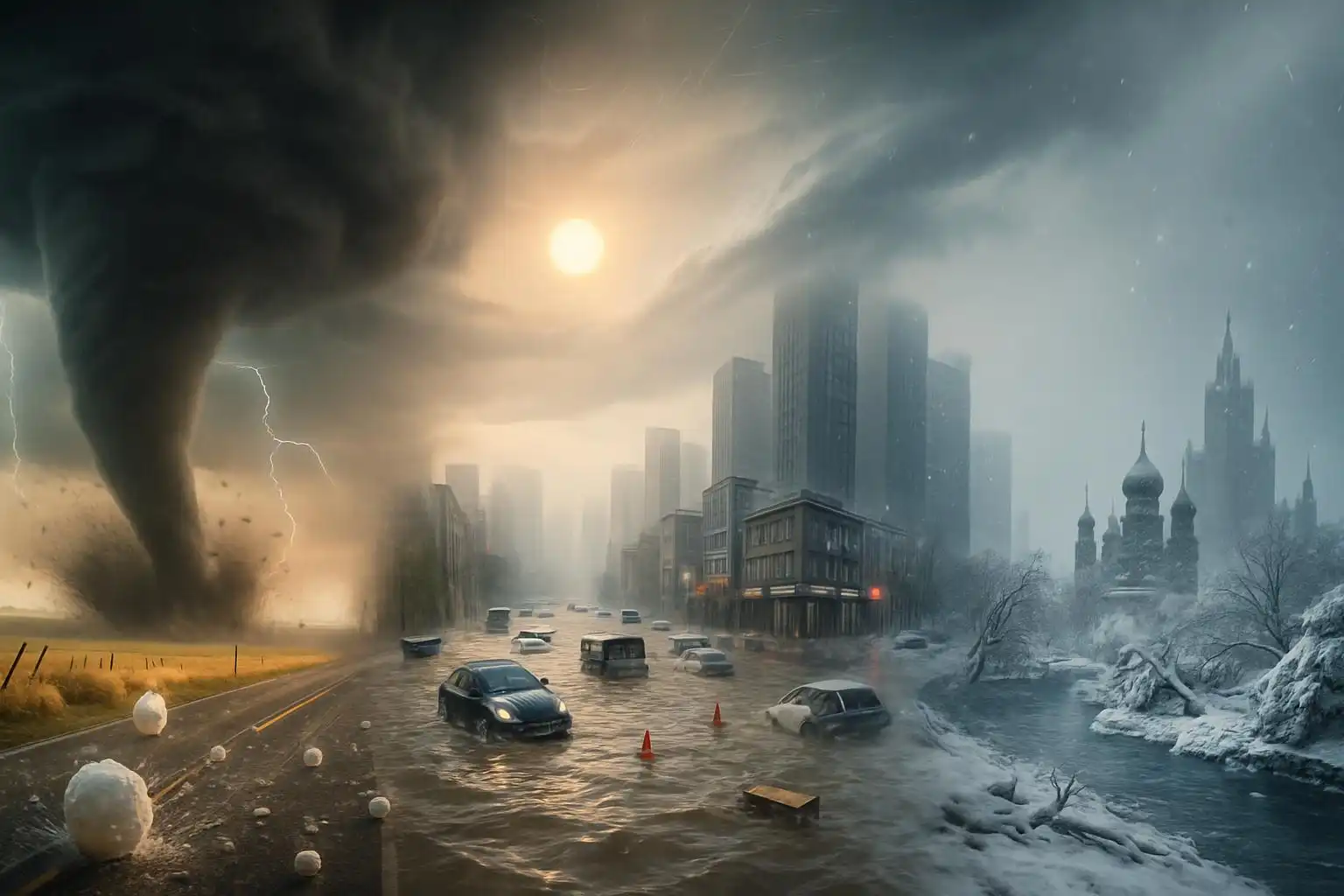

Spring 2026 has delivered a cascade of extreme weather events, spanning continents and shattering meteorological records. From monster hail and tornadoes across the U.S. to catastrophic flash floods in southern China, Europe’s record-shattering heat, and even a late-season Moscow snowstorm, this spring’s volatility offers both a scientific warning and a reminder of the profound ways climate now shapes our daily lives.
Midwest U.S.: Hail the Size of Baseballs, Ripping Tornadoes
The central United States faced a barrage of severe thunderstorms this week, with nearly 50 million people at risk across the Midwest and Mississippi Valley. Monday brought eight tornadoes, including an EF2 twister that tore through Sycamore, Kansas, leveling homes and causing widespread damage [1]. The atmosphere, primed by a surge of warm, moist air meeting a vigorous cold front and dryline, unleashed not just tornadoes but also a historic hailstorm over Springfield, Missouri. Hailstones up to 12 centimeters (about 5 inches) rained down, destroying vehicles, breaking windows, and tragically killing an emu at the local zoo. This has already been called the costliest hailstorm in the city’s history [1].

The cycle of violence continued through the week as the National Weather Service warned of more rounds of severe weather and heavy rainfall, especially as a cold front collided with a dryline in Texas. At least two people were killed by a tornado in northern Texas over the weekend, with additional injuries reported [2].
Climate-Driven Flood Catastrophes: From China to Russia
Half a world away, parts of southern China reeled from a deluge that dumped 538 millimeters (over 21 inches) of rain in just 12 hours in Qinzhou. For perspective, that’s more than one-third of the region’s total annual rainfall falling in half a day. Hundreds of vehicles were submerged, residents stranded, and emergency services waded through chest-deep water, rescuing hundreds and evacuating 800 residents. Meteorologists pointed out that such concentrated downpours are becoming more common as a warmer atmosphere holds and dumps more moisture, heightening flood risk [1].
Meanwhile, Moscow recorded its deepest April snowfall since 1880, with a powerful North Atlantic high-pressure system diverting cold Arctic air into western Russia. Wind gusts over 50 mph toppled hundreds of trees and paralyzed air traffic—a rare sight this late in the season and a vivid demonstration of intensified weather extremes [1].
The Human Toll: Resilience and Vulnerability in Texas
Extreme weather is not just about records—it’s about people. In Houston, one of the most disaster-prone U.S. cities, the compounding impacts of hurricanes, derechos, heatwaves, and historic floods have driven many residents—especially the most vulnerable—into a perpetual state of “survival mode.” The epic 2017 flood of Hurricane Harvey, worsened by climate change, was followed by repeated blackouts and further storm disasters. Harris County, including much of Houston, is more vulnerable to cascading disasters than nearly three-fourths of all U.S. counties. The most at risk are working-class and immigrant communities, who bear a disproportionate burden from property losses, heat illnesses, and slow recoveries [3].
Europe: The Red Warning Lights of Runaway Heat
Europe is likewise sounding the alarm after another record-hot year. Glaciers have melted at an unprecedented pace, with Iceland suffering the second-greatest mass loss ever recorded and the Greenland ice sheet pouring 139 gigatons of ice into the ocean in 2025 alone. Surface temperatures across European waters soared, and parts of Scandinavia saw three weeks of searing “tropical nights.” These rapid changes threaten not only the continent’s climate stability but also its food, water supplies, and biodiversity. As community leaders and scientists warn, fossil fuel pollution relentlessly accelerates these changes, pushing governments toward ever-more-urgent climate action [4].
Safety Tips and What Lies Ahead
For people across the U.S. Midwest and South, the ongoing threat of tornadoes, large hail, flash floods, and power outages remains real for days to come. If you live in a high-risk zone:
- Have weather alerts activated on your phone and a battery-powered NOAA radio.
- Identify your safest shelter—preferably a basement or interior room on the lowest floor—before storms hit.
- Stay away from vehicles and windows during hail storms, and never try to outrun a tornado in your car.
- Keep an emergency kit prepared for possible blackouts or evacuations.
As I’ve seen again and again, weather is both a force of nature and a mirror for our vulnerabilities—and resilience—in a rapidly shifting climate. This extraordinary spring reminds us of the interconnectedness of local weather, global climate, and human experience.
References
- Weather tracker: Tornadoes and giant hail in central US – The Guardian
- Tornadoes, hail and high winds forecast to hit midwest and Mississippi valley – The Guardian
- ‘Living in survival mode’: Houston’s embattled immigrant community faces health, climate and petrochemical crises – The Guardian
- Nordic heatwave part of record year that saw temperatures scorch most of Europe, report finds – The Guardian

Leave a Reply