

There is a phrase climate scientists are using more often now: the “extreme of extremes.” It is not meant to describe an ordinary heat wave, a bad thunderstorm day, or a seasonal flood. It points to the kind of event that overwhelms assumptions — the disaster that sits outside what many communities, power grids, hospitals, farms, and emergency managers were built to handle.
That concern is moving from the edges of climate discussion into the center of weather risk. Scientists quoted by the Associated Press warn that the planet is inching closer to catastrophic climate events as heat waves, floods, storms, and droughts intensify in a warming world.[1] As meteorologists, we have to be careful with language. Not every severe event is unprecedented, and not every forecast bust is a climate signal. But the background conditions are changing, and the atmosphere is increasingly capable of producing shocks that would have seemed exceptional only a generation ago.
One reason this matters is that extreme weather is no longer arriving one hazard at a time. A heat dome can bake cities while wildfire smoke spreads downwind. Monsoon moisture can bring flash flooding into regions already stressed by dangerous heat. A tropical system can collapse, reorganize, or become less impressive on a satellite loop while still pushing moisture toward vulnerable terrain. The modern risk map is layered, and those layers are what make today’s weather so dangerous.
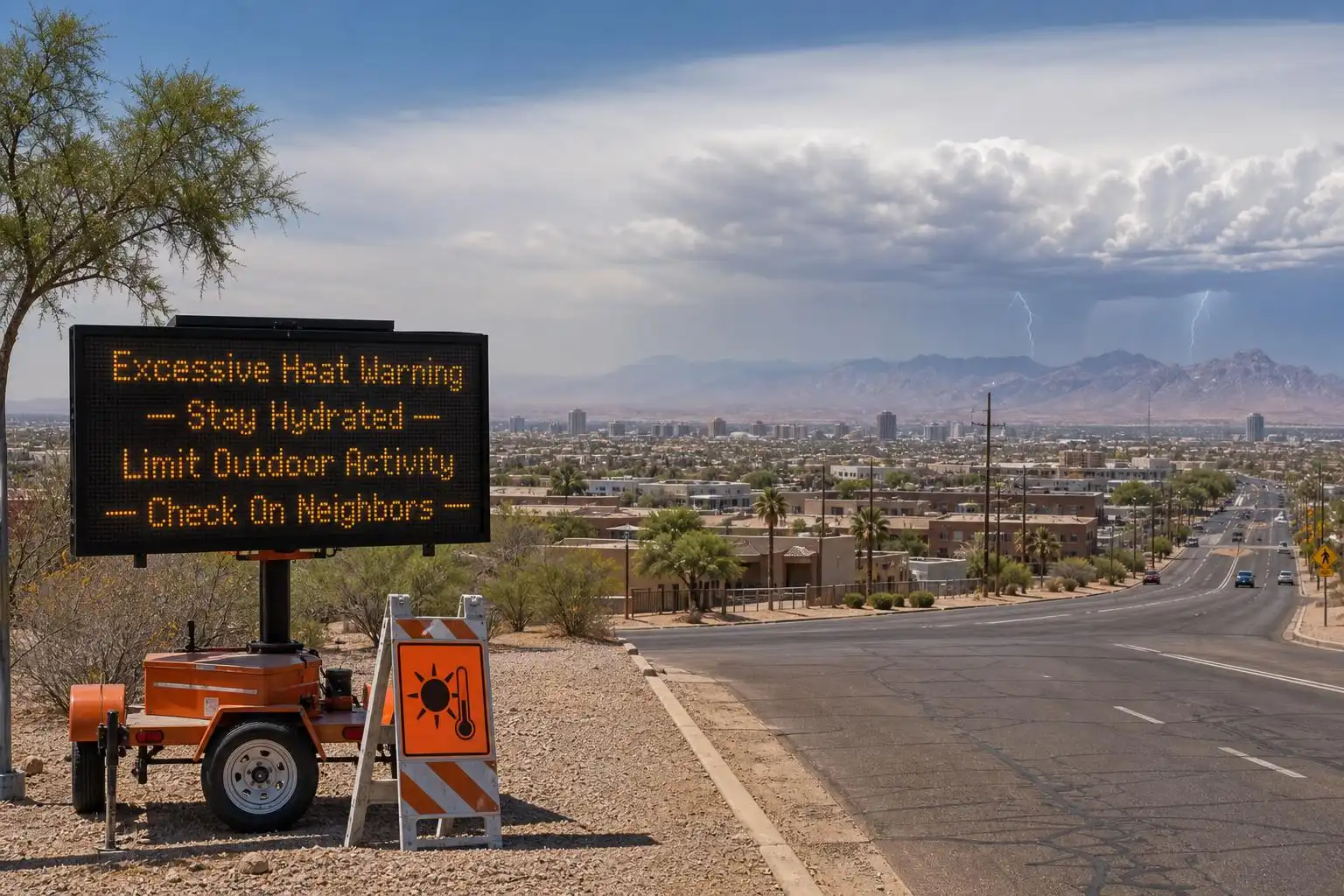
The U.S. Southwest is a good example. A record-breaking heat dome was expected to bring dangerous temperatures from Texas to California, while forecasters also watched monsoonal moisture capable of producing heavy scattered showers and thunderstorms across parts of the Southwest, Rocky Mountains, and Plains.[2] That combination is especially hard on the human body. Heat alone is dangerous, but humidity limits the body’s ability to cool itself through evaporation. Add in warm nights, outdoor labor, aging infrastructure, and people without reliable air conditioning, and the risk rises quickly.
Heat domes form when a strong ridge of high pressure builds in the middle and upper atmosphere. Air sinks beneath the ridge, warming as it compresses. Clouds are often suppressed, sunshine becomes intense, and the ground dries out. Once soils dry, more incoming solar energy goes into heating the air instead of evaporating moisture from the land surface. That feedback can help lock the heat in place. In cities, pavement and buildings store heat during the day and release it at night, reducing overnight relief.
The most dangerous heat waves are not always the ones with the single highest afternoon temperature. They are often the ones that last several days, keep nighttime temperatures elevated, and arrive in places where people are not acclimated or prepared. Older adults, young children, people with chronic illness, outdoor workers, unhoused residents, and those without cooling access face the greatest risk. The National Weather Service guidance highlighted in the Southwest heat forecast — limiting outdoor activity, hydrating, wearing loose and lightweight clothing, and checking on vulnerable neighbors — is basic advice, but it saves lives when followed early.[2]
Globally, the same pattern of overlapping hazards is showing up in stark ways. Recent extreme-weather coverage has included flash floods on the Nepal-Tibet border, record floodwaters in China from Typhoon Narra, extreme rain in Japan, a tornado in southern France, European heat mortality, and wildfire activity near Reno, Nevada.[4] The details differ by region, but the underlying lesson is similar: communities are being asked to respond to hazards that are faster, wetter, hotter, or more compound than their planning systems may assume.
The Nepal-Tibet flood disaster is especially sobering because mountain regions can change from scenic to deadly in minutes. Steep terrain accelerates runoff. Glacial lakes, landslide-dammed rivers, saturated slopes, and narrow valleys can all amplify flood danger. Reports noted that hundreds of foreigners were in the area for work, guided treks, or pilgrimages when the disaster struck, underscoring how weather risk can intersect with tourism, religion, local economies, and remote rescue challenges.[5]
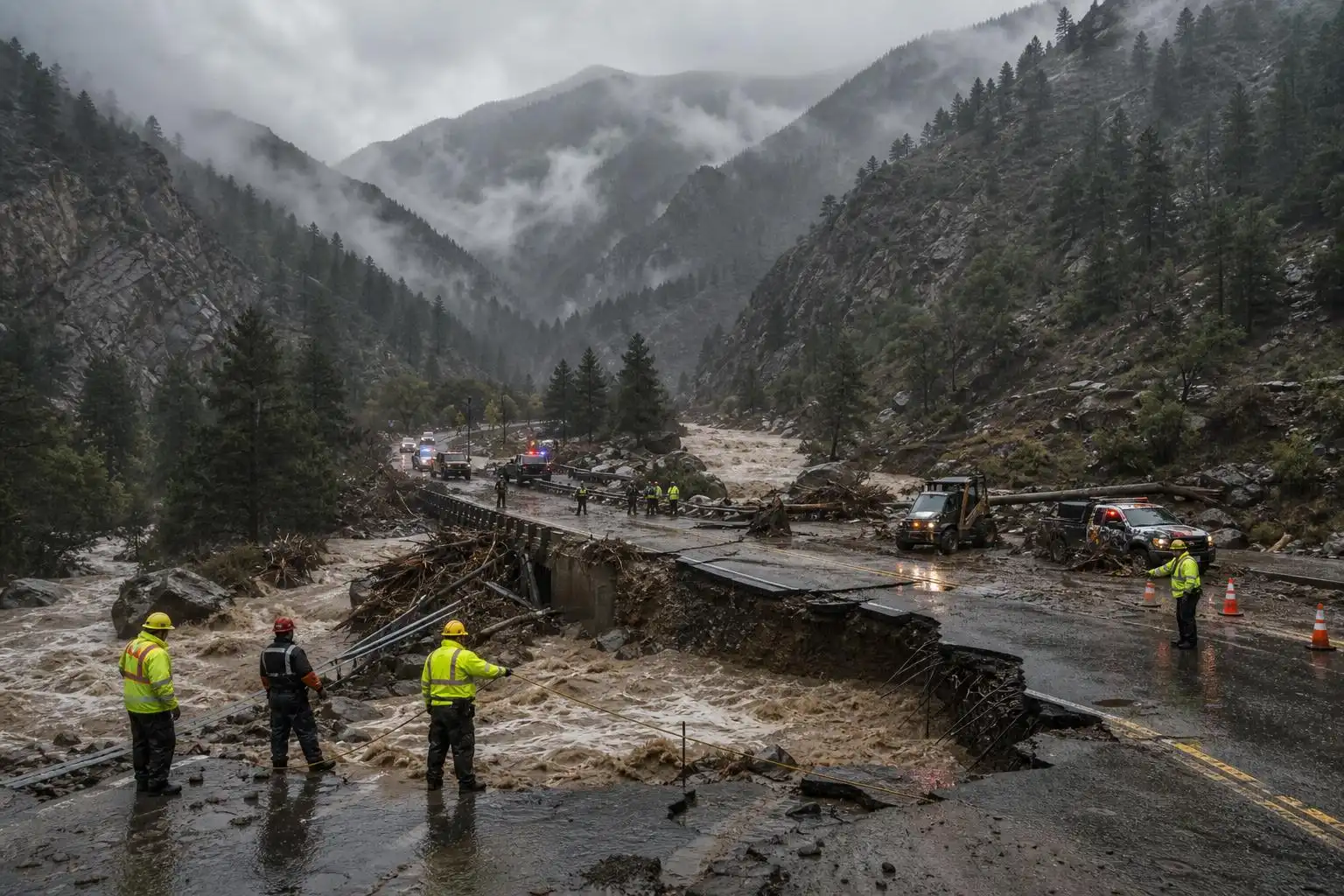
Flash flooding in mountainous terrain is not like flooding on a broad river plain. Water can arrive as a wall of debris-filled flow, carrying boulders, trees, mud, and pieces of infrastructure. Roads wash out, bridges fail, communications go down, and helicopter rescue may be limited by clouds, wind, elevation, or ongoing rain. Even when rain stops, the danger may not. An overflowing lake or unstable slope upstream can keep rescuers and survivors at risk hours or days later.
That is why the phrase “bigger shocks are on the way” deserves attention, even if it makes some readers uncomfortable. The AP report notes the communication challenge clearly: warnings about a possible “Other Big One” can sound exaggerated until an event actually arrives, but scientists argue that the ingredients for major disruption have been building.[1] In weather, uncertainty is not the same thing as safety. We may not know the exact city, date, or storm track of the next catastrophic event, but we know the atmosphere is carrying more heat and, in many situations, more moisture.
A warmer atmosphere can hold more water vapor — roughly 7% more for every 1°C of warming, all else being equal. That does not mean every location gets wetter. Some regions dry out under persistent high pressure, shifting storm tracks, or hotter evaporation. But when storms do have access to moisture, rainfall rates can become more intense. This is one reason we are seeing such concern about both ends of the hydrologic spectrum: deeper droughts and more extreme downpours.
The public conversation often asks whether climate change “caused” a particular event. That is not always the best first question. Weather events still require immediate ingredients: lift, instability, moisture, wind shear, terrain, ocean heat, frontal boundaries, or blocking patterns. Climate change loads the dice by altering the background state in which those ingredients come together. It can raise the ceiling on heat, increase the moisture available to storms, worsen drought stress, and expand the conditions that support wildfire spread.
The human side is where the science becomes urgent. A heat dome is not just a weather map feature; it is a farmworker deciding whether to keep working through dizziness. A flash flood is not just a rainfall statistic; it is a family trying to cross a road that looked passable five minutes earlier. A wildfire is not only acres burned; it is a community breathing smoke, evacuating livestock, and wondering whether insurance or savings will cover the loss.
Preparedness has to match this new reality. For heat, communities need cooling centers, shaded transit stops, backup power plans, worker protections, and outreach before the hottest day arrives. For floods, people need clear evacuation routes, real-time warnings, and the discipline to avoid flooded roads. For wildfire smoke, schools, clinics, and homes need filtration strategies. For emergency managers, the planning question should increasingly be: what happens if two or three hazards overlap?
On an individual level, there are practical steps that matter:
- Know the difference between a watch and a warning, and make sure wireless emergency alerts are enabled.
- During extreme heat, check indoor temperatures, not just the forecast high.
- Never drive through floodwater; depth and road damage are often impossible to judge.
- Keep a go-bag with medications, documents, chargers, water, and pet supplies.
- Identify vulnerable neighbors before a disaster, not during one.
- Treat “rare” events as possible if the forecast environment supports them.
The atmosphere has always produced extremes. What is different now is the baseline. Heat records are being challenged more often. Heavy-rain events are becoming more efficient in many regions. Drought, fire, flood, and heat are increasingly connected rather than isolated. The warning from scientists is not that every week will bring catastrophe. It is that the tail risks — the low-probability, high-impact events — are growing sharper.
That makes communication one of the most important tools we have. Meteorologists, journalists, emergency managers, and public officials need to avoid hype, but we also need to avoid false comfort. If a wolf is outside the door, as climate scientist Daniel Swain put it in the AP report, people deserve to know.[1]
The next “extreme of extremes” may not look like the last one. It could be a heat wave that cripples a major city, a flood that hits a mountain corridor full of travelers, a wildfire that races through the edge of a metro area, or a compound disaster that strains responders across several states or countries at once. The exact form is uncertain. The direction of risk is not.
References
- The world inches toward catastrophic climate events: ‘Bigger shocks are on the way’ — https://apnews.com/article/climate-change-disaster-big-one-threat-5b062254250a759483c94376d32ae478
- Record-breaking heat dome expected to bring dangerous temperatures to US south-west — https://www.theguardian.com/us-news/2026/aug/25/us-weather-heat-dome-south-west
- Extreme weather — https://www.theguardian.com/world/extreme-weather
- Extreme weather | World — https://www.theguardian.com/world/extreme-weather/2026/aug/28/all


Leave a Reply