
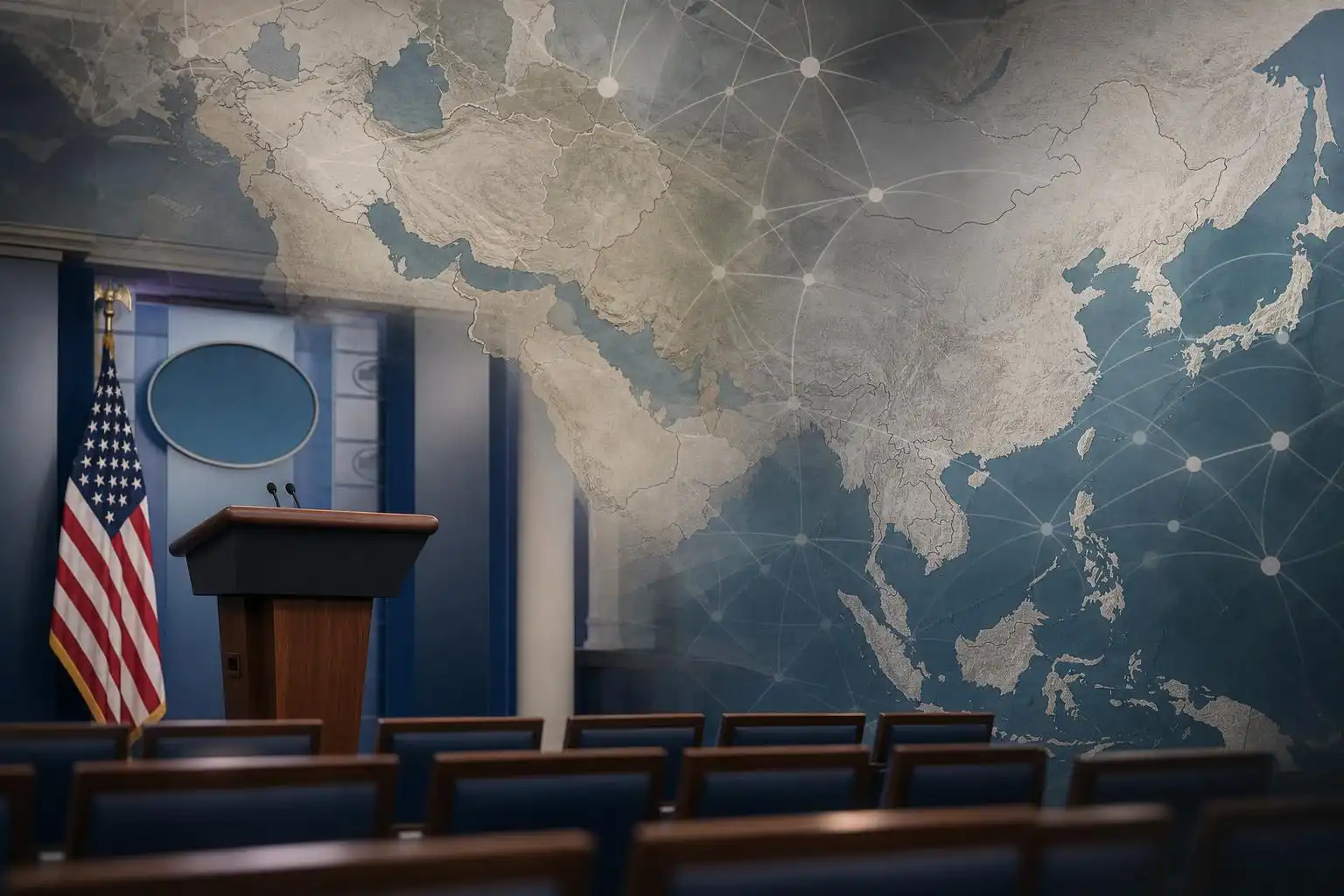

The week opens with pressure points converging across Washington and abroad: a war with no declared end date, a developing court fight over press access, renewed risks around Saudi Arabia and Yemen, and a tentative U.S.–China discussion on AI security. The common thread is uncertainty over the rules that will govern each crisis.
No endpoint offered for the Iran war
The clearest signal from the administration is that the Iran conflict may not have a near-term finish. Ambassador Mike Waltz said he would not “necessarily put a timeline” on whether the war could run until 2029, an assessment that leaves the public, allies and markets with little indication of what would constitute an end state.[2]
That ambiguity matters beyond the battlefield. A prolonged campaign requires sustained military resources, continued coordination with regional partners and a political explanation for an open-ended commitment. It also increases the chance that related theaters—from Red Sea shipping to Saudi security—become more directly entangled.
The financial scale is already substantial. U.S. Central Command has put the cost of the Iran war at at least $43.6 billion, according to a Washington Post briefing, adding another dimension to the debate over how long Washington can sustain its approach.[7]
Houthi attack puts Saudi risk back in focus
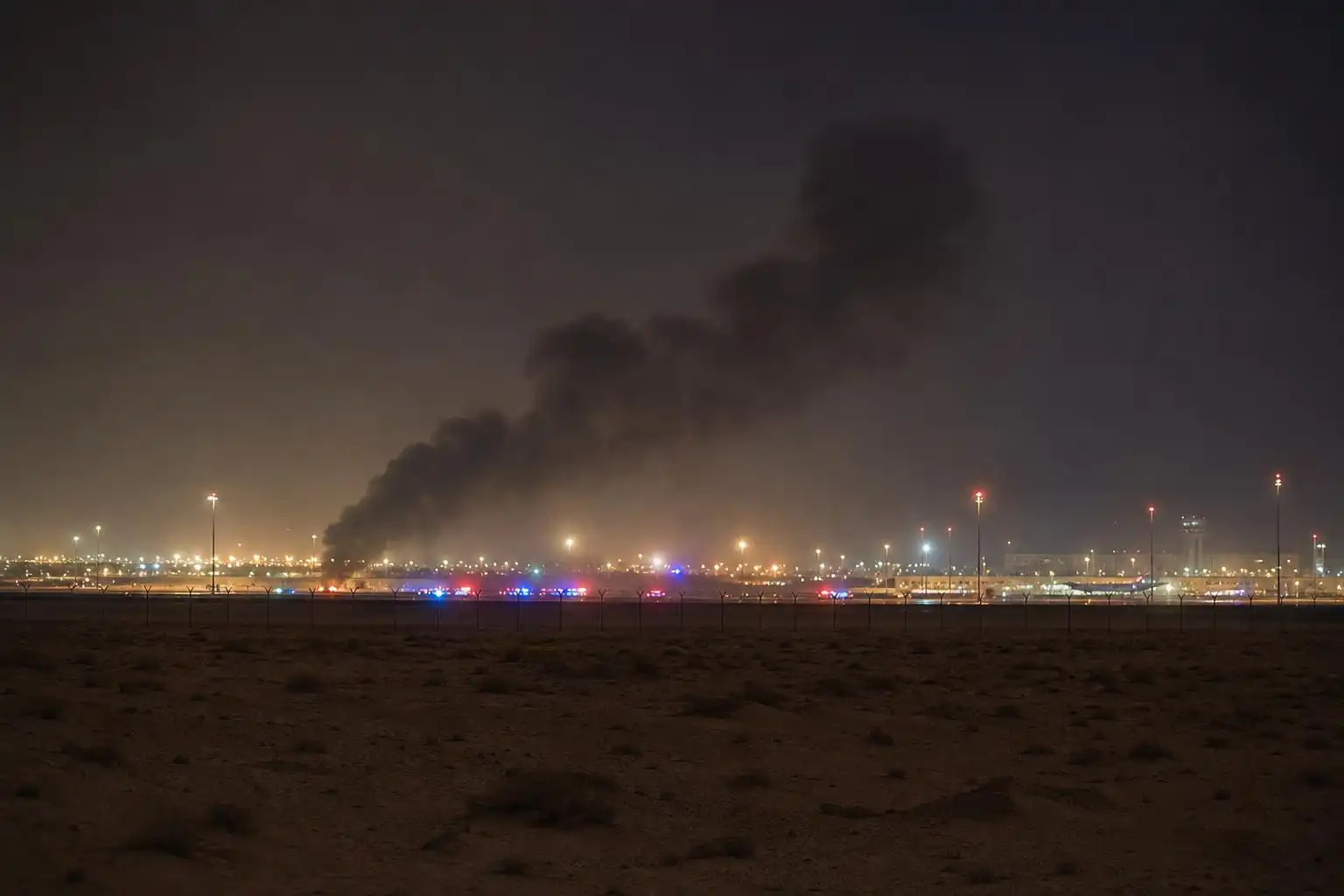
Footage of flames and black smoke near Riyadh airport underscores the immediacy of the regional spillover. Reuters reported that Yemen’s Houthi movement had targeted Saudi Arabia, renewing attention on whether the group’s campaign will draw a more forceful response from Riyadh or its partners.[5]
The Houthis have grown from a local Yemeni force into a consequential regional actor, with attacks and threats that affect civilians, air travel, shipping routes and the calculations of much larger governments. Reuters described that evolution as the rise of a “geopolitical heavyweight.”[5]
For the United States, the immediate question is whether protecting partners and commercial routes can be separated from the broader Iran conflict. The less clear that boundary becomes, the harder it will be for officials to contain escalation.
Major news organizations challenge White House bans
At home, CNN, MS NOW and Politico say they will sue the government after the White House revoked their journalists’ credentials. The organizations said the action came without notice or process and was prompted by the administration’s objection to their reporting.[3]
Their joint statement frames the dispute as more than a fight over individual reporters’ access. It argues that allowing the government to decide which outlets can cover the White House threatens press freedom and the public’s right to independent reporting.[3]
The legal case could test the limits of White House control over credentialing. Administrations have long managed physical access to a secure workplace, but the outlets contend that access cannot be withdrawn as punishment for unfavorable coverage. The lawsuit arrives as Trump has suggested he might bar additional media organizations from the White House.[1]
AI becomes a narrow opening with Beijing
Even as U.S.–China tensions remain broad, officials from the two countries have discussed a system to warn one another about artificial-intelligence national-security issues, according to The New York Times.[8]
The reported talks do not amount to a wider bargain on technology, trade or security. Still, a warning channel would recognize a practical reality: advanced AI can introduce risks that move faster than traditional diplomatic systems, including misunderstandings involving cyber operations, military applications and automated decision-making.
A functioning channel would depend on details that are not yet public—what events trigger a warning, who can verify a claim and whether either government shares information it considers sensitive. The value of the discussion is therefore less a breakthrough than an acknowledgment that communication itself may be a form of risk management.
A crowded diplomatic test
Trump begins a week of diplomacy while increasingly isolated, according to the Washington Post’s Monday briefing.[7] That backdrop raises the stakes for every meeting involving Iran, China, Europe or U.S. alliances.
Other issues are competing for official attention. Reuters’ daily coverage points to a Pennsylvania request for federal CDC assistance amid measles concerns, while Trump has called for some childhood vaccines to be split into five shots.[1] Those are separate disputes, but both reinforce a wider demand for clear, evidence-based public communication.
The immediate week will not settle the Iran war, the White House access dispute or the future of AI guardrails. It may, however, show whether the administration can replace open-ended signals and confrontational tactics with workable goals—at home and in a world where several crises are increasingly connected.
References
- Austin officials open investigation after ICE-involved shooting – Reuters — https://www.reuters.com/video/watch/idRW416021092026RP1/
- Amb. Waltz on if Iran war could extend until 2029: ‘I wouldn’t necessarily put a timeline on it’ – CNN — https://www.cnn.com/2026/09/20/politics/video/waltz-iran-war-houthis-sotu
- CNN, MS NOW, Politico to sue over White House bans – The Washington Post — https://www.washingtonpost.com/business/2026/09/21/cnn-ms-now-politico-sue-over-white-house-bans/
- Yemen’s Houthis have targeted Saudi Arabia: what now? – Reuters — https://www.reuters.com/video/watch/idRW417021092026RP1/
- Monday briefing: Trump arch; how the world could end; six-figure jobs; and more – The Washington Post — https://www.washingtonpost.com/the-seven/2026/09/21/7-things-know-monday-september-21/
- U.S. and China Discuss System to Warn of A.I. National Security Issues – The New York Times — https://www.nytimes.com/2026/09/20/business/us-china-ai-warning-system-national-security.html


Leave a Reply