
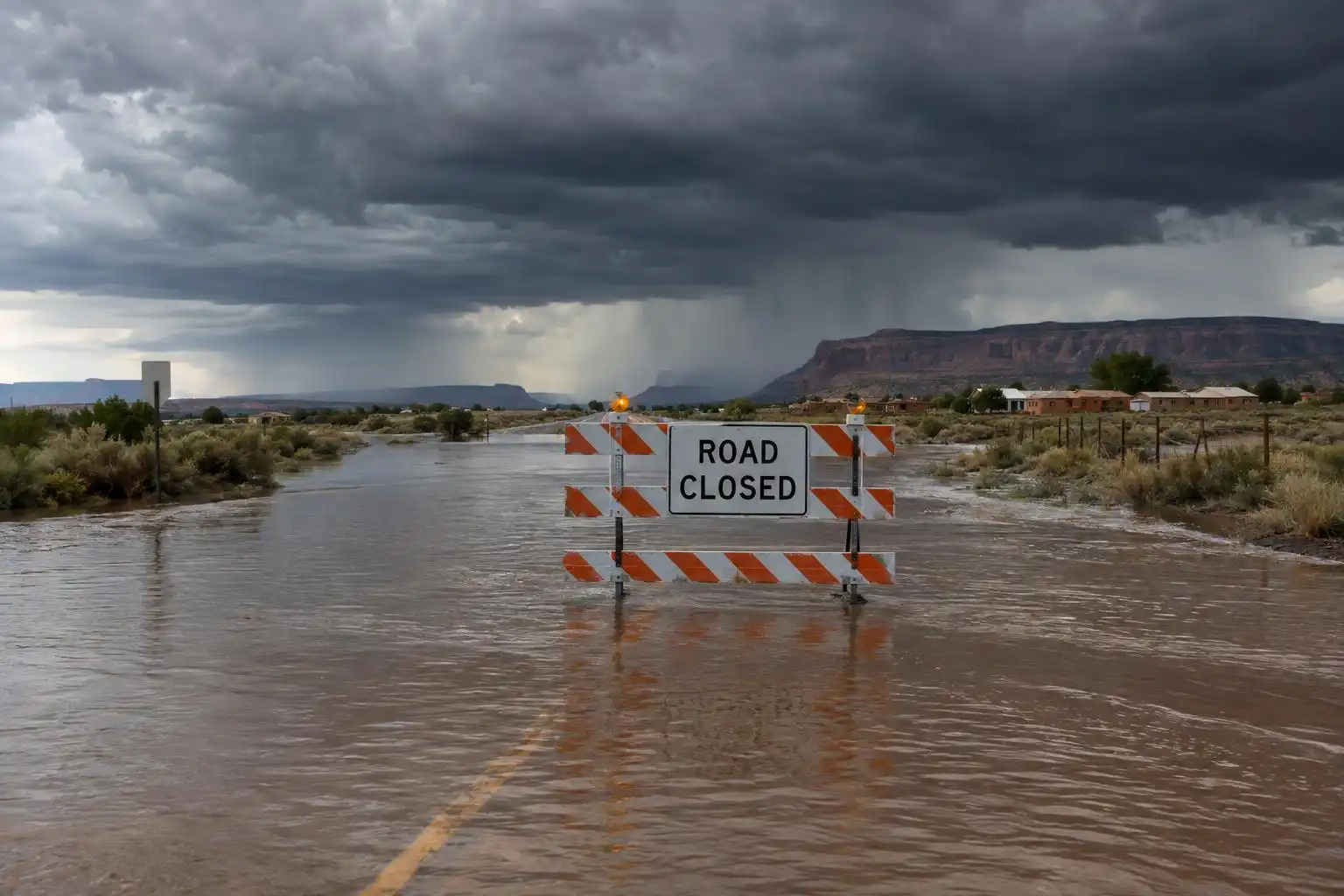

A tropical storm can disappear from the hurricane map and still leave dangerous weather behind. By October 2, moisture associated with Polo had spread from the Southwest into the Plains, with the flood threat extending eastward. Roads in Arizona and New Mexico had already flooded, and a box truck was swept away north of Phoenix; its driver escaped.[3]
For communities in the plume’s path, the immediate question is where the next downpour will fall. The larger question is whether roads, emergency services and household essentials can withstand it. Recent reporting from Vermont and on electricity shutoffs offers a useful reminder: resilience depends not only on infrastructure, but also on who can afford to use it.
How tropical moisture becomes an inland flood threat
When a tropical system weakens, its winds may ease faster than its supply of water vapor disappears. That moisture can travel far inland. If it meets a front or another source of lift, showers and thunderstorms can produce heavy rain well beyond the storm’s former coastal track.
Polo’s moisture reached the Plains at levels described as near record, according to The Weather Channel. National Weather Service meteorologists noted how unusual heavy rain from tropical remnants is in western Kansas. Earlier in the week, parts of the Southwest received one to three inches of rain, with a reported 3.91 inches in Bullhead City, Arizona.[3]
Those totals do not tell the whole story. Rain falling quickly onto a desert wash or a paved street can turn a familiar route into a dangerous crossing. Farther east, repeated storms can saturate the ground and raise the risk from later rainfall. The location and timing of the heaviest rain matter as much as the broad outline of the moisture plume.
Vermont’s storm-tested approach to power
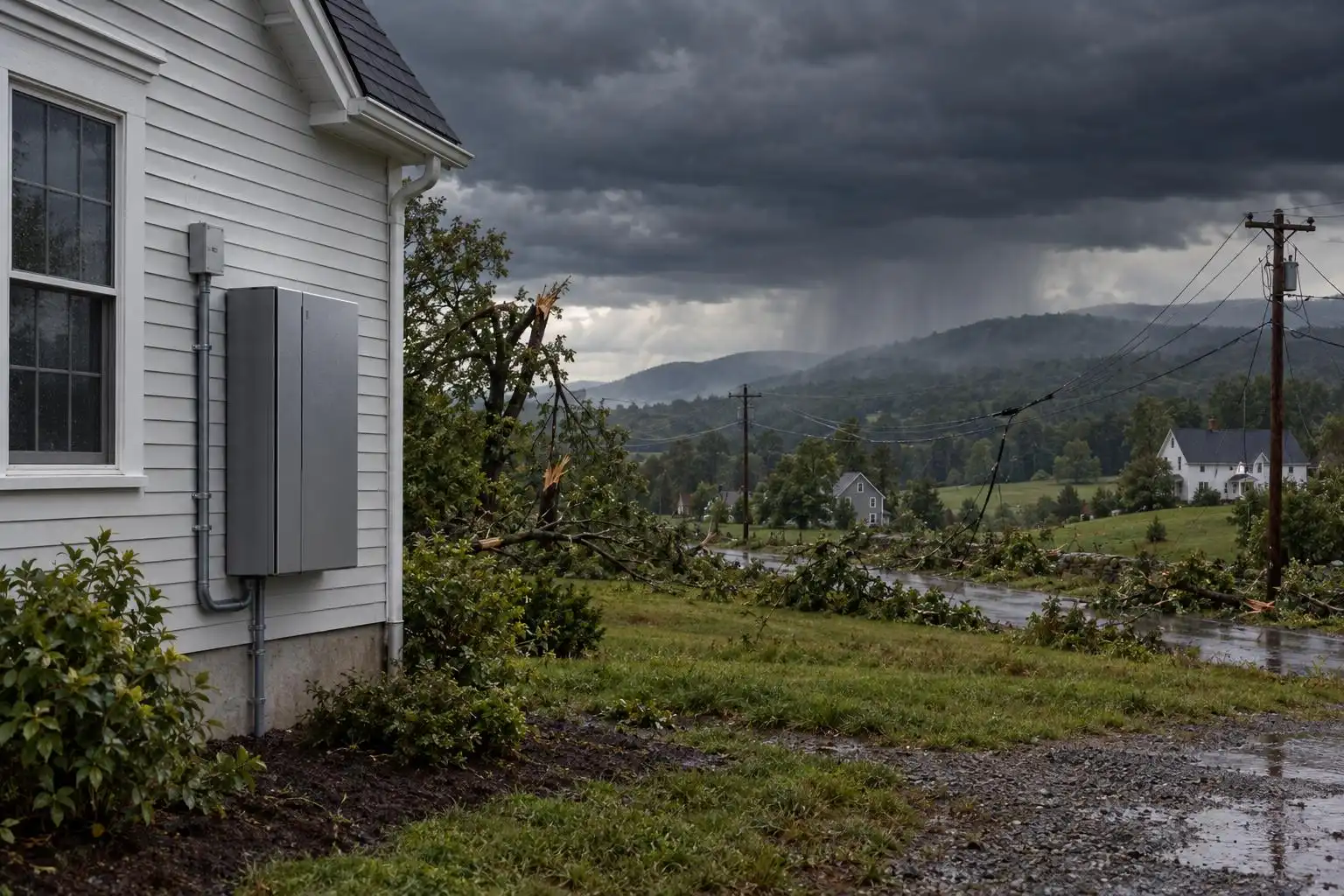
Floodwater is the immediate hazard in Polo’s path. Elsewhere, storms illustrate another part of weather preparedness: keeping electricity available when conventional lines fail. In Vermont, utility Green Mountain Power has assembled a virtual power plant from batteries in customers’ homes. The batteries can support the wider grid, while participating households can use stored power during some outages.[1]
The BBC reports that seven of the 10 most damaging storms in the utility’s history occurred in the past decade, causing more than $225 million in damage. For residents accustomed to losing power during storms, a battery can mean more than convenience: it may keep lights, communications and other essential devices running while crews work to restore service.[1]
A virtual power plant is not a guarantee against every outage. Backup depends on the equipment installed, how much charge is available and which circuits the system can serve. It also cannot make a flooded road passable. Its value is in giving a community another layer of protection when a storm disrupts the grid.
Resilience has an affordability problem
Backup power is harder to celebrate if ordinary electricity is out of reach. The Guardian reports that utility disconnections in 10 U.S. states rose 28% in July 2026 compared with July 2024, during a period of extreme heat.[5] A household without service cannot count on an air conditioner, a charged phone or a working sump pump when severe weather arrives.
The comparison does not show that the same households affected by shutoffs were affected by Polo, nor does it establish one cause for the rise in disconnections. It does expose a gap in how we talk about preparedness. Weather warnings matter, but people also need the means to act on them—and dependable power before, during and after an emergency.
What to do while the flood threat moves east
For people in areas under flood watches or warnings, the most useful preparation is local. Check National Weather Service alerts for your location rather than relying on a storm’s former name or track. Identify a route that avoids low-water crossings, and never drive into a flooded road: the depth and condition of the pavement may be impossible to judge.
Charge phones and necessary medical devices while power is available, and plan how you would receive warnings if service fails. If you have a home battery, know what it actually powers and how long it can run. Polo’s inland rain threat and Vermont’s experience point to the same lesson: the best time to find a weak link in a safety plan is before the weather tests it.
References
- A ‘power plant’ hidden in Vermont homes is keeping the lights on during storms — https://www.bbc.com/future/article/20260928-a-virtual-power-plant-hidden-in-vermont-homes-is-keeping-the-lights-on-during-storms
- Polo’s historic moisture plume expands flood threat into East — https://weather.com/2026/10/02/forecast/regional/hurricane-polo-southwest-plains-flash-flooding
- ‘It’s just cruel’: US households hit by surge in electricity disconnections — https://www.theguardian.com/environment/2026/sep/29/electricity-disconnected-record-heat


Leave a Reply