
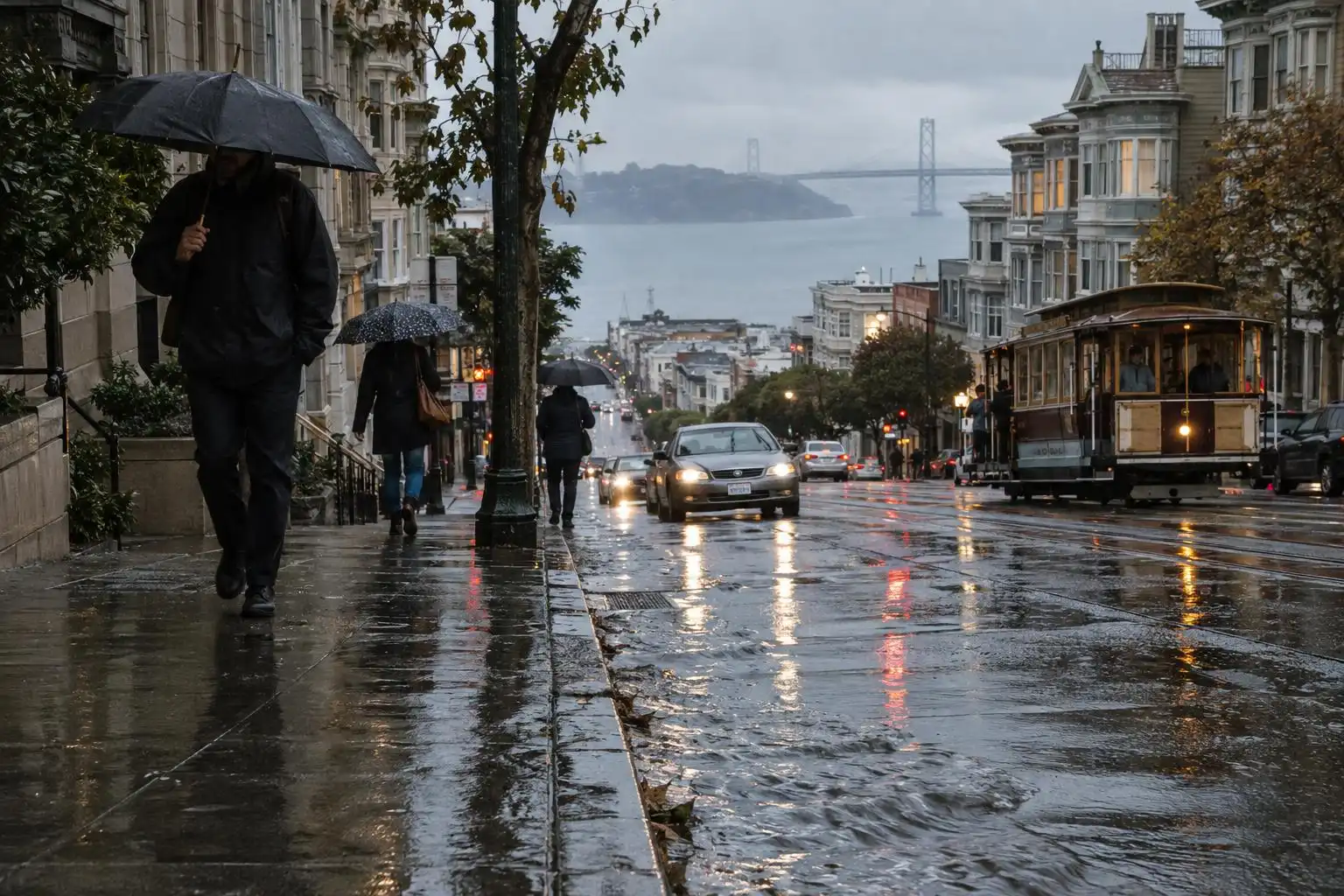

Downtown San Francisco recorded record-breaking rainfall as a November storm swept through the Bay Area, bringing flooding and power outages across the region.[3] The immediate concern is getting people through flooded streets and disrupted travel. The longer question is how communities prepare when rain, mountain snow and coastal hazards arrive in close succession.
One storm, different hazards
A series of storms moving across the West Coast this week brought a sharply different forecast depending on location and elevation. Lower elevations faced rain and gusty winds, while the Cascades and Sierra Nevada were expected to receive substantial snow. Forecasters also warned of localized flooding, difficult mountain-pass travel and hazardous surf.[2]
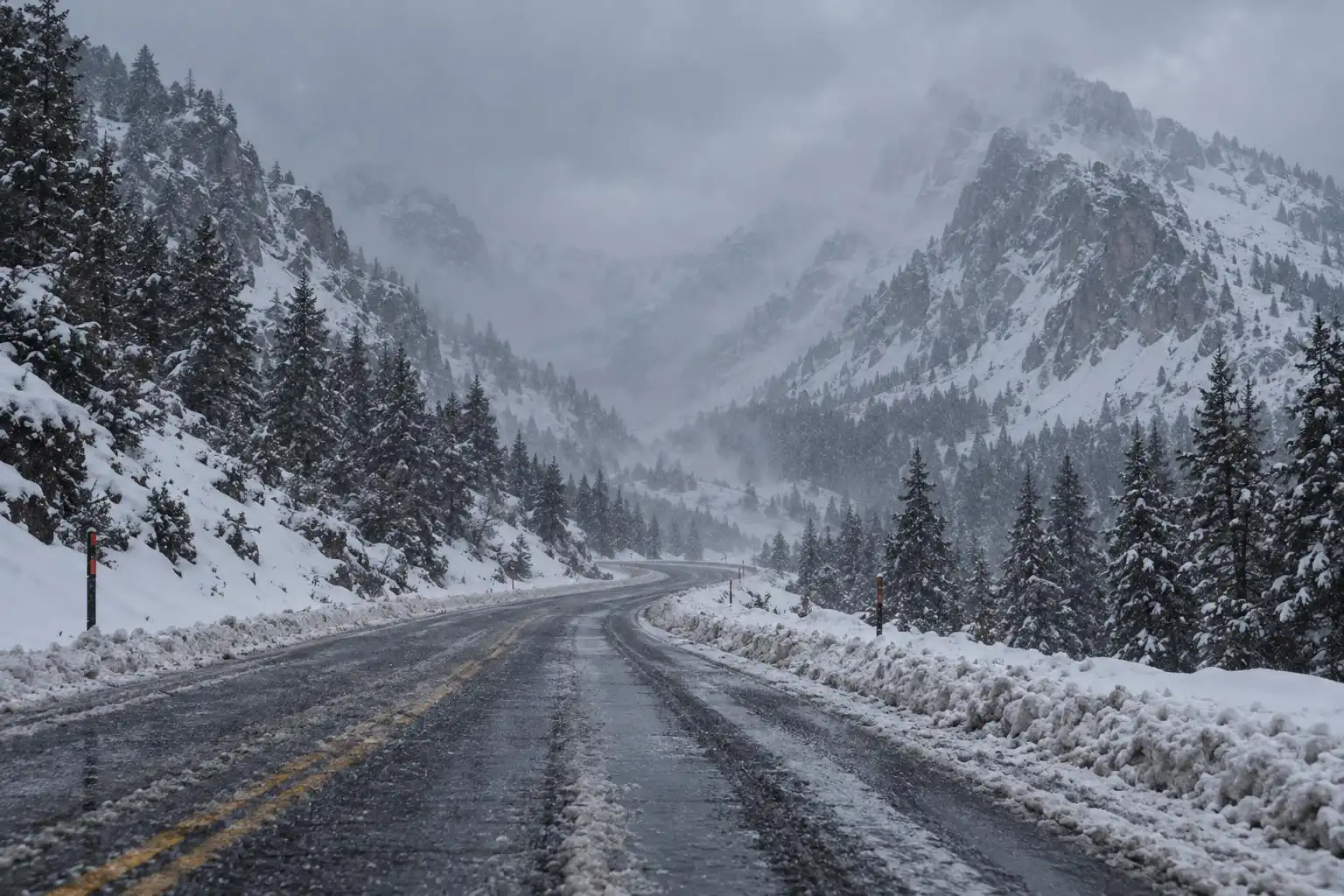
That split is familiar to anyone who watches Western weather, but it matters enormously on the ground. Rain can overwhelm a city drain while snow makes a mountain highway impassable. A household may face a power outage at the same time that a nearby community is digging out. The same storm system can demand different decisions only a short drive apart.
The Bay Area’s flooding is a reminder that a rainfall total does not tell the whole story. How quickly the rain falls, where runoff collects and whether drains are blocked can determine which streets become dangerous. Reports of flooding and power outages after the record-breaking rain show why impacts—not just the size of the storm on a map—deserve attention.[3]
Why back-to-back systems raise the stakes
When storms arrive close together, there may be little time to clear drains, restore electricity or reopen roads before the next round begins. Wet ground can also allow more rain to run off rather than soak in. Those possibilities do not mean every storm will produce a flood, but they make the gap between systems part of the forecast.
Coastal conditions pose a separate danger. Forecasters warned that long-period swells could produce exceptionally high surf and occasional sneaker waves—waves that reach farther up a beach or across rocks than an observer expects.[2] A sunny break between showers is not a signal that the shoreline is safe.
Where El Niño fits—and where it doesn’t
The storms are arriving amid wider concern about a strong El Niño. Reporting ahead of COP31 describes it as a potential risk multiplier for weather extremes in different parts of the world, alongside accounts of wildfire and crop losses in Indonesia, drought in Sudan and coastal inundation in the United States.[1]
El Niño can shift the odds of seasonal weather patterns by changing conditions across the tropical Pacific and influencing atmospheric circulation. It does not provide a simple explanation for any single Bay Area downpour. The intensity and location of an individual storm depend on shorter-term factors, including its path and moisture supply. Keeping those timescales separate helps residents take a seasonal warning seriously without treating every event as predetermined.
Practical decisions before the next warning
For residents, the safest response begins with the hazard closest to home:
- Check local flood alerts before driving; never enter water covering a road.
- Review road and pass conditions before mountain travel, and carry winter supplies.
- Stay well back from surf, jetties and wave-washed rocks, even between storms.
- Charge essential devices and plan for medication or medical equipment needs if power fails.
November’s Bay Area rain has already shown how quickly a weather system can disrupt daily life.[3] The most useful forecast now is a local one: not merely whether another storm is coming, but which roads, shorelines and neighborhoods may be hardest to navigate when it does.
References
- ‘Risk multiplier’: super El Niño looms over Cop31 as … — https://www.theguardian.com/environment/2026/nov/15/el-nino-cop31-turkey-climate
- Back-to-back storms to bring heavy rain and feet of snow to the Western states — https://www.accuweather.com/en/weather-forecasts/back-to-back-storms-to-bring-heavy-rain-and-feet-of-snow-to-the-western-states/1958787
- Record-breaking rain lashes California’s Bay area as ‘ … — https://www.theguardian.com/us-news/2026/nov/18/california-atmospheric-river-flooding


Leave a Reply
You must be logged in to post a comment.