


A high‑stakes swing through the Middle East and a fierce night of drone and missile fire in Europe set today’s tone, while North Africa’s migration pressure flared again and India added fresh clues to a cosmic mystery.
-
Mideast command and the cost of long deployments: A top U.S. commander visited the USS Abraham Lincoln as Gaza talks moved to Egypt, underscoring Washington’s effort to steady multiple fronts at once.[1] After the stop, U.S. officials emphasized crew well‑being: the Navy says mental health at sea remains a priority on the Lincoln following an extended deployment, even as former President Donald Trump has publicly downplayed concerns; the service adds it has not seen an increase in suicidal ideation among sailors.[4][3]
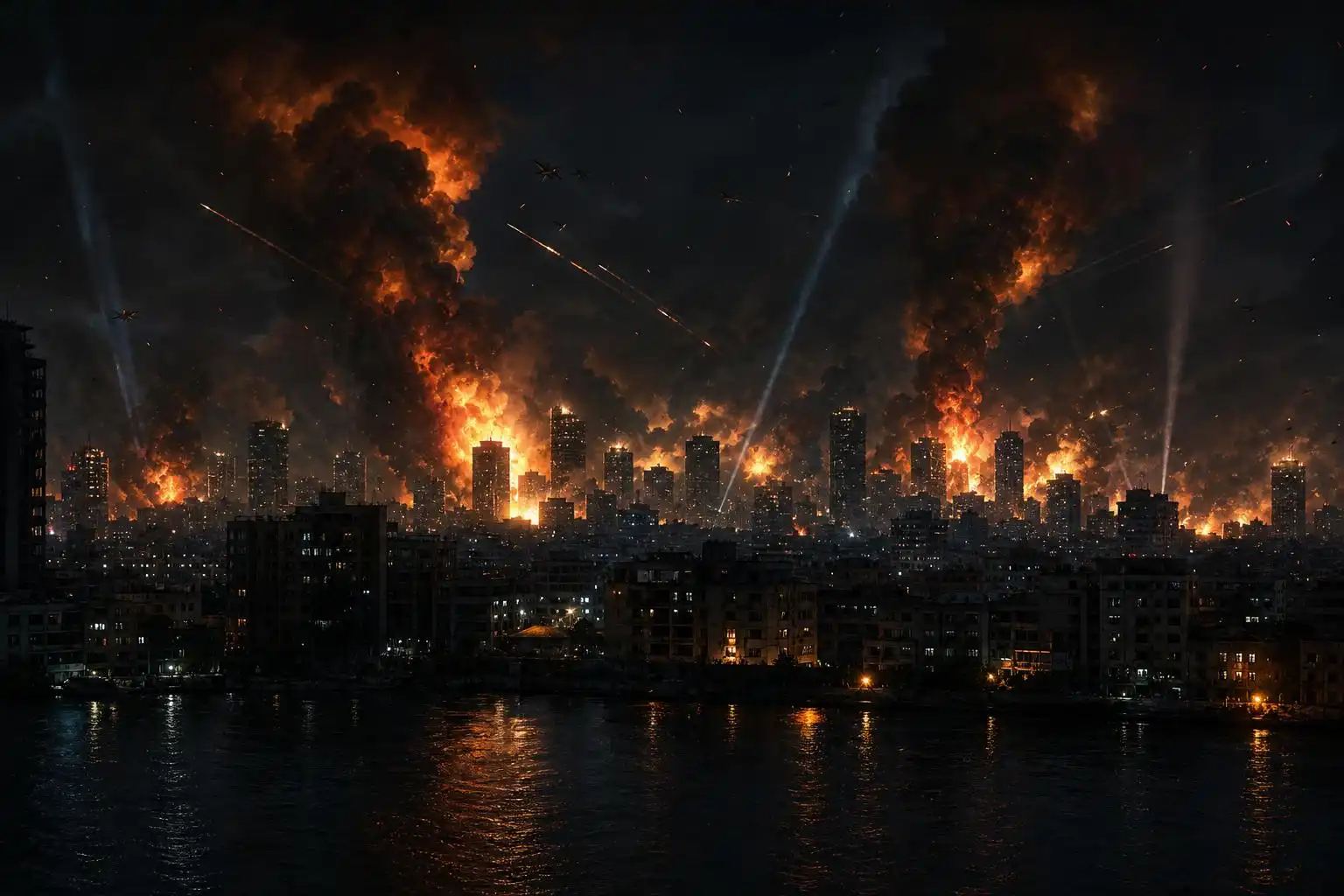
A fierce night of strikes underscored the war’s shifting tempo. -
Gaza diplomacy’s awkward dance: Trump envoy Jared Kushner held a rare meeting with a Hamas leader to push a Gaza plan that Israel’s Benjamin Netanyahu has rejected for now — a move U.S. officials privately frame as campaign‑season posturing rather than a definitive break.[4][7] In the background, the Red Sea saw the first reported deadly Houthi strike since the start of the Iran war, with at least six killed, a reminder that any Gaza corridor must contend with a wider regional arc of risk.[7]
-
Ukraine escalates the air war: Kyiv launched one of its largest aerial attacks of the conflict, with fatalities reported inside Russia, even as Moscow claimed at least seven dead from the overnight barrage and answered with strikes that ignited fires around Kyiv.[1][4] The dueling narratives — a hallmark of this war — will keep pressure on air defenses and energy infrastructure as both sides probe for leverage ahead of the winter planning cycle.
-
Ceuta pressure cooker: Moroccan security forces said they arrested nearly 300 migrants attempting the perilous crossing to Spain’s North African enclave, highlighting a summer spike that strains local resources and tests EU border coordination.[1]
-
Europe’s grim tally and a marble cleanup: A bus crash in Hungary killed 12 and injured at least 10 more, one of the deadliest European road incidents this season.[1] In Athens, workers began cleaning the all‑marble Panathenaic Stadium — host of the first modern Olympics — for the first time in more than a century, a meticulous effort intersecting tourism, heritage and heat‑stress maintenance.[1] Greece also battled twin fires on Salamina island that forced evacuations and left two dead before firefighters brought one blaze under control.[4]
-
Lebanon’s watershed vote: In a region where capital punishment remains on the books in many states, Lebanon’s parliament voted to abolish the death penalty, sending the measure to the cabinet and potentially setting a Middle East first if enacted.[7]
-
The U.S. deportation machine goes offshore: At home, federal agents are averaging roughly 2,000 arrests a day as the administration pours billions into detention capacity. A New York Times investigation details how Washington is also paying developing countries to receive deportees and is building an archipelago of overseas detention sites where people can be held indefinitely — even exploring electric‑shock gloves for ICE officers — raising acute due‑process and human‑rights questions.[5]
-
India looks to the Sun — and keeps monkeys at bay: New results from India’s solar mission shed light on why the Sun’s corona runs millions of degrees hotter than its surface, feeding a long‑running physics puzzle with fresh data that could refine space‑weather forecasting.[8] Closer to Earth, organizers of the badminton world championships in Delhi are deploying creative measures to keep monkeys and pigeons away from arenas after past wildlife run‑ins.[8]
What to watch: Whether Gaza talks in Egypt can inch past rhetoric toward verified sequencing; any follow‑on U.S. naval moves that rotate crews off extended duty; Russia’s response to Ukraine’s expanded reach; and how Europe balances migration control with rescue and asylum obligations as summer crossings crest.[1][4]
References
- Associated Press News: Breaking News, Latest Headlines and Videos … — https://apnews.com
- Iran war — https://apnews.com/hub/iran
- BBC Home – Breaking News, World News, US News, Sports, Business, Innovation, Climate, Culture, Travel, Video & Audio — https://www.bbc.com
- No Way Out — https://www.nytimes.com/2026/08/16/world/deportations-eswatini-italy-heist.html
- Middle East | Latest News & Updates — https://www.bbc.com/news/world/middle_east
- India | Latest News & Updates — https://www.bbc.com/news/world/asia/india


Leave a Reply