
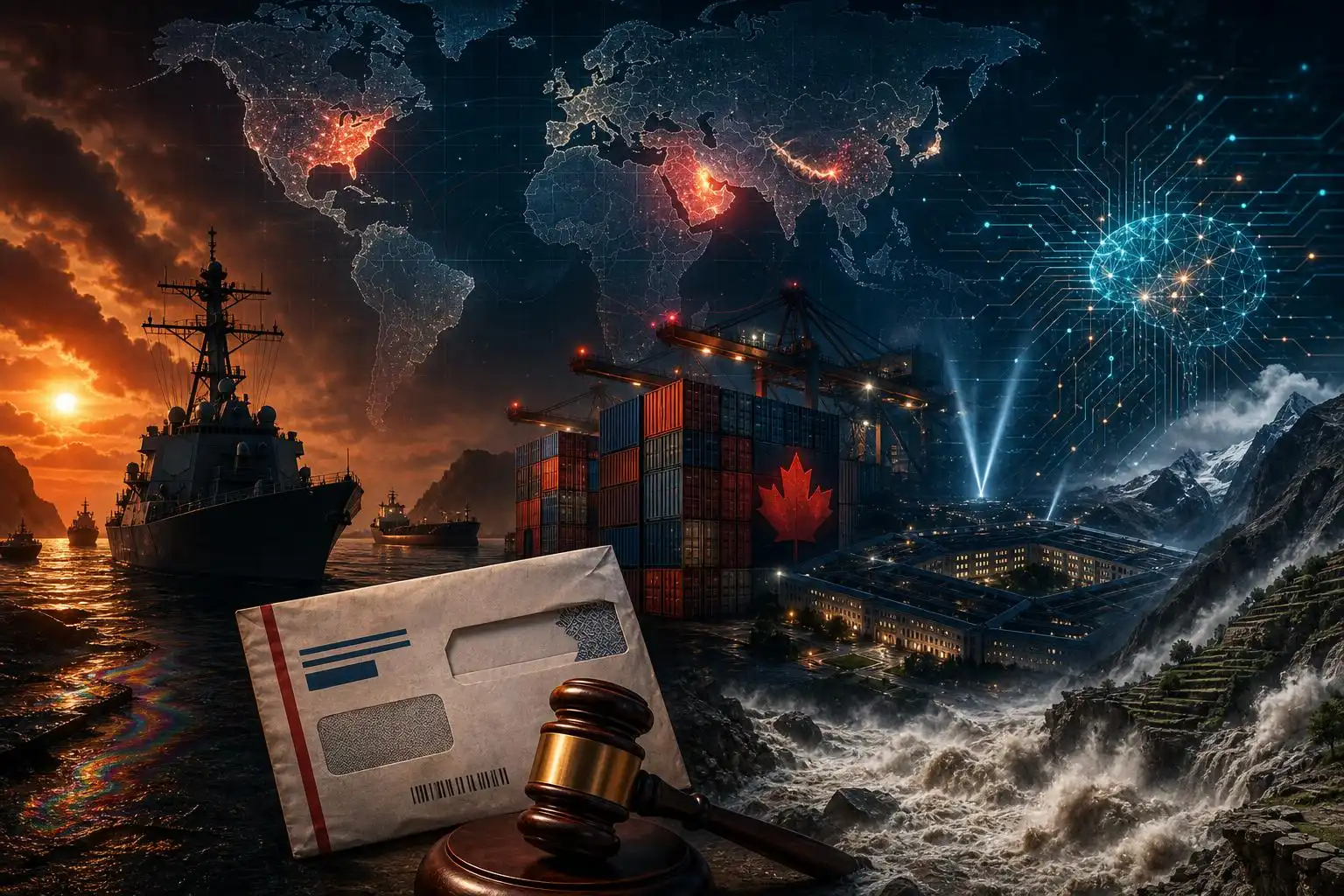

Six months into the Iran war, the conflict’s toll is widening from Hormuz diplomacy to U.S. defense budgets, even as domestic political and legal battles reshape the election landscape and the tech industry’s ties to Washington.
Iran, Hormuz and the price of attrition
- The war reached its six‑month mark with fresh reminders of its regional and global spillovers, from shipping risk to energy markets. In Doha, Iran and Qatar held talks aimed at easing tensions in the Strait of Hormuz and creating conditions for possible U.S. dialogue, signaling a fragile diplomatic lane amid a grinding conflict. [1][2]
- Inside Washington, budget strain is showing: documents and military interviews reviewed by the Guardian indicate the Iran war has depleted the U.S. Navy’s finances, raising questions about longer‑term readiness if the conflict drags on. [7]
Mail voting whiplash and a tech‑policy rebuke
- The U.S. Postal Service says Supreme Court‑backed restrictions on mail‑in ballots are now in effect, even as new legal challenges surface. Hours later, a federal judge blocked a separate Trump mail‑voting order, setting up a likely sprint of appeals and a confusing run‑up to the midterms. [2][7]
- In Silicon Valley’s latest clash with the Pentagon, a U.S. judge ruled the Defense Department’s blacklisting of AI firm Anthropic unlawful—a high‑stakes reminder that procurement power has limits when it collides with speech and due‑process concerns. [2][7]
Trade war with Canada hardens—and the optics sharpen
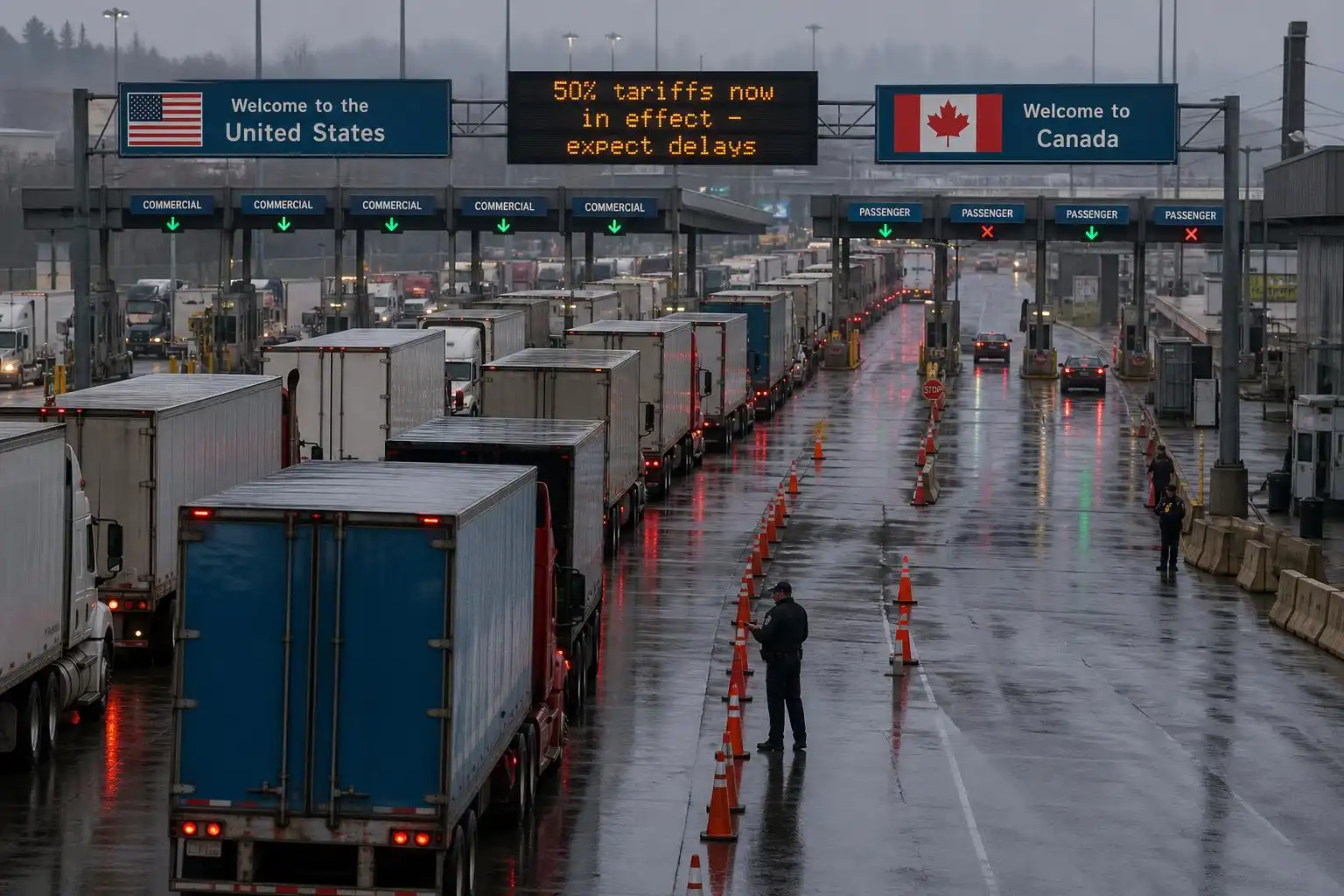
- President Trump unveiled sweeping 50% tariffs on Canadian cars, trucks and steel, deepening a cross‑border rift with a top U.S. trading partner; Ottawa has fired back with broad retaliation, and economists warn the fight could endanger roughly 90,000 Canadian jobs. [3][2]
- In a made‑for‑TV flourish, Trump touted an executive order to rename Lake Ontario “Lake America,” underscoring how symbolism is being marshaled alongside tariffs in a bruising political season. [5][8]
Disasters and a shifting energy map
- Along the Nepal–China border, the death toll from a catastrophic flash flood continues to rise as authorities warn a debris‑formed lake could burst, compounding devastation. Nearly 500 people are confirmed dead, with missing spanning more than 30 countries—an international tragedy testing rescue and relief networks. [5][1]
- The Gulf oil shock is accelerating electric‑vehicle adoption worldwide, a sign that supply disruptions and war risk are speeding up consumers’ pivot even as charging build‑outs and grid reliability struggle to keep pace. [6]
Also on the radar
- Norway is in mourning after King Harald V died at 89, closing a consequential reign and ushering in a transition to King Haakon VIII. [1]
- In Washington, three Democratic senators urged an inquiry into whether a top Agriculture Department official interfered to steer wildfire resources toward his own Idaho property—allegations the department is under pressure to address swiftly. [7]
The thread through it all: geopolitics is rewriting domestic policy in real time—at the post office, in courtrooms, at the pump, and on trading floors. Expect the next moves on Hormuz diplomacy, mail‑voting rules, and U.S.–Canada tariffs to land fast—and to echo through markets and the ballot box alike. [2][3]
References
- Live updates: Iran war reaches its six-month mark – AP News — https://apnews.com/live/donald-trump-news-updates-08-28-2026
- United States | Today’s latest from Al Jazeera — https://www.aljazeera.com/where/united-states
- Americas — https://www.theguardian.com/world/americas
- China warns of further floods near Nepal border — https://www.bbc.com/audio/play/p0p6q9fy
- The New York Times in Print for Friday, Aug. 28, 2026 — https://www.nytimes.com/issue/todayspaper/2026/08/28/todays-new-york-times
- Swift appeal likely as judge blocks Trump mail voting order – US politics live | Donald Trump | The Guardian — https://www.theguardian.com/us-news/live/2026/aug/28/donald-trump-mail-voting-tariffs-canada-space-nasa-march-on-washington-latest-news-updates
- United States – BBC News — https://www.bbc.co.uk/news/topics/cx1m7zg01xyt


Leave a Reply