
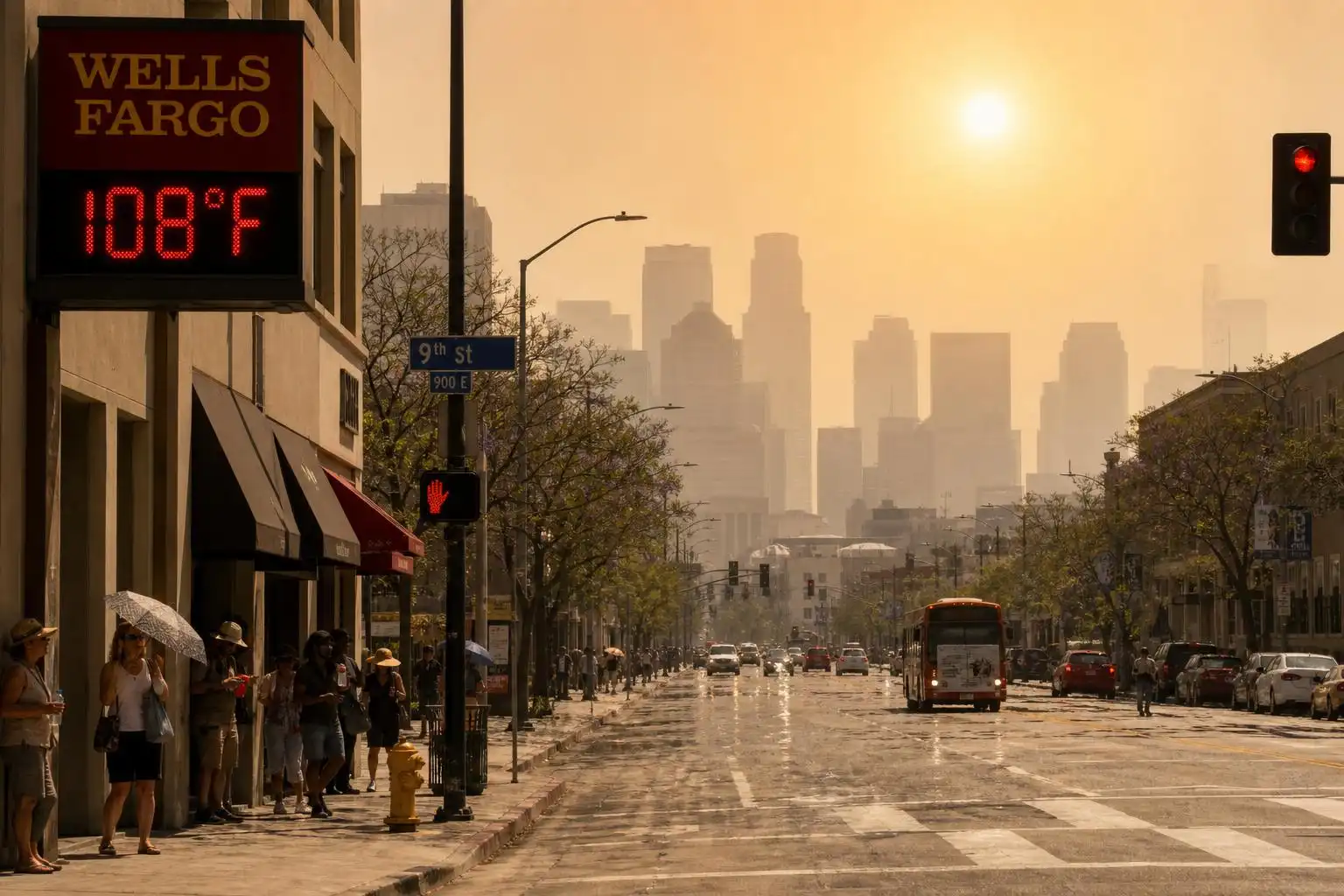

The summer of 2026 did not just feel relentless. It now stands as a national benchmark: the hottest summer in the United States in 132 years of recordkeeping, with August also setting a new heat record, according to NOAA reporting cited by Al Jazeera.[1] For meteorologists, that kind of record is not just a trivia point on a climate chart. It is a signal that the atmosphere, oceans, land surface, power grid, farms, forests, and public health systems are all being tested at the same time.
The timing matters. The World Meteorological Organization is warning that the current El Niño may become one of the strongest on record and could persist into early 2027.[1] El Niño is a natural warming of the tropical Pacific Ocean, but when it unfolds on top of a warmer background climate, it can help push global temperatures higher and shift storm tracks, drought zones, wildfire risk, and hurricane behavior.
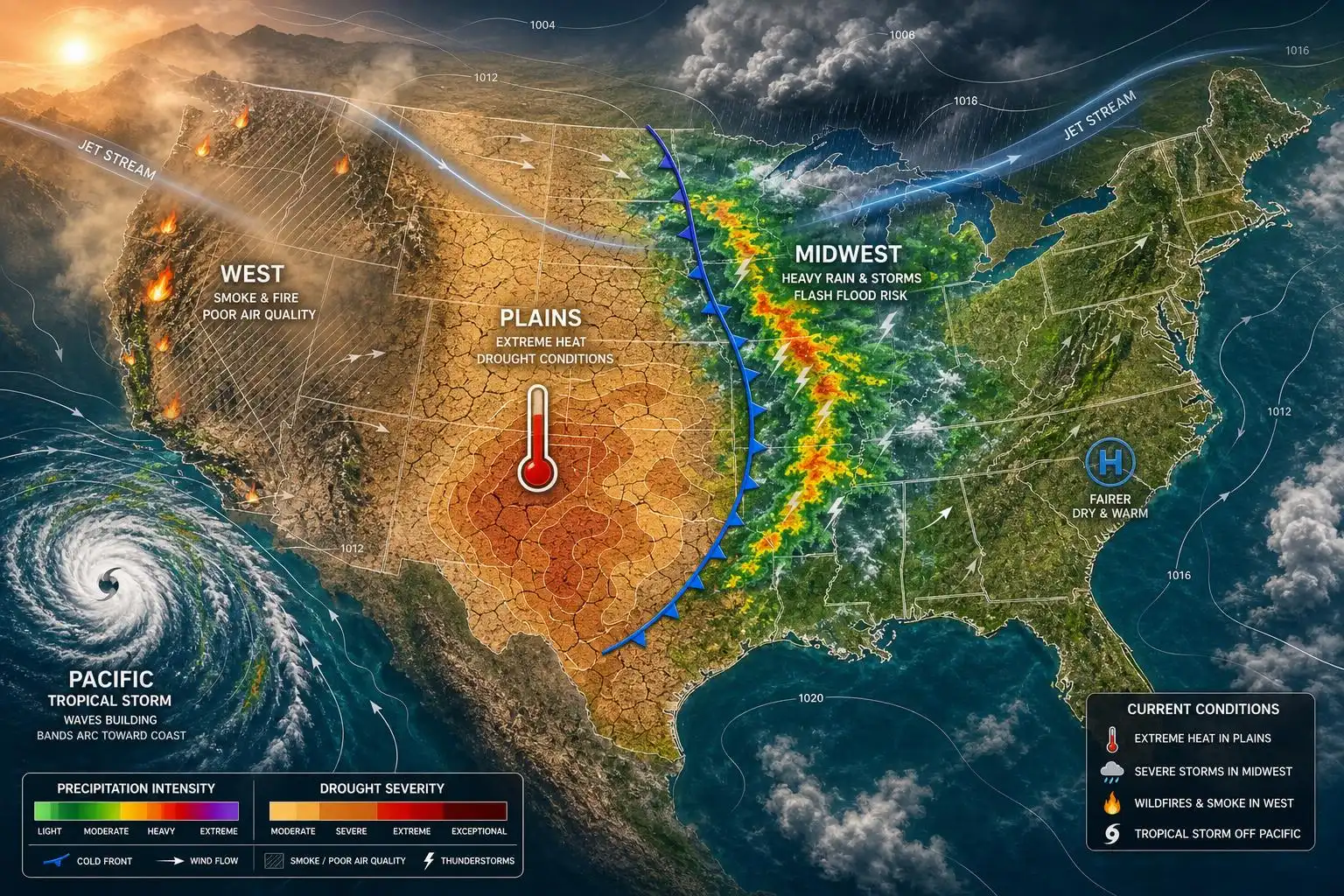
That is what makes this moment so important: the hottest U.S. summer on record may not be the end of a dangerous pattern. It may be the opening chapter of a broader, El Niño-amplified weather year.
Heat was the headline, but water told the deeper story
Extreme heat dominated the summer, but the national rainfall pattern was just as revealing. By September 1, about 59 percent of the contiguous United States was in drought, an increase of more than 10 percentage points in a single month.[1] Texas and Oklahoma were especially dry, with parts of both states receiving less than 30 percent of their normal August rainfall.[1]
But this was not a simple “hot and dry everywhere” summer. Indiana and Ohio recorded their wettest August on record, with roughly twice their usual rainfall.[1] That contrast is a classic feature of an increasingly volatile hydrologic cycle: some regions bake and dry out, while others receive more water than drainage systems, soils, and rivers can comfortably handle.
Warmer air can hold more water vapor. That does not mean every location gets wetter, but it does mean storms that do form can tap into a deeper reservoir of moisture. Meanwhile, areas stuck beneath persistent high pressure can experience faster soil drying, more evaporation, and hotter afternoon temperatures. In practice, this creates a map of extremes: drought stress in one region, flash-flood risk in another, and sometimes both hazards in the same state within the same season.
The human side: higher bills, less outdoor life, more smoke
Weather records matter most when they show up in daily life. This summer, they did.
A Reuters report citing AP-NORC polling found that 70 percent of Americans say they experienced at least one extreme weather impact in the past year, including power outages, canceled outdoor plans, or being forced indoors by unhealthy air.[4] The same polling found that 80 percent of Americans say extreme heat has increased their electric bills, up from 69 percent two years ago, while 68 percent say heat has limited outdoor activities, up from 57 percent.[4]
Those numbers describe a quiet but significant shift. Extreme weather is no longer something many people experience mainly through dramatic disaster footage. It is affecting household budgets, youth sports, construction schedules, farm work, school calendars, tourism, and the ability to simply be outside.
The smoke problem has also become impossible to ignore. Reuters described a summer marked by wildfire haze, heat-related cancellations, and major heat alerts affecting more than 180 million Americans during a life-threatening heat dome.[4] When smoke overlaps with heat, the health burden rises sharply. People may be told to stay indoors because of poor air quality, only to face dangerous indoor heat if they lack reliable air conditioning or cannot afford to run it.
That is one of the most challenging parts of modern extreme weather: hazards are increasingly layered. Heat worsens drought. Drought raises wildfire risk. Wildfires degrade air quality. Smoke can reduce solar output. Heat drives electricity demand. Power outages then turn a hot day into a medical emergency.
El Niño is reshaping hurricane risk, not eliminating it
One of the more unusual features of this season is the quiet Atlantic. The BBC reports that El Niño is helping suppress Atlantic hurricane activity by increasing wind shear — changes in wind speed or direction with height — that can tear apart developing tropical storms.[5] Saharan dust has also played a role, spreading dry, dusty air across the Atlantic and making it harder for thunderstorms to organize into tropical cyclones.[5]
That does not mean hurricane risk disappears. It means the risk shifts.
In the eastern Pacific, where El Niño often supports more tropical activity, the season has been much more active. The BBC reports 13 named storms so far, including five hurricanes and three major hurricanes, with major Hurricane Lowell striking Hawaii with damaging winds, flooding rain, and high waves.[5]
This is a key point for coastal communities: a quieter Atlantic season can still produce dangerous storms, and an active Pacific season can threaten places that are not always in the center of the hurricane conversation. Hawaii, Mexico’s Pacific coast, and parts of the U.S. West Coast must keep watching the tropics even when Atlantic maps look deceptively calm.
Why September still matters
The heat may not be finished. NOAA expects much of the country to see a warmer-than-usual September, while drought could persist or worsen in several regions and parts of the Northwest, Midwest, and South face elevated wildfire risk.[1]
September is a transition month, but it is not automatically a safe month. Heat can linger long after Labor Day. Drought can deepen before fall storm systems arrive. Wildfire season can accelerate when dry fuels meet gusty winds. And in the tropics, September remains a month when hurricane activity can change quickly if atmospheric conditions become more favorable.
For communities, this is the time to avoid “calendar complacency.” The weather does not reset just because summer vacation ends.
Practical steps for a high-risk fall
Here are a few steps worth taking now:
- Treat heat like a serious hazard. Check on older neighbors, outdoor workers, people with chronic illness, and anyone without reliable cooling. Heat illness can develop quickly, especially when nighttime temperatures remain high.
- Review your power outage plan. Know how you would keep medications cool, charge phones, operate medical devices, and reach a cooling center if needed.
- Watch drought and fire conditions. Avoid outdoor burning during dry, windy periods, secure trailer chains, and follow local fire restrictions.
- Do not ignore flood risk in wet regions. Record rainfall months can saturate soil and raise the risk of flash flooding from later storms.
- Keep hurricane supplies ready even in a quieter Atlantic. Wind shear and dust can suppress storms for a while, but conditions can change, and it only takes one landfalling storm to make a season memorable.
The big picture
The atmosphere is giving us a complicated message: record heat, expanding drought, pockets of extreme rainfall, wildfire smoke, a suppressed Atlantic hurricane season, and an active eastern Pacific can all exist at the same time. That is not a contradiction. It is the nature of a climate system under stress, with El Niño adding another powerful push.
As a meteorologist, I look at this summer as more than a broken record. I see it as a preparedness test. The communities that fare best in the months ahead will be the ones that understand their local risks, communicate clearly, protect vulnerable people, and plan for overlapping hazards rather than one disaster at a time.
References
- US records hottest summer in 132 years | Climate News | Al Jazeera — https://www.aljazeera.com/news/2026/9/9/us-records-hottest-summer-in-132-years
- After a summer of wildfires and record heat, Americans are talking about climate change. Why aren’t our leaders? | Reuters — https://www.reuters.com/sustainability/climate-energy/after-summer-wildfires-record-heat-americans-are-talking-about-climate-change–ecmii-2026-09-08
- New hurricane season record as ‘historic’ El Niño leaves Atlantic eerily quiet — https://www.bbc.com/weather/articles/cwyzq4538j3o


Leave a Reply