
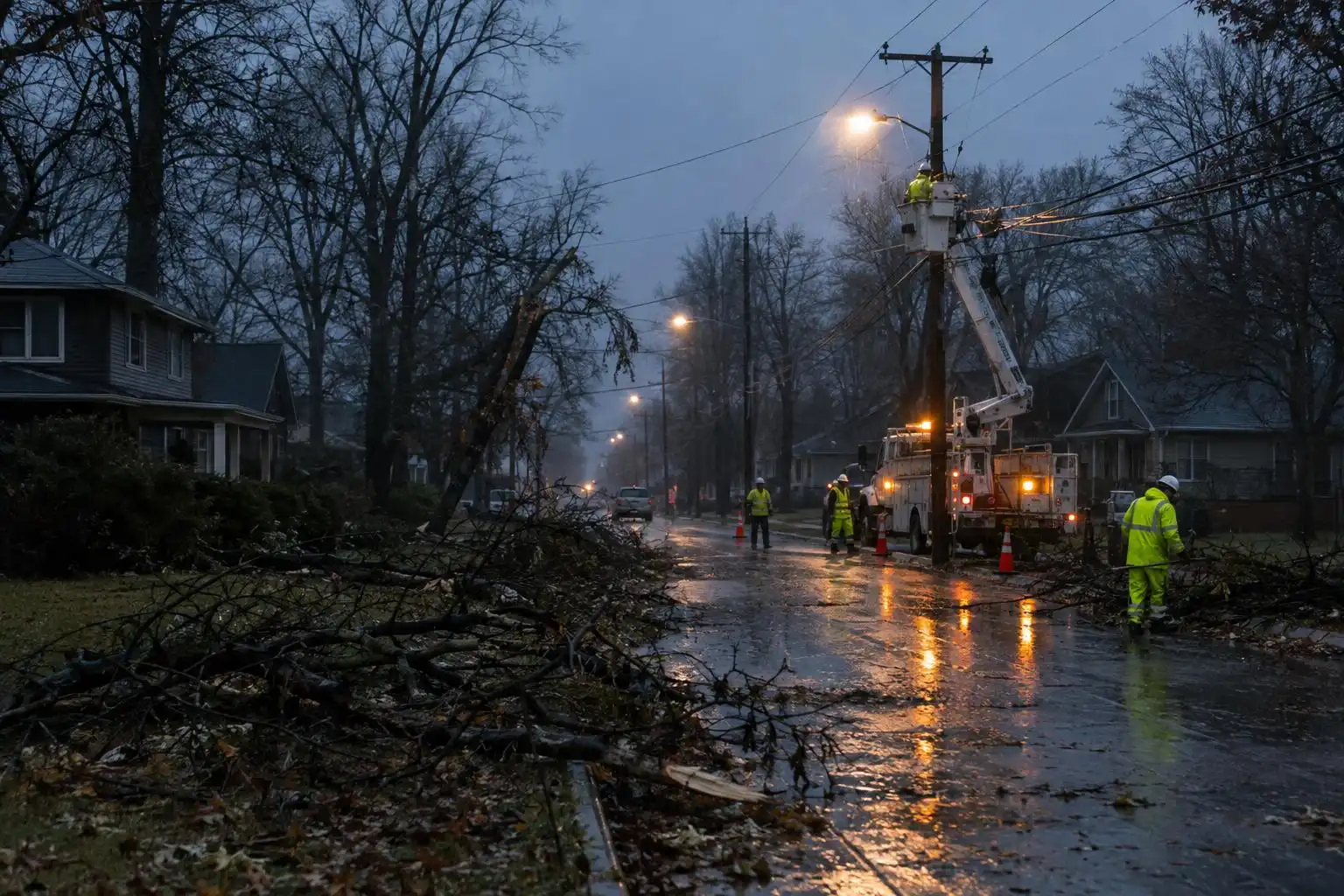

A winter forecast can tell you where snow is more likely. It cannot tell you whether a falling tree will cut power to your street, or whether a warm storm will bring rain to a mountain town instead. As the United States looks toward a winter influenced by a strong El Niño, those distinctions matter as much as the snowfall map.[5]
Snowfall Outlooks Are Not Snowfall Promises
A seasonal guide published by weather.com favors the Sierra and Rockies for January snowfall while pointing to limited snow chances in much of the East. It also notes that wetter weather in parts of the Appalachians and Northeast could arrive as mixed precipitation rather than snow.[5]
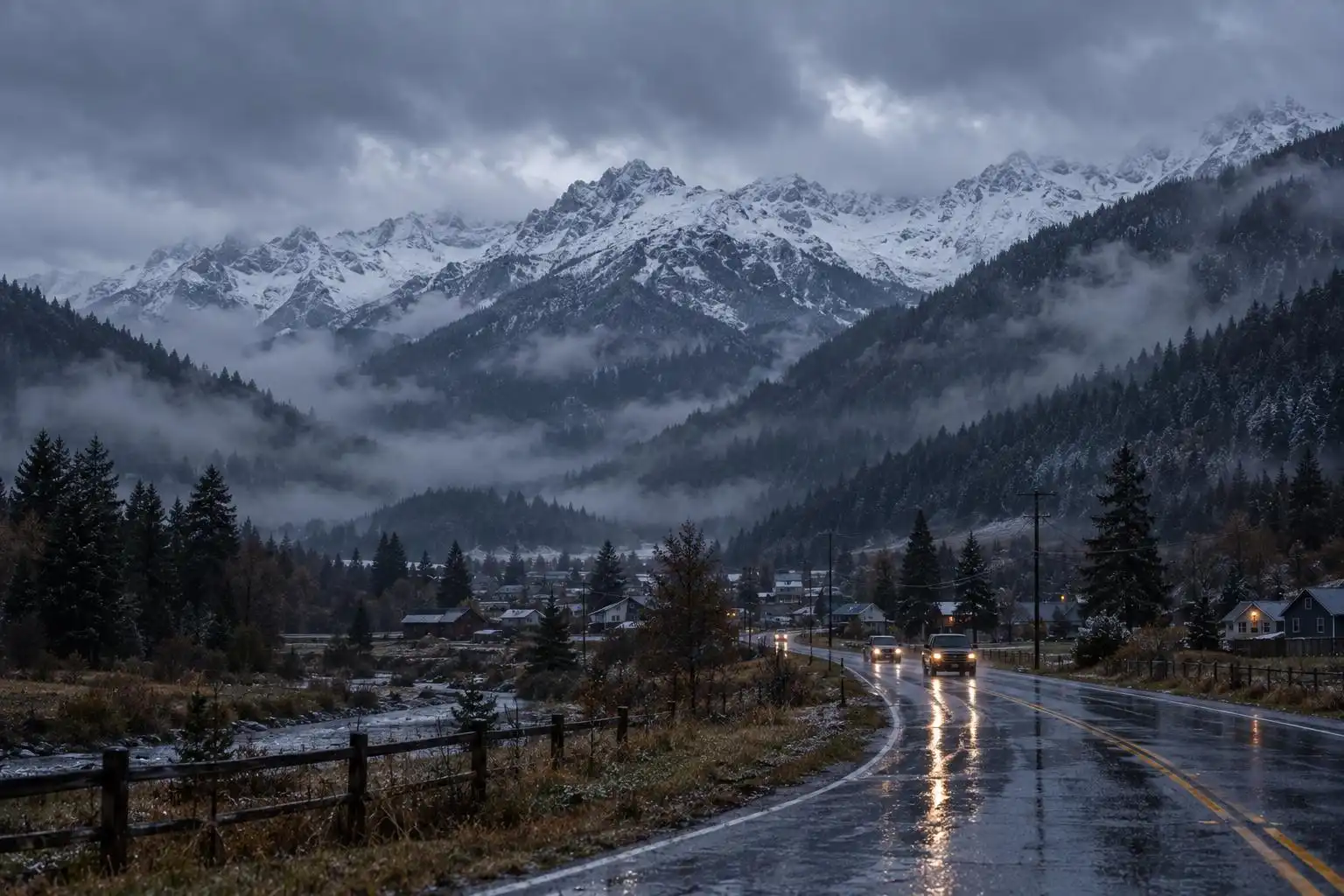
That is a useful regional outlook, not a forecast for a particular ski weekend or commute. El Niño shifts the odds of broad weather patterns; it does not dictate the path, temperature, or precipitation type of every storm. A few degrees can separate a snowstorm from freezing rain or a cold, soaking rain. Travelers and residents alike need to check shorter-range forecasts as a storm approaches.
Wind and Rain Can Disrupt a Winter Before Snow Falls
Recent storms around the British Isles offer a reminder that winter-season disruption does not require deep snow. BBC News reported that high winds and heavy rain associated with Storm Boelo left families without electricity, toppled trees, disrupted travel, and broke a fishing boat from its moorings. As another storm eased, an energy provider said about 2,000 properties in northern Scotland remained without power.[3]
The precise hazard changes with the storm, but the household consequences can look familiar: food storage becomes a concern, heating or medical equipment may depend on electricity, and roads can be blocked just when people need supplies. A forecast that says “rain” deserves a closer look when it also calls for strong wind, saturated ground, or temperatures near freezing.
Backup Power Is Growing—but Not Equally
Businesses are investing in ways to keep electricity flowing when the wider grid is strained. Reuters Events reports that demand from AI data centers, aging grid infrastructure, and extreme-weather risks are helping drive investment in microgrids and other on-site power systems. It describes a fully islanded system under construction for a large technology customer in Ohio.[4]
A microgrid can, when designed and operated for it, disconnect from the larger grid and serve its own connected loads. But a data center’s backup system is not automatically a backup system for nearby homes. That distinction raises a practical question for communities: which facilities—such as shelters, water systems, and clinics—can keep operating during an outage, and which residents may need help reaching them?
Good Decisions Still Depend on Good Observations
Seasonal outlooks and local storm warnings rely on different kinds of information, but both benefit from sustained weather and climate observations. The Guardian reported this week on concerns that cuts to the National Oceanic and Atmospheric Administration have stalled research related to El Niño and extreme-weather response.[2]
No observing network can eliminate uncertainty. Its value is helping forecasters detect changes, test predictions, and update warnings as conditions develop. For a household deciding whether to travel, or a utility deciding where to stage repair crews, timely updates are more useful than treating an October winter outlook as a fixed script.
Prepare for the Failure, Not Just the Forecast
Before the next storm, find out how your local utility reports outages and how your community announces warming centers. Keep phones charged when warnings are issued, make a safe plan for essential medical devices, and follow generator instructions carefully: portable generators belong outdoors, well away from doors and windows, because of carbon monoxide risk.
This winter may bring excellent snow to some slopes and messy rain or ice elsewhere. The most resilient communities will be ready for both the weather they expect and the interruption they cannot yet pinpoint.
References
- Trump’s cuts have exposed US to ‘cascade’ of El Niño … — https://www.theguardian.com/environment/2026/oct/27/trump-cuts-el-nino-noaa
- Severe weather – BBC News — https://www.bbc.com/news/topics/cx1m7zg05wpt
- AI scaling race accelerates investments in microgrid technology | Reuters — https://www.reuters.com/business/energy/ai-scaling-race-accelerates-investments-microgrid-technology–reeii-2026-10-26
- Where to ski each month: Best US snow conditions by region — https://weather.com/2026/10/29/travel/best-ski-conditions-snow-us-december-january-february


Leave a Reply
You must be logged in to post a comment.