
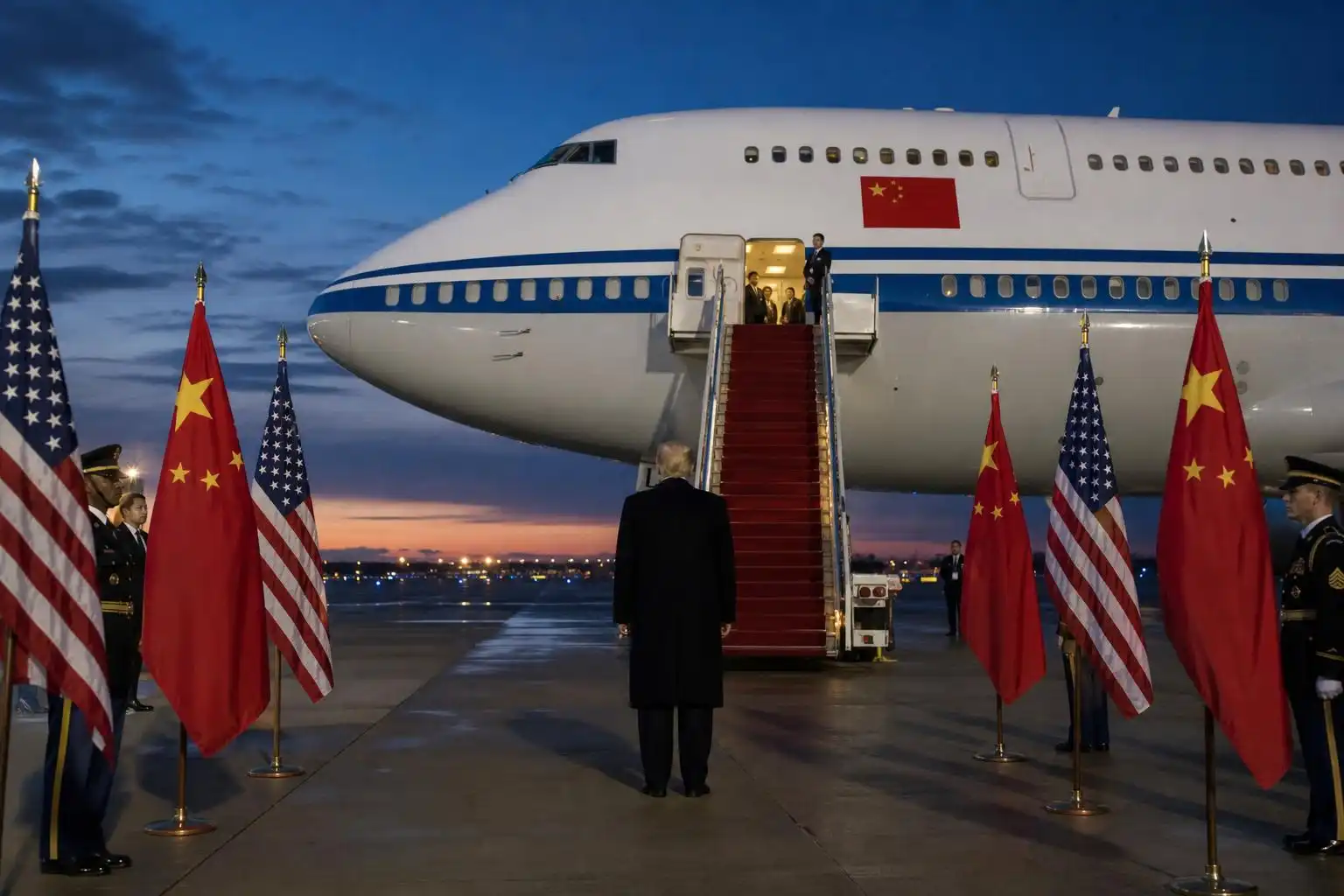

President Donald Trump is preparing a ceremonial welcome for Chinese President Xi Jinping in Washington, but the state visit arrives amid consequential disputes over trade, technology, Taiwan and Iran. At the same time, the White House is navigating fresh diplomacy with Tehran, record diesel prices and a major overhaul of U.S. refugee admissions.
Xi’s visit puts superpower tensions on display
Xi departed Beijing on Wednesday for a three-day U.S. visit, accompanied by his wife, Peng Liyuan, senior Communist Party official Cai Qi and Foreign Minister Wang Yi. Trump is expected to greet the Chinese leader on arrival at Joint Base Andrews, an unusually personal planeside welcome before a carefully choreographed set of events in Washington.[1]
The program is designed for spectacle: a state dinner involving technology leaders, a White House military ceremony with flyovers and a National Archives visit are among the planned events. But the stagecraft should not obscure the difficult agenda. The two governments are expected to issue separate announcements rather than hold a joint news conference, leaving each side room to stress its own version of the talks.[5]
Trade, Taiwan and Tehran are the central tests
Xi is expected to press Trump to reduce U.S. arms sales to Taiwan. A proposed second arms package reportedly worth about $14 billion has been held up for months after an $11 billion package was approved in December. Trump has described arms sales as a negotiating tool, making Taiwan both a security issue and a bargaining chip in the broader relationship.[5]
Iran also links the two leaders’ agendas. China is Tehran’s largest trading partner, yet Washington has withheld secondary sanctions on major Chinese banks despite Trump’s threats of sweeping economic action against countries doing business with Iran. Beijing’s lower oil demand and release of strategic stockpiles have also helped steady crude markets during the war, according to Reuters.[5]
Iran contact follows a stark UN warning
Trump said U.S. envoys Steve Witkoff and Jared Kushner met Iranian officials for roughly three hours Tuesday on the sidelines of the United Nations gathering. The reported contact came shortly after Trump warned in his General Assembly address that he could “annihilate” Iran if a deal to end the nearly seven-month conflict is not reached soon.[1]
The juxtaposition illustrates the administration’s approach: keep a negotiating channel open while maintaining public military and economic pressure. No substantive details of the meeting were disclosed, so it remains unclear whether it marks a meaningful opening or a brief diplomatic exchange amid a war that continues to reverberate through energy markets and alliance politics.
Diesel proposal exposes the energy squeeze
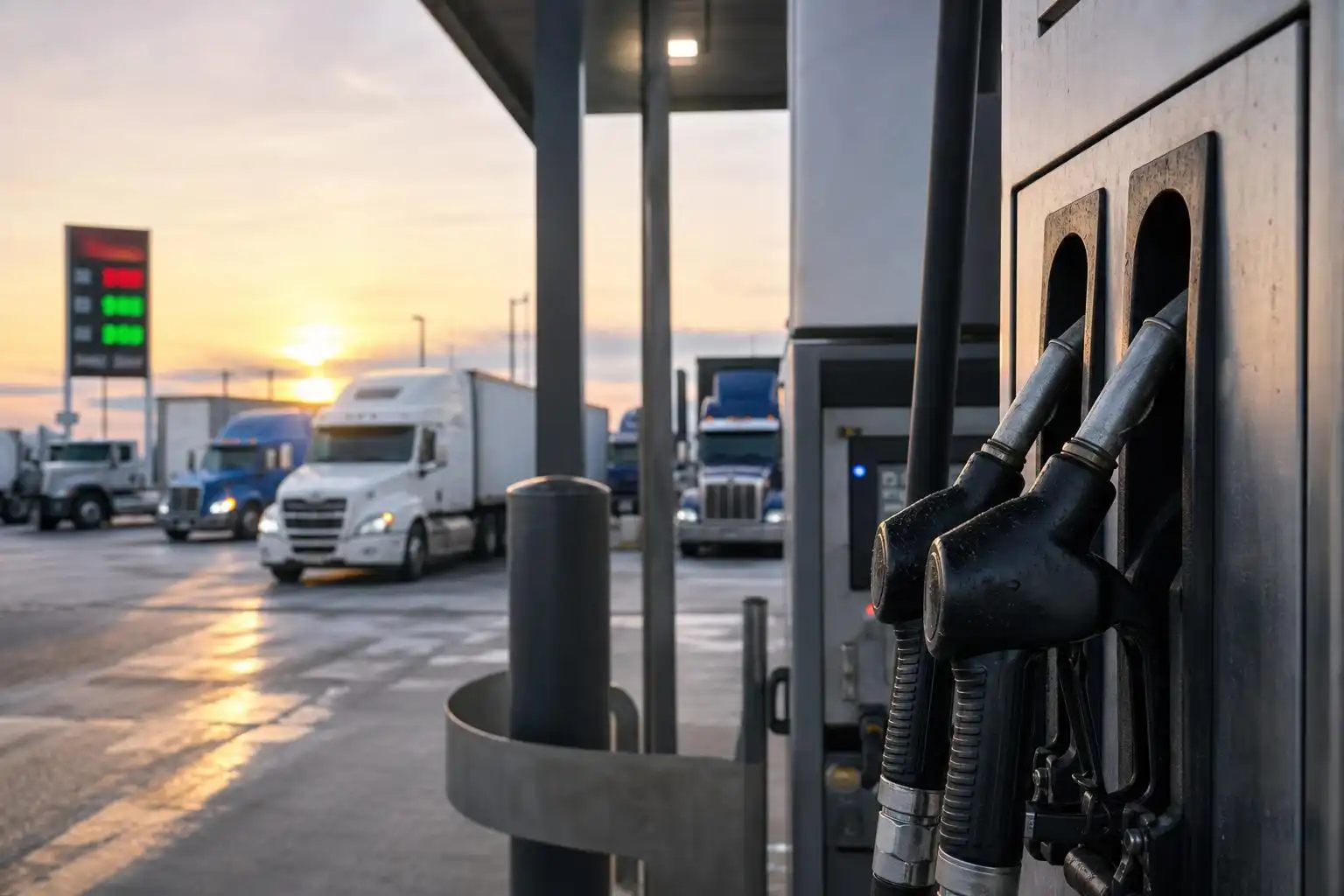
Trump has backed the idea of banning U.S. diesel exports as farm-state lawmakers seek relief from record fuel costs. Diesel prices in the United States and Europe have been driven higher as the Iran and Ukraine wars cut exports from major producers including Russia, Saudi Arabia and the United Arab Emirates.[4]
Administration energy officials have warned that an export ban could prove counterproductive. Energy Secretary Chris Wright said restricting flows could create a Gulf Coast glut, force refiners to reduce output and ultimately curb gasoline production. Interior Secretary Doug Burgum similarly warned that a ban may not lower petroleum prices and could invite retaliation from countries supplying energy to states such as California.[4]
Europe, which depends heavily on diesel imports from the United States, could feel an immediate effect. Analysts told Reuters an export curtailment would further tighten supplies for key U.S. allies. The debate is a reminder that domestic fuel-price politics and foreign policy are now inseparable: actions intended to ease pressure at home can shift it rapidly across the Atlantic.[4]
Refugee policy and press access add domestic friction
The administration told Congress it plans to cap refugee admissions in 2027 at 17,500, with the program focused mostly on white South Africans. It said it intends to spend about $500 million resettling the arrivals, a sharp departure from a refugee system historically aimed at people escaping wars, persecution and humanitarian crises worldwide.[1]
At the UN, Trump also confronted a CNN reporter, telling Kaitlan Collins she should not be there. CNN, MS NOW and Politico have sued after being barred from White House grounds; the outlets argue the restriction is unconstitutional. The dispute will continue in court even as the administration uses the UN week to project diplomatic reach abroad.[1]
What to watch next
The immediate question is whether the Xi visit produces concrete agreements or merely parallel declarations. Any move on tariffs, technology restrictions, Iranian sanctions or Taiwan arms sales would carry consequences well beyond the ceremonial welcome.
For Americans, the most tangible near-term measures may come through the price at the pump and the cost of goods. For U.S. partners, the stakes include diesel supplies, Taiwan deterrence and whether Washington can translate its high-pressure diplomacy with Iran into a credible path away from a widening war.
References
-
Live updates: China’s Xi kicks off state visit to Washington with a rare planeside welcome from Trump — https://apnews.com/live/trump-xi-china-cnn-unga-news-updates-09-23-2026
-
Trump supports diesel export ban as fuel prices hit records — https://www.reuters.com/world/us/trump-says-he-backs-idea-ban-diesel-exports-2026-09-22
-
Trump plans grand spectacle for potentially tense Xi talks — https://www.reuters.com/world/china/trump-plans-grand-spectacle-potentially-tense-xi-talks-2026-09-23


Leave a Reply