

Thanksgiving travel is difficult enough without a flooded street, a damaged roof or a power outage. As the 2026 holiday weekend began, severe weather was affecting both U.S. coasts. Reports described hundreds of canceled flights and hundreds of thousands of people without power, including in Virginia, North Carolina and New Jersey.[2]
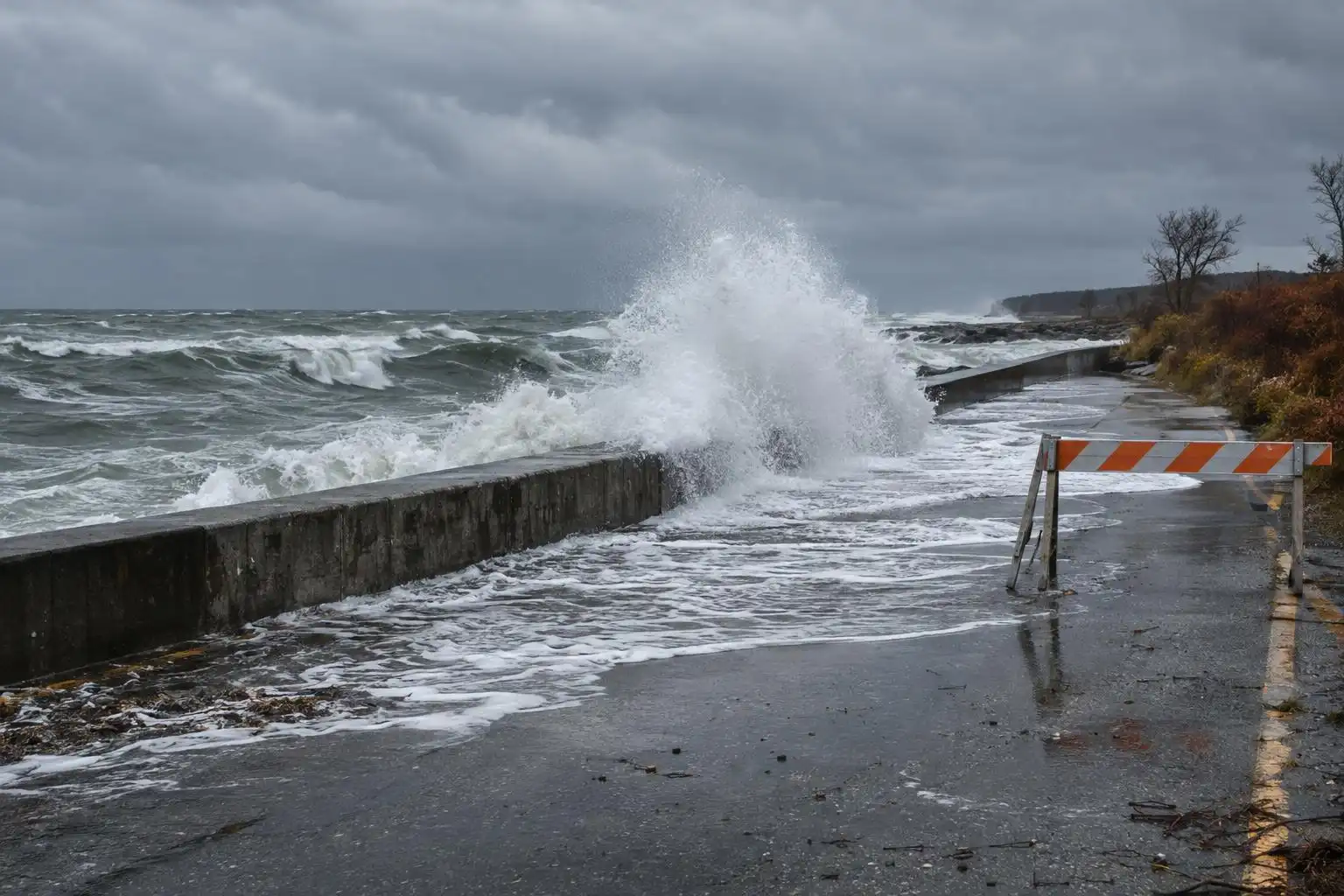
California faced a different coastal problem. Ahead of Thanksgiving, high tides and flooding were a concern; subsequent reporting described record-breaking tides flooding roads and businesses, with a large wave crashing over a seawall in Pacifica.[4][3] The hazards on the two coasts need not come from one weather system to disrupt the same holiday.
Why a Tide Can Become a Flood
A high tide sets the starting water level at the coast. On top of it, strong winds can push water toward shore, while large waves can run up beaches or over seawalls. When those effects coincide, water may reach roads and buildings that remain dry during an ordinary high tide. Rain can add another problem by filling low spots and slowing drainage.
Those ingredients should not be treated as interchangeable. A photograph of a wave overtopping a wall shows an immediate hazard, but it does not, by itself, establish how much of a nearby flood came from tide, waves or rainfall. For residents and travelers, the distinction matters less than the practical question: will the route still be passable when they need it?
Wind Damage Reaches Beyond the Shore
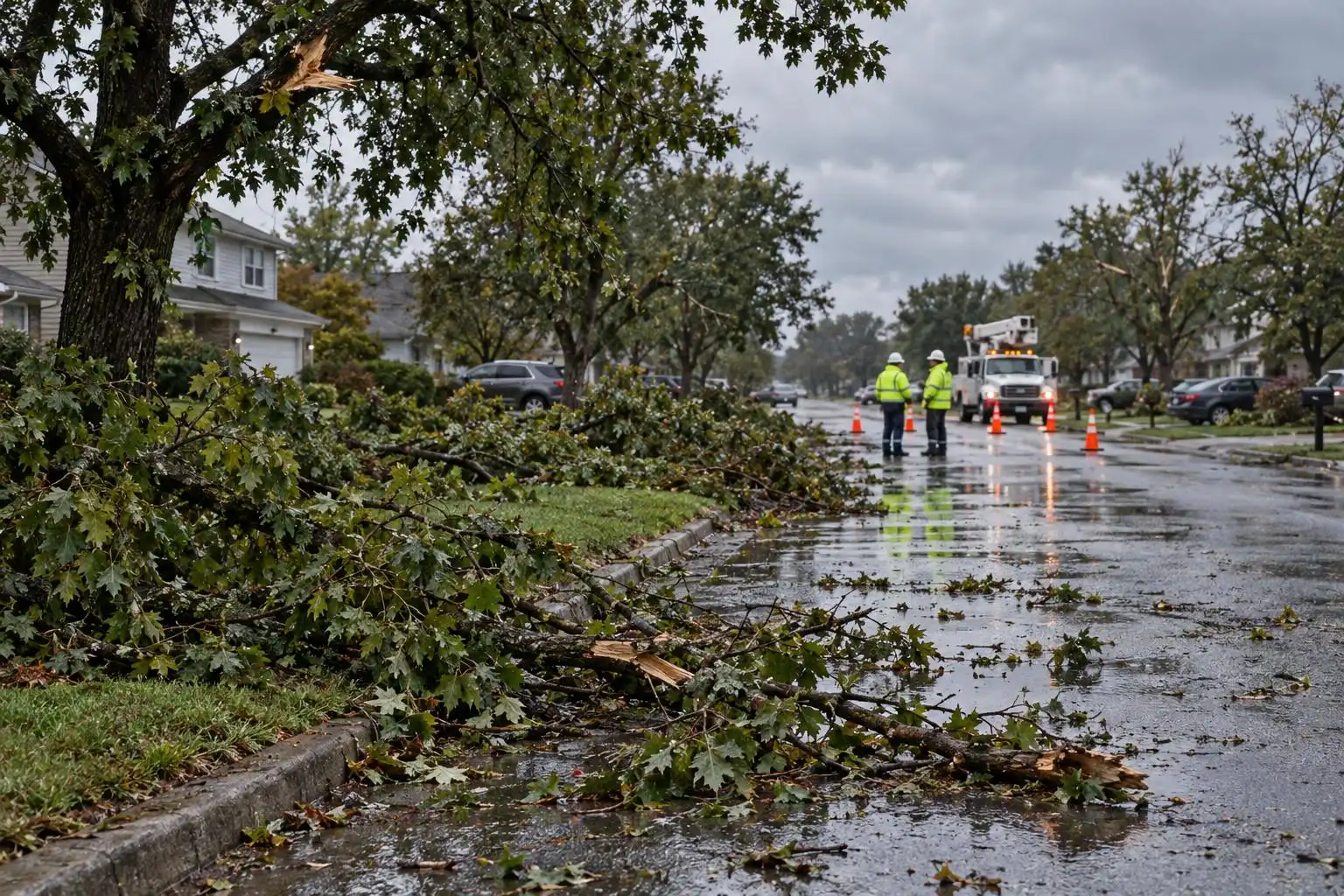
On the eastern side of the country, holiday-weekend footage showed roofs torn from houses and streets under water.[2] Damaging winds can also bring down trees and power lines well inland. A flight cancellation may begin with conditions at an airport far from a traveler’s destination, making weather disruption difficult to judge from the sky outside one terminal.
The human costs extend beyond a delayed trip. Losing electricity can mean losing heat, refrigeration or the ability to charge a phone. Water across a familiar street can cut off access to work, medical care or a relative’s home. These are reasons to follow local alerts rather than relying on a broad description such as “coastal storm.”
Thanksgiving Has a History of Weather Surprises
Holiday weather has caught Americans off guard before. A late-November 1983 storm brought more than 20 inches of snow to much of northeastern Colorado, with higher totals on the eastern slopes of the Rockies. As the system moved northeast, at least a foot of snow fell along a corridor stretching from Denver toward Duluth, Minnesota.[1]
That storm was a snowstorm, not a template for this weekend’s coastal flooding and wind damage. Its lesson is about exposure: a storm becomes especially disruptive when it intersects with a period when many people are on the road, in the air or far from their usual supplies.
Make the Next Decision a Safe One
Before setting out, check the latest local weather alerts and the status of each road or flight on your route. If water covers a road, turn around; its depth and the condition of the pavement beneath it may be impossible to judge. Keep clear of downed wires, and never run a generator indoors or near an opening where exhaust can enter a building.
Along the coast, give seawalls, beaches and flooded streets room even if a wave has just receded. Conditions can change with the next tide or burst of wind. This weekend’s reports are a reminder that a holiday forecast is not merely about whether travel will be comfortable. It can determine whether the safest trip is the one postponed.
References
- Weirdest Thanksgiving Weather Events In US History — https://weather.com/2026/11/26/science/weather-explainers/weirdest-thanksgiving-weather-events-us
- Watch: Roofs torn off and streets under water as severe weather hits US — https://www.bbc.com/news/videos/cq808d704m22o
- Extreme weather — https://www.theguardian.com/world/extreme-weather
- California on edge as high tides and floods set to wreak … — https://www.theguardian.com/us-news/2026/nov/23/california-high-tides-floods-weather-thanksgiving


Leave a Reply
You must be logged in to post a comment.