
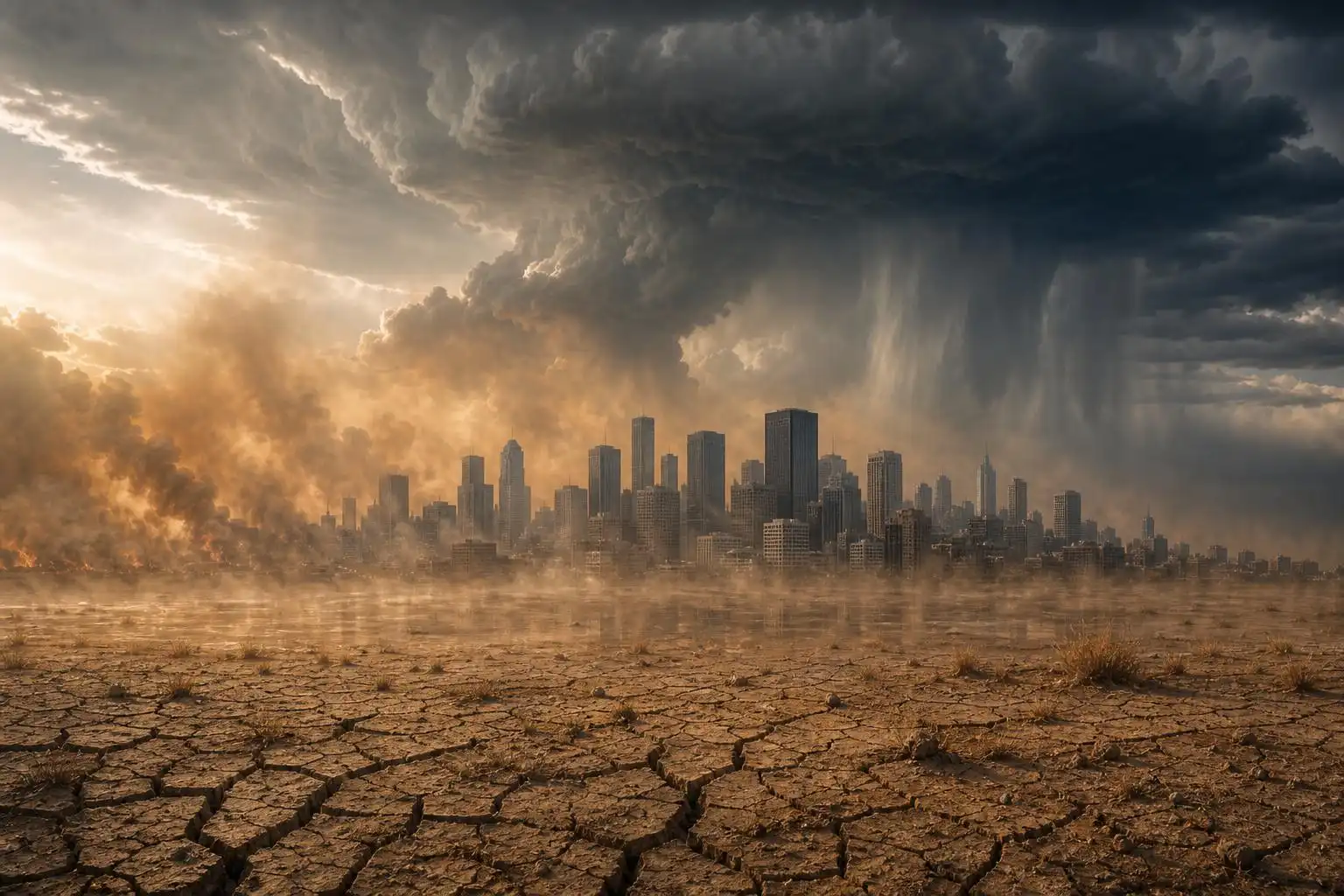

There are summers when the weather map looks busy, and then there are summers when it looks interconnected. Smoke from Canadian forests dims skies over U.S. cities. A thunderstorm line clears the haze but drops enough rain to flood transit hubs. Europe bakes under heat that dries soils even after a wet winter. Argentina logs a winter night that feels like midsummer. And across the Pacific, a strengthening El Niño pattern helps load the dice for tropical cyclone activity.
That is the pattern taking shape now: not one disaster, but overlapping hazards. As a meteorologist, I think this is one of the most important shifts for the public to understand. Extreme weather is not just becoming more intense in many places; it is increasingly arriving in combinations that strain emergency managers, infrastructure, farms, health systems, and families all at once.
Americans Are Noticing the Pattern
A new survey shared with The Guardian found that 61% of likely U.S. voters believe extreme weather events have become more frequent over the past five years, including 72% of Democrats, 63% of Independents, and 46% of Republicans.[1] That last number matters. Weather is local, and repeated exposure has a way of cutting through abstractions.
The same survey found majorities linking climate change to worsening wildfires, droughts, flooding and flash flooding, hurricanes, severe thunderstorms, and hailstorms, with heat waves topping the list at 67%.[1] Heat may be the hazard that builds the broadest agreement because nearly every region has felt it recently, and because heat is often less dramatic on camera but more dangerous in the death statistics.
High temperatures kill more people annually in the United States than hurricanes, tornadoes, and floods combined, according to the reporting on the survey.[1] That is why heat deserves the same urgency we give to named storms and tornado warnings. It is not just uncomfortable weather. It is a public-health hazard, especially for outdoor workers, older adults, people without reliable cooling, athletes, unhoused residents, and anyone taking medications that affect hydration or temperature regulation.
Smoke, Then Storms: The Northeast’s Double Hazard
The northeastern United States recently saw a vivid example of compound weather risk. Canadian wildfire smoke returned to New York City and nearby communities, pushing air quality into unhealthy territory, before shifting winds helped bring in strong to severe thunderstorms.[3] In other words, the same change in the atmosphere that started to scour out smoke also opened the door to flash flooding.
The first wave of storms moved through northern New Jersey and New York City, triggering a flash flood warning as torrential rain hit vulnerable urban infrastructure, including reports of water pouring into parts of Penn Station.[3] This is a classic urban flood problem: pavement accelerates runoff, storm drains can be overwhelmed quickly, and underground transportation systems become collection points for water.
Meanwhile, parts of Texas were dealing with their own flood emergency after more than 2 feet of rain fell in some areas during a week of relentless downpours.[3] Near Ozona, floodwaters overtopped Interstate 10, more than 50 people were rescued by boat from flooded apartment complexes, and part of a bridge collapsed over the Nueces River in Uvalde County after months’ worth of rain fell in days.[3]
The meteorology behind these events can differ from region to region, but the vulnerability theme is similar: when rainfall rates exceed what land, rivers, roads, and drainage systems can handle, impacts escalate fast.
Canada’s Fire Season Is Now a Continental Air-Quality Event
More than 900 wildfires were burning across Canada, with smoke carried by winds into the United States and even across the Atlantic toward northern Europe.[2] That long-distance smoke transport is not unusual in a physical sense—upper-level winds can move fine particles thousands of miles—but the scale and frequency of these smoke episodes have made them a recurring part of summer life for places far from the flames.
Wildfire smoke is a complicated hazard because it can arrive under otherwise calm skies. People may look outside and see haze rather than danger, yet fine particulate matter can penetrate deep into the lungs and aggravate asthma, heart disease, and other health conditions. For schools, summer camps, construction crews, outdoor sports leagues, and people who work delivery routes, air quality has become part of the daily weather forecast.
This is also where risk communication gets tricky. A community can be under an air-quality alert in the morning, a severe thunderstorm watch in the afternoon, and a heat advisory the next day. Emergency messaging has to be clear enough for people to act, but flexible enough to handle hazards that stack on top of each other.
Europe’s Drought Shows How Heat Can Dry a Landscape Even Without a Rainfall Deficit
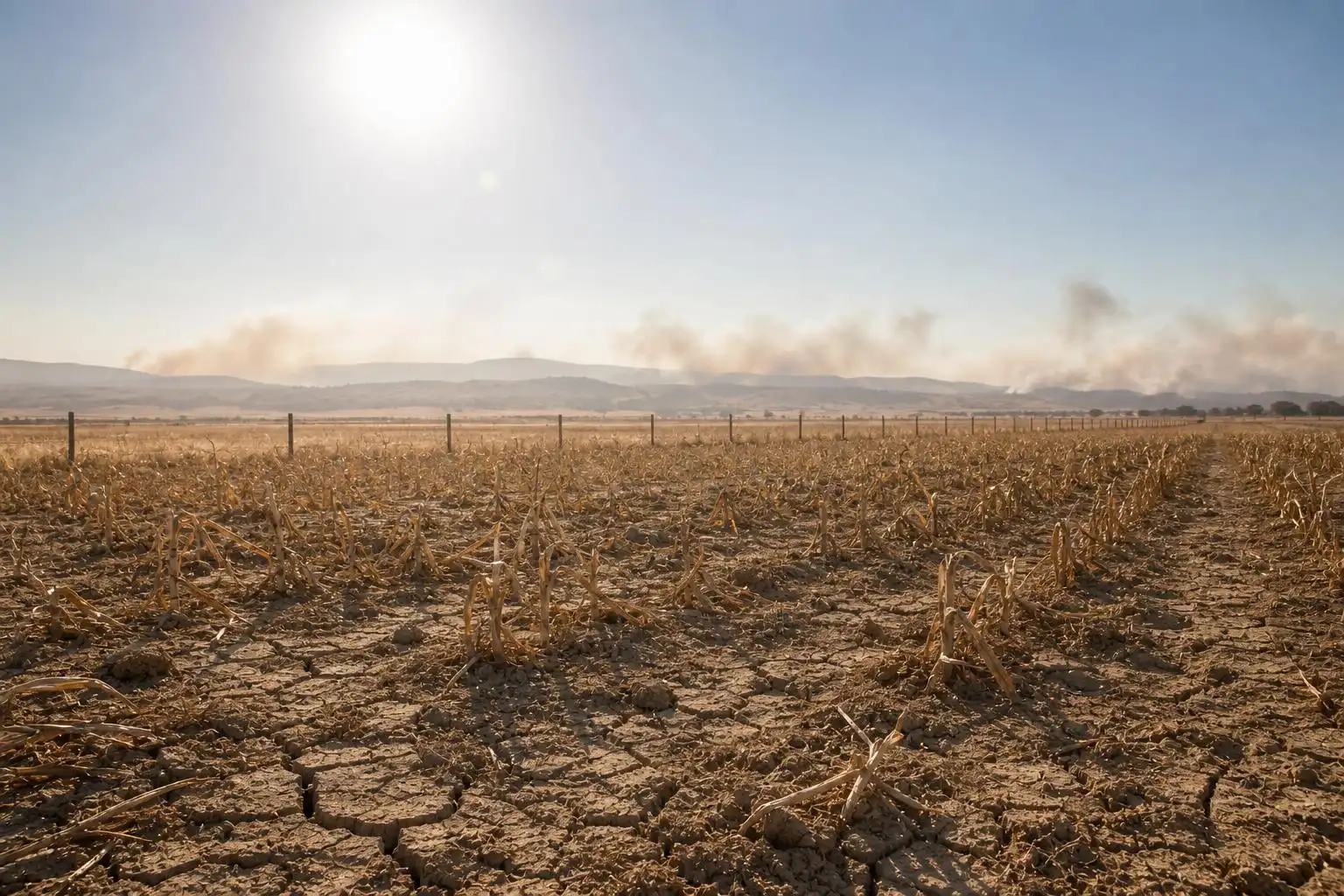
One of the most important scientific developments in recent drought research is the growing recognition that drought is not only about how much rain falls. It is also about how fast the atmosphere pulls moisture back out of soils, rivers, lakes, crops, and vegetation.
A World Weather Attribution analysis reported that record-breaking heat waves helped drive severe soil drying across Europe, with the hot atmosphere strongly evaporating water from rivers, lakes, soils, and plants.[5] The analysis found that these evaporative conditions were made 80 times more likely by global heating in western Europe and 40 times more likely in eastern Europe.[5]
That matters because western Europe had a wet winter, yet still entered a damaging drought as heat accelerated moisture loss.[5] In practical terms, a wet season no longer guarantees resilience if spring and summer heat rapidly erase the moisture savings account.
The agricultural consequences are already serious. The report cited expectations of about 9 million tonnes of grain losses across Europe, with France facing its worst maize harvest in 50 years and Romanian farmers losing more than a million hectares of crops.[5] This is where weather becomes economics: lower yields affect farm income, food prices, livestock feed, water allocation, and trade.
France’s Heat Wave Underscores the Human Toll
France’s historic June heat wave was not only a meteorological event; it was a mortality event. French health authorities reported 5,700 more deaths than usual during the episode, which they described as unprecedented because of its early onset, intensity, and duration while school and work activities were still in full swing.[4]
Early-season heat waves can be especially dangerous because people may not yet be acclimated, buildings may not have transitioned into summer cooling mode, and schools or workplaces may still be operating on normal schedules. Heat also behaves differently from many other hazards: it accumulates. A single hot afternoon can be dangerous, but multiple hot days and warm nights can become deadly because the body and the built environment do not get enough time to recover.
Warm nights are a critical piece of the heat-health equation. When nighttime temperatures stay high, people without air conditioning cannot cool down, and the risk of heat stress rises. That is why minimum temperatures deserve more public attention. The overnight low can be just as important as the afternoon high.
A Winter Heat Record in Argentina, and the Foehn Effect
The global nature of this pattern showed up in Argentina, where Salta recorded its warmest-ever overnight minimum temperature: 26°C, or 79°F, despite the country being in winter.[2] For context, Salta’s average winter nighttime minimum is about 3°C, making the reading extraordinary.[2]
The immediate driver was the Zonda wind, a local version of a foehn-type wind that develops when air crosses the Andes, descends on the leeward side, and warms and dries as it sinks.[2] Meteorologically, that sinking motion compresses the air, raising its temperature and lowering its relative humidity. Similar effects are seen with Chinook winds east of the Rockies and Santa Ana winds in Southern California.
But the background matters too. The report noted that a rapidly developing El Niño in the eastern Pacific may have contributed by leaving the incoming air mass warmer than average before it descended.[2] Local wind mechanics can create the spike, while a warmer baseline can help raise the ceiling on what that spike becomes.
El Niño Adds Another Layer of Risk
El Niño is not a storm. It is a basin-scale ocean-atmosphere pattern centered in the tropical Pacific, and its influence can ripple through weather patterns around the world. In the western Pacific, the strengthening El Niño is expected to increase typhoon activity, and Tropical Storm Noul formed north of the Philippines with forecasts indicating it could intensify into a typhoon before tracking between the Philippines and Taiwan and toward China’s southeast coast.[2]
That does not mean El Niño causes every typhoon, flood, drought, or heat wave. Attribution is more careful than that. But El Niño can tilt regional odds, shifting storm tracks, rainfall patterns, and heat distribution. When it occurs on top of a warmer climate system, the extremes that emerge can be more disruptive.
What Communities Can Do Right Now
The big solutions—resilient infrastructure, better building standards, cleaner energy systems, heat protections for workers, improved drainage, forest management, and stronger forecasting networks—require policy and investment. But households and communities can still take practical steps now.
During smoke events, check the Air Quality Index, reduce strenuous outdoor activity when air is unhealthy, keep windows closed if indoor temperatures allow, and use properly fitted N95-style masks if you must be outside for extended periods. If you have asthma, COPD, heart disease, or other vulnerabilities, follow your medical action plan early rather than waiting for symptoms to worsen.
During flash flood threats, never drive through water covering a road. It takes less moving water than most people think to float or sweep away a vehicle, and floodwater can hide washed-out pavement. In cities, avoid low-lying underpasses, basement spaces, and subway entrances during intense rainfall.
During extreme heat, treat shade, hydration, and cooling as safety tools—not luxuries. Check on older neighbors, schedule outdoor work for cooler hours when possible, and remember that fans alone may not protect the body when indoor temperatures are dangerously high. Warm nights deserve special caution because they prevent recovery.
The throughline in all of these events is that weather risk is becoming more layered. The forecast is no longer just “hot,” “stormy,” or “smoky.” Increasingly, it is all of the above, moving through the same communities in rapid succession.
That is the reality emergency managers are preparing for, scientists are documenting, and voters are beginning to recognize. The atmosphere is giving us plenty to talk about. The challenge now is turning that shared experience into preparation that saves lives.
References
- Majority of US voters link extreme weather to climate crisis, study finds — https://www.theguardian.com/environment/2026/jul/19/climate-crisis-us-voters-study
- Weather tracker: More than 900 wildfires rage across Canada — https://www.theguardian.com/environment/2026/jul/24/weather-tracker-wildfires-canada-argentina-heat
- Flash flood warnings strike north-east US amid wildfire smoke from Canada — https://www.theguardian.com/us-news/2026/jul/18/flash-flood-weather-north-east-us
- France recorded 5,700 more deaths than usual during its historic June heatwave — https://apnews.com/article/france-heatwave-extra-deaths-health-agency-dff2ed624e0cdad02f836d30ae3e878f
- Climate crisis-driven heat ‘sucking soils dry’ as extreme drought hits Europe — https://www.theguardian.com/environment/2026/jul/23/climate-crisis-heat-sucking-soils-dry-extreme-drought-europe-analysis


Leave a Reply