


A powerful earthquake in southern Japan has left at least 13 dead, knocked out power, ruptured roads, and triggered a suspected gas explosion that tore through part of a shopping mall. Rescuers worked through the night pulling survivors from the rubble as authorities probed the blast’s cause; the full extent of the disaster remains unclear. Earlier alerts warned of casualties at the mall following the 7.1 quake and subsequent blast. [5][2]
In Washington, Prime Minister Benjamin Netanyahu’s latest White House visit — his seventh under President Trump — underscored the political risk calculus both leaders are navigating as the Iran war grinds on and regional tensions persist. [2][1] Ukraine’s Volodymyr Zelenskyy, meanwhile, hailed a “good meeting” with Trump, part of a brisk diplomatic push that also includes Zelensky becoming the first foreign leader to visit Burnham, the U.K.’s new prime minister. [2][1]
On the battlefield and at sea, Ukraine and Russia have intensified strikes on vessels in the Black Sea and Sea of Azov, contributing to declines in regional oil and grain shipments. Kyiv also launched long-range drones at industrial targets deep inside Russia, while Russian drones hit near Odesa and in Ukraine’s Kherson region, where local officials reported one killed and three injured. These claims could not be independently verified by Reuters. [6]
At home, immigration enforcement is back in the spotlight: the Trump administration has begun arresting foreign citizens with expired U.S. visas at American airports, according to documents obtained by The New York Times and immigration lawyers. [3] Democrats are grappling with money and messaging, too, as reports point to debt and disarray at the Democratic National Committee amid a turbulent campaign year. [3]
Markets are fixated on the Federal Reserve’s July meeting. A new, notably tight-lipped Fed chair has avoided telegraphing policy, keeping traders guessing on the path for rates. The Times outlines what to watch as officials parse inflation progress and growth risks. [1][7]
Extreme weather remains a transatlantic threat. Record-breaking wildfires are ripping through parts of France and Spain ahead of another punishing heat dome, even as record-warm seas in the Pacific power multiple concurrent storms. The East Coast of the United States, meanwhile, braces for heavy downpours and severe thunderstorms. [1]
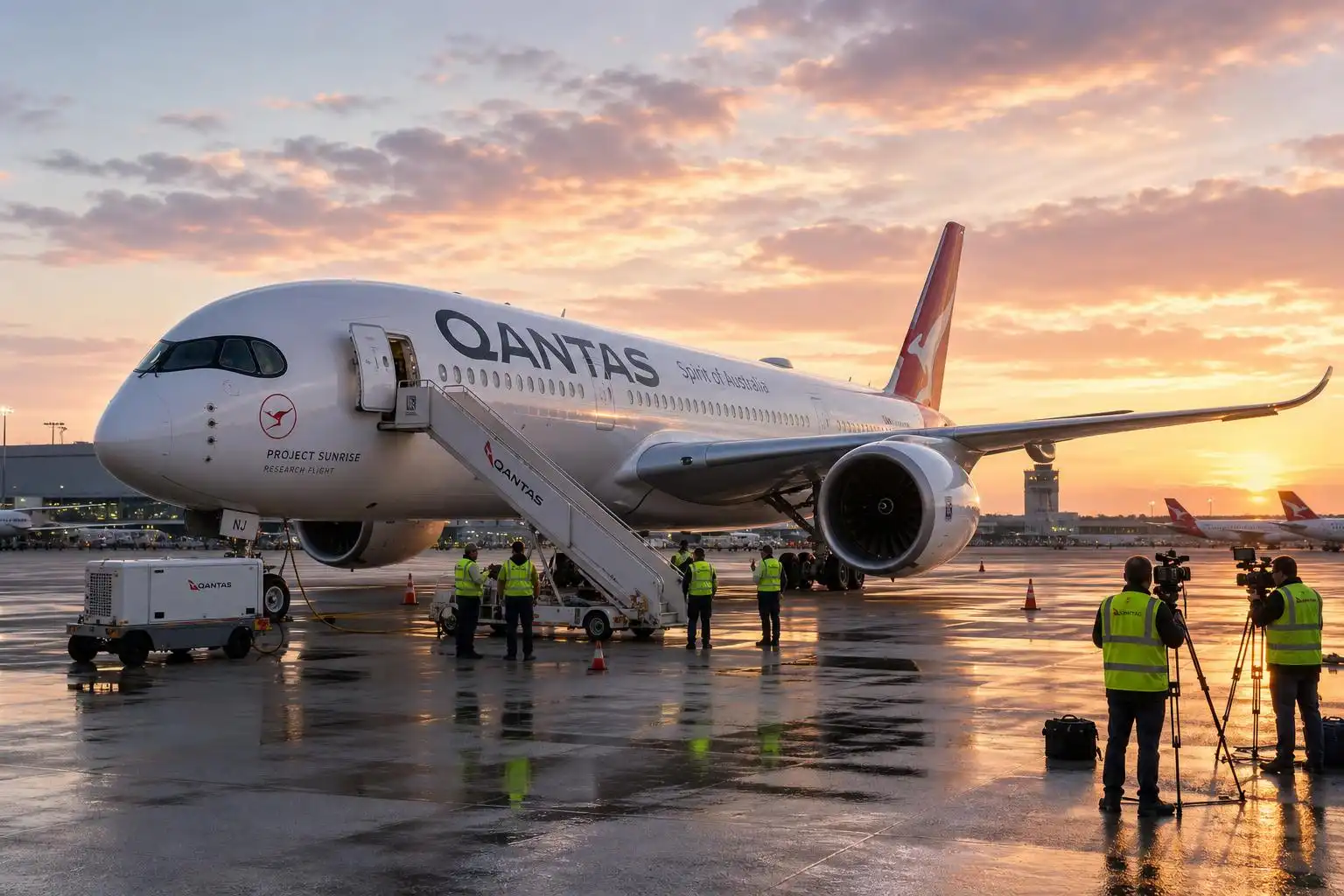
Aviation set a new endurance mark: a Qantas test flight stayed aloft for 24 hours and 24 minutes, covering roughly 23,075 km without stopping — an apparent record for a commercial aircraft, aided by an extra fuel tank and flown on an Airbus platform. [8]
Finally, Washington paused to remember Senator Lindsey Graham, as the Air Force moved to rename Joint Base Charleston in his honor and dignitaries gathered for his funeral. [1]
References
- The Washington Post — https://www.washingtonpost.com
- Al Jazeera — https://www.aljazeera.com
- ICE Arrests Surge at Airports, and Fauci’s Private Diary Faces Scrutiny (The New York Times) — https://www.nytimes.com/2026/07/29/podcasts/the-headlines/ice-airports-fauci-diaries.html
- Japan quake toll rises to 13 as rescuers haul people from a collapsed mall (Reuters) — https://www.reuters.com/world/asia-pacific/japan-quake-toll-rises-13-rescuers-haul-people-collapsed-mall-2026-07-29
- Ukrainian drones strike across Russia; both sides step up attacks on vessels (Reuters) — https://www.reuters.com/world/industrial-facilities-russias-ryazan-fire-after-drone-attack-regional-governor-2026-07-29
- What to Watch at the Federal Reserve’s July Meeting (The New York Times) — https://www.nytimes.com/2026/07/29/business/what-to-know-federal-reserve-july-meeting.html
- Qantas plane flies for more than 24 hours in record-breaking flight (The Guardian) — https://www.theguardian.com/business/2026/jul/28/qantas-plane-flies-for-more-than-24-hours-in-record-breaking-flight


Leave a Reply