
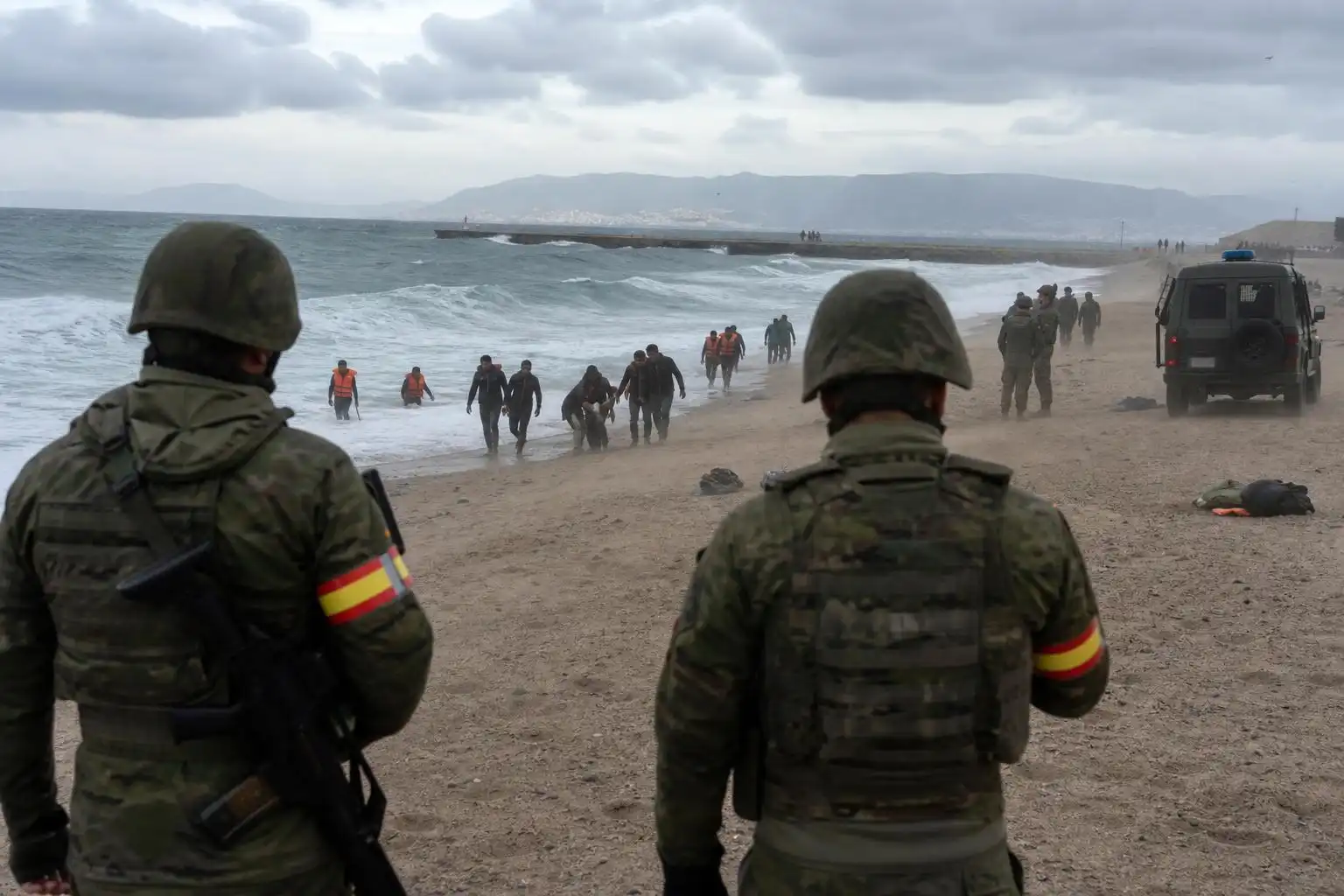

Europe’s open-borders project is under fresh strain after mass crossings into Spain’s North African enclave of Ceuta prompted Madrid to send troops—amid reports that Italy moved to suspend free movement with Spain, raising the question of a broader Schengen wobble.[1][7]
U.S.–Brazil tensions spiked as Washington revoked the visa of Brazilian Ambassador Maria Luiza Ribeiro Viotti in response to Brasília delaying approval of the White House’s pick for envoy—and after Brazil denied visas to two U.S. officials over alleged election interference concerns. The State Department framed the move as reciprocal; Brazil criticized it, setting up a high‑stakes standoff over the nomination of Daniel Perez, a Republican Florida state lawmaker chosen as the next U.S. ambassador to Brazil.[5][3]

On the battlefield in Ukraine, at least 27 people were killed as Russia and Ukraine traded heavy attacks, with fuel infrastructure increasingly in the crosshairs—an ominous shift that heightens civilian risk and complicates logistics.[1][2]
In Washington’s courts and markets, a judge reluctantly dismissed the final Jan. 6 cases tied to the Oath Keepers, even as U.S. stocks notched fresh records on easing worries about Middle East escalation and A.I. volatility.[2] The broader economy showed mixed signals: the U.S. trade deficit narrowed in June as both imports and exports fell, with imports declining more sharply—even as war-related disruptions—from the Strait of Hormuz to commodity inputs—kept supply chains on edge.[4]
The Iran file remains unsettled. Despite talk of a deal to stabilize traffic through Hormuz, Tehran’s insistence on collecting transit fees—a red line for the White House—has fed oil-price volatility and political costs at home, underscoring how hard successive administrations have found it to parse Iran’s power centers and incentives.[6] The rhetoric hasn’t cooled either: the president has repeatedly cast negotiations as Tehran’s “last chance,” a pattern that has yet to yield a durable breakthrough.[1]
Tech and security stories are colliding, too. Palantir reported eye‑popping growth despite criticism tied to Gaza, even as a new wave of data‑center buildouts raises air‑pollution concerns that could force hard choices about how—and where—the A.I. economy scales.[1][2]
Around the region and beyond: Spain’s troop deployment in Ceuta followed deadly scenes offshore, with multiple drownings reported amid chaotic crossings from Morocco—another reminder that the Mediterranean migration crisis is not contained to the sea lanes of Italy and Greece.[7] And in the U.S., authorities arrested a suspect over the Spokane wildfire that forced mass evacuations, while rights groups demanded answers after a Salvadoran man died in ICE custody at a New Jersey facility.[1]
The bottom line: Geopolitics and economics remain tightly linked. Europe’s border strains, America’s sharp‑edged diplomacy with Brazil, and the unresolved Iran‑Hormuz puzzle are all feeding through to energy markets, trade flows and corporate risk. Markets may be rallying, but today’s headlines still read like a volatility index in waiting.[2][4]
References
- Breaking News, World News and Video from Al Jazeera — https://www.aljazeera.com
- A Growing Data Center Pollution Threat, and the Last of the Jan. 6 Cases — https://www.nytimes.com/2026/08/05/podcasts/the-headlines/data-center-pollution-threat-last-jan-6-cases-michigan-primary.html
- Latin America — https://www.bbc.com/news/world/latin_america
- U.S. Trade Deficit Dips in June Along With ‘World Cup Effect’ — https://www.nytimes.com/2026/08/04/business/economy/us-trade-deficit-june.html
- U.S. Revokes Visa of Top Brazilian Diplomat, Dialing Up Tensions — https://www.nytimes.com/2026/08/04/world/americas/brazil-ambassador-us-visa.html
- An Angry Trump Struggles to Understand Iran’s Defiant Leaders — https://www.nytimes.com/2026/08/04/us/politics/trump-iran.html
- Morocco — https://www.bbc.com/news/topics/cx1m7zg0gylt


Leave a Reply