
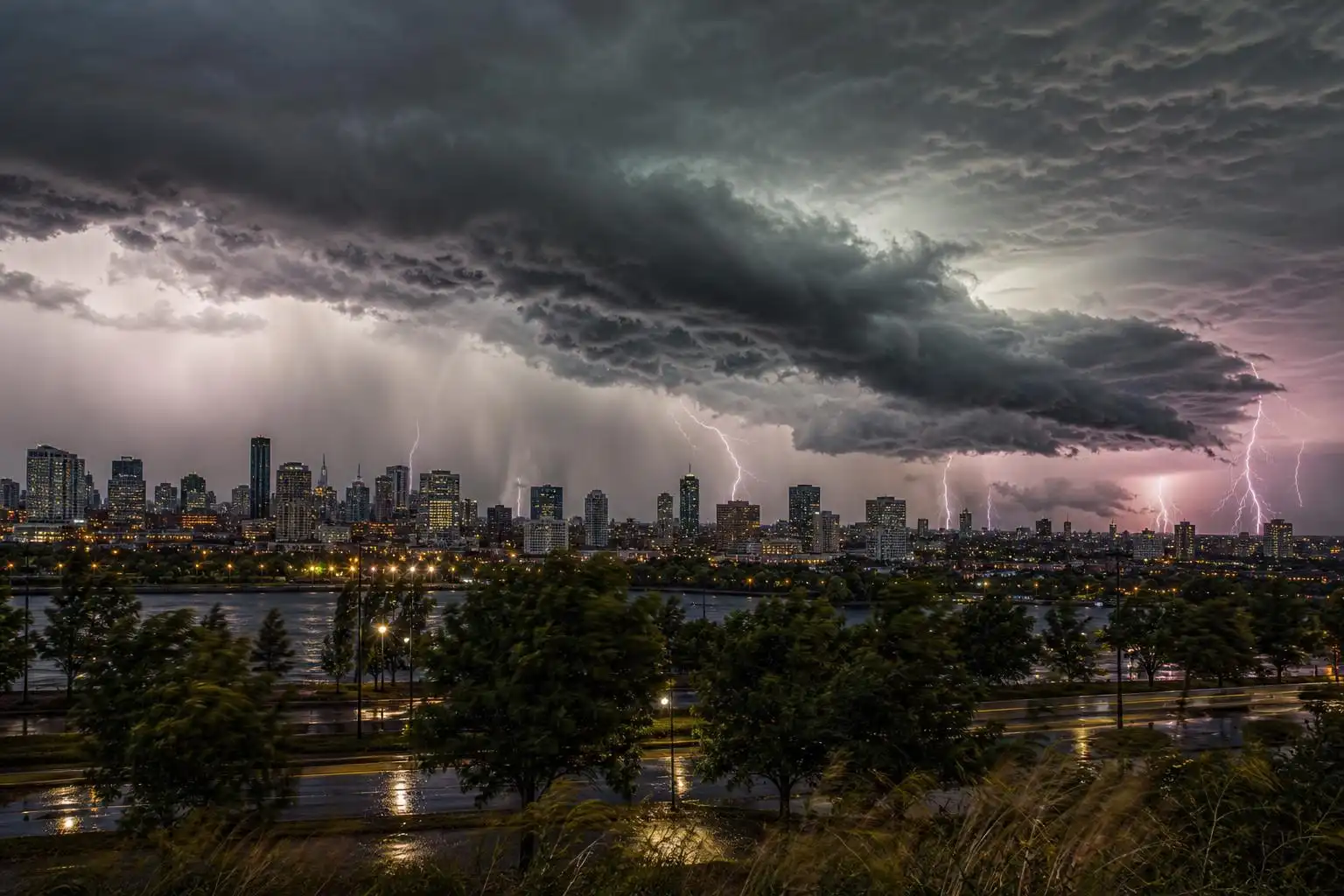

A quiet but important shift is underway in the way weather risk is showing up on American balance sheets. Hurricanes still produce some of the most terrifying single-event disasters in U.S. history, but the broader insurance problem is increasingly being driven by severe thunderstorms: wind, hail, derechos, and tornado-producing storm complexes that can strike far from the coast and often with only minutes to hours of warning.
According to Aon data cited by AccuWeather, U.S. severe-weather events accounted for about $68 billion in insured losses last year, while cumulative insured losses from severe thunderstorms have climbed to roughly $794 billion since 2000.[1] That is a staggering number, and it reflects a hazard that is not confined to hurricane season, coastal counties, or floodplains.
The thunderstorm threat is becoming a national cost problem
Severe thunderstorms are expensive because they are common, widespread, and very good at finding things humans have built. A hurricane may dominate the national headlines for a week, but hail swaths and damaging wind events can repeatedly rake across suburbs, warehouses, schools, farms, solar installations, vehicle lots, and dense urban neighborhoods from spring through fall.
First Street analysis cited in the AccuWeather report found that severe thunderstorm and tornado winds of at least 65 mph threaten broad stretches of the United States, including major population and economic centers such as Chicago, Dallas, New York City, Phoenix, and Detroit.[1] Winds in that range can peel shingles, break large tree limbs, bring down power lines, and turn unsecured outdoor objects into hazards.
The reason this matters is simple: exposure has exploded. More homes, cars, warehouses, data centers, power infrastructure, and commercial roofs now sit in the path of severe convective storms. Even when the meteorology is not historically unprecedented, the damage bill can be.
Hail is no longer just a farm-country problem
Hail deserves special attention because it is one of the most efficient property-damage machines in the atmosphere. The same storm that produces brief, localized hail may leave behind thousands of dented vehicles and battered roofs in a matter of minutes.
The AccuWeather report notes that the United States dominates global hail-risk rankings, with Texas ranking first worldwide for economic activity exposed to hail of at least 1 inch, followed by Illinois; Ohio, North Carolina, and Georgia also rank among the global top 10.[1] One-inch hail is often where property claims begin, while larger stones can smash skylights, crack windshields, puncture siding, and compromise roofing materials.
Meteorologically, big hail requires a strong updraft, cold air aloft, enough instability, and wind shear that helps the storm stay organized. But from a community-impact standpoint, the key factor is often timing and location. A hailstorm over open rangeland may be memorable. The same hailstorm over a fast-growing metro area becomes an insurance event.
Meanwhile, extreme heat is testing cities overseas
The same week that weather-risk discussions in the U.S. are focused on thunderstorms, South Korea is facing the other side of the extreme-weather ledger: dangerous heat. South Korea recently recorded its highest temperature, with BBC Earth reporting temperatures soaring to 42.5C.[5] The Guardian reported that a Korea Baseball Organization game in Changwon was canceled after the city reached 39.5C, with officials citing the safety and health of spectators and players.[3]
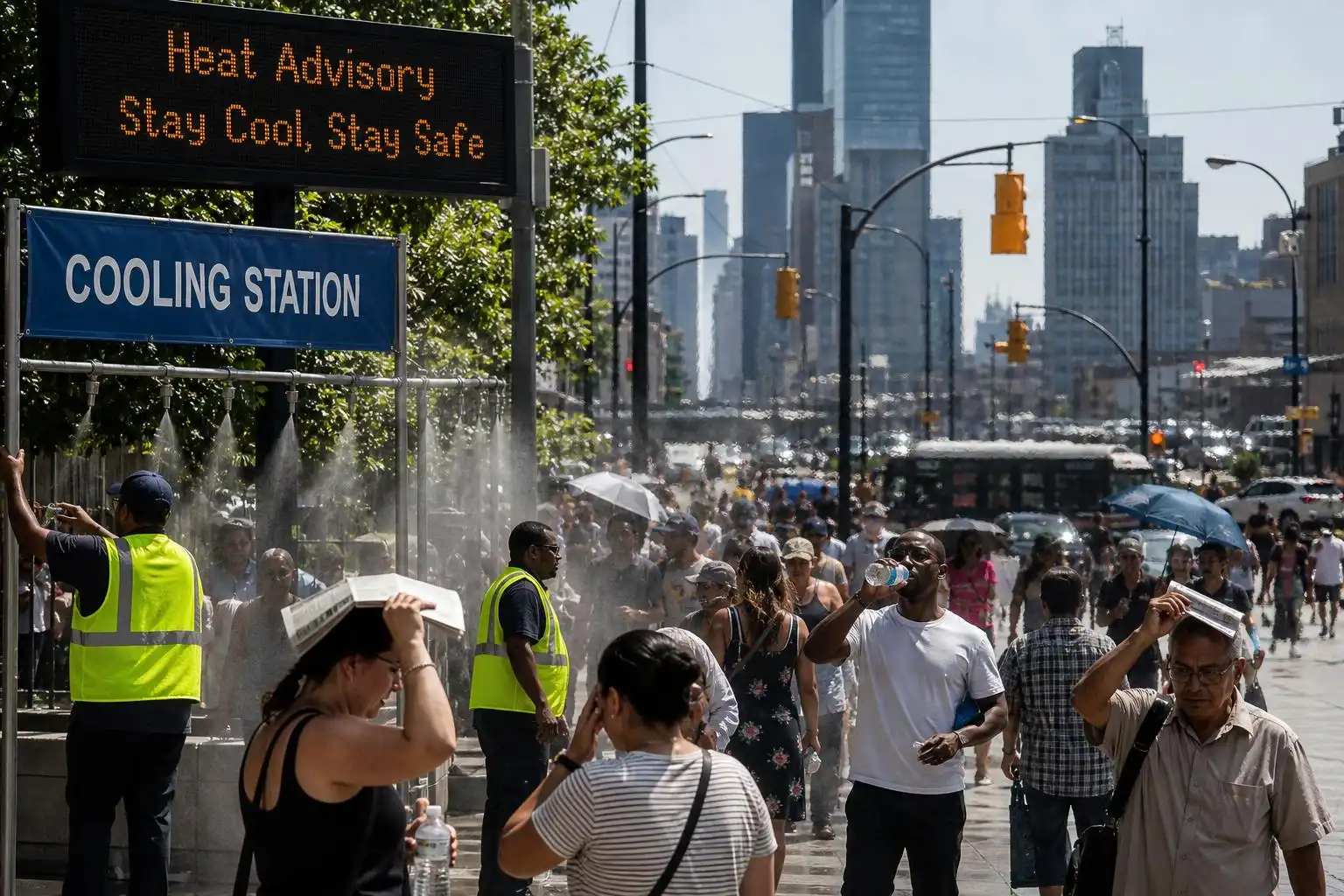
By early August, Seoul was bracing for the heatwave as South Korea’s reported heat-related death toll reached 16.[4] That number is a reminder that heat is not simply uncomfortable weather. It is a slow-moving public health emergency, especially for older adults, outdoor workers, people without reliable cooling, and anyone with heart, lung, or kidney disease.
Heat becomes especially dangerous when overnight temperatures fail to drop. The human body needs nighttime relief to recover from daytime stress. In dense cities, concrete, asphalt, limited tree cover, and waste heat from vehicles and buildings can trap warmth well after sunset. That urban heat-island effect can turn a hot spell into a prolonged medical crisis.
El Niño and climate change are loading the background pattern
No single hailstorm, wind event, or heatwave can be explained by one factor alone. Weather is always the result of short-term atmospheric setup: fronts, jet streams, moisture, instability, pressure systems, and local geography. But climate change is changing the background environment in which those setups occur.
Warmer air can hold more water vapor, which can increase heavy-rain potential. Hotter baseline temperatures make heatwaves more intense and more likely to break records. In some regions, changes in instability, moisture availability, and storm environments may alter severe-thunderstorm risk, though the details vary by location and season.
The return of El Niño adds another layer. The Guardian noted that El Niño, a natural Pacific climate pattern, is contributing to the broader extreme-weather backdrop this year.[3] El Niño does not cause every extreme event, but it can shift storm tracks, temperature patterns, tropical cyclone behavior, and rainfall odds across large parts of the world.
The misinformation problem is now part of disaster response
There is another emerging challenge: knowing what is real during a crisis. BBC News recently highlighted how AI-generated or misleading disaster videos are spreading during extreme weather in China, creating real-world problems as people try to understand what is happening and where danger exists.[2]
That matters everywhere. During severe weather, false images of destroyed bridges, fake flood rescues, or exaggerated storm damage can clog social media feeds and distract from official warnings. In a fast-moving tornado or flash-flood situation, confusion can cost time. Time is safety.
A good rule: during active weather, prioritize your national meteorological agency, local emergency management, trusted local broadcasters, and verified municipal accounts. Treat dramatic viral clips with caution unless they are geolocated, time-stamped, and confirmed by reliable sources.
What communities can do now
The risk picture is not hopeless, but it does demand practical adaptation.
For severe thunderstorms and hail:
- Keep trees trimmed and remove dead or internally decayed limbs before storm season.
- Use impact-resistant roofing materials where hail risk is high.
- Move vehicles into garages or covered structures when severe thunderstorm warnings include large hail.
- Secure patio furniture, trampolines, trash bins, and construction materials before damaging wind arrives.
- Have multiple warning sources, including Wireless Emergency Alerts and a weather radio.
For extreme heat:
- Check on older neighbors, people living alone, and those without air conditioning.
- Avoid strenuous outdoor work during the hottest part of the day when possible.
- Hydrate early, not just after symptoms begin.
- Know the signs of heat exhaustion and heat stroke.
- Cities should expand shade, cooling centers, reflective surfaces, and tree canopy, strategies increasingly discussed as places adapt to hotter urban summers.[5]
The new reality: many hazards, often at once
The old mental map of weather risk was too simple: hurricanes on the coast, tornadoes in Tornado Alley, heat in the desert, hail on the Plains. Today’s risk map is broader and more complicated. Severe storms are driving enormous insured losses deep into the interior. Record heat is disrupting daily life and public health in major Asian cities. Disaster misinformation is spreading almost as quickly as real storm footage.
As a meteorologist, I see the common thread as exposure. We have more people, more infrastructure, and more economic activity in harm’s way, while the atmosphere is operating in a warmer and more energetic background state. That combination means the next billion-dollar disaster does not need to be a Category 4 hurricane. It may be a windstorm over a metro corridor, a hailstorm over a car-dependent suburb, or a heatwave that quietly overwhelms hospitals.
The forecast challenge is scientific. The preparedness challenge is social. And the cost of ignoring either one is rising.
References
- The most expensive insured weather threat isn’t hurricanes anymore — https://www.accuweather.com/en/weather-news/the-most-expensive-insured-weather-threat-isnt-hurricanes-anymore/1920142
- China | Latest News & Updates | BBC News — https://www.bbc.com/news/world/asia/china
- ‘Stop all outdoor activities’: South Korea records its highest ever temperature — https://www.theguardian.com/world/2026/aug/03/south-korea-highest-temperature
- Seoul braces for heatwave sweeping South Korea as death toll reaches 16 — https://www.theguardian.com/world/2026/aug/04/south-korea-heatwave-seoul-heat-warning
- BBC Earth | Environment, Climate Change, AI, Food, Health, Social, & Technology — https://www.bbc.com/future-planet


Leave a Reply