
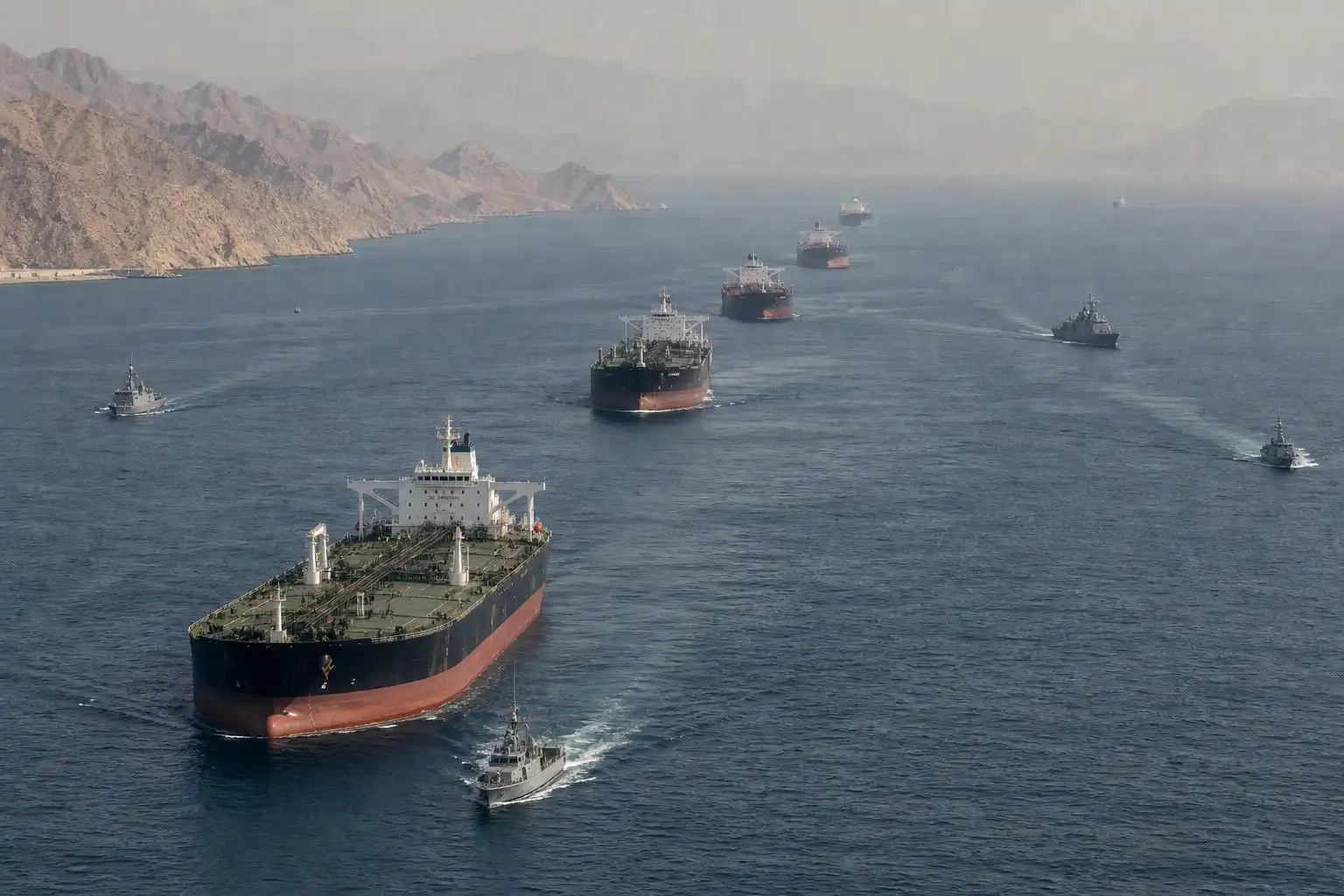

Iran is doubling down on leverage at the Strait of Hormuz, saying it will not fully reopen the waterway until the United States lifts its naval blockade, withdraws forces from around Iran, releases frozen assets and pays war damages—conditions that go well beyond the now‑defunct June ceasefire framework.[4][3] Tehran has effectively kept Hormuz closed since the U.S.–Israeli campaign began in late February, a choke point that has pushed up global energy costs and created political headaches in Washington.[4]
The White House, for now, is signaling restraint. President Trump said the U.S. is “only semi‑negotiating” with Tehran and shifting emphasis to economic pressure after months of conflict, arguing Iran’s high inflation and reported difficulty paying troops will force concessions over time. “We are low‑keying it,” he told Axios, crediting the U.S. naval blockade for increasing strain in Iran.[5] Vice President JD Vance separately said officials are working on a traffic scheme to allow safer passage, underscoring an interim focus on deconfliction rather than a broad political settlement.[3]
Muscat‑mediated talks have edged forward on coordinates for a new shipping lane, Iranian officials say, but Tehran stresses such technical understandings are distinct from any decision to reopen the strait, which it ties to the sweeping preconditions it set last week.[4][5] Former NATO commander James Stavridis warned Iran may be “overplaying its hand,” narrowing Washington’s options but not necessarily compelling a rapid deal.[3]
Markets and energy: Crude has seesawed on the Hormuz headlines; regional reporting flagged gains as Iran hardened its stance, even as Trump asserted U.S. pump pain has eased with prices “just above $75.”[1][5]
Regional ripples: Israel has rebuffed a 15‑point U.S. plan for Gaza, adding strain to already fraught coordination with Washington across multiple fronts, while Yemen’s Houthis—aligned with Tehran—have escalated missile and drone attacks, underscoring the risk of spillover conflict.[1] Meanwhile in Iraq, clashes erupted in the city of Kut amid protests over electricity shortages, a reminder that domestic stressors are compounding across the region.[8]
A shifting map in Syria: In a separate but consequential development for the eastern Mediterranean, Damascus said it reached a memorandum with Moscow to reorganize Russia’s military footprint—converting bases into joint training centers—and canceled Russia’s contract to manage Tartus port in favor of a new $800 million deal with Dubai Ports World. The transition is slated to finish within three months, though key details remain unsettled.[6]
What to watch next: Whether Oman can lock in a safe‑passage scheme without a wider political accord; if U.S.–Israel friction over Gaza complicates Washington’s Iran calculus; and how insurers and shippers price risk if Hormuz remains partially constrained through the fall.[4][1]
Also today — U.S. gymnastics: Hezly Rivera repeated as national all‑around champion as selection dynamics for Worlds—and the 2028 LA Olympics—begin to take shape. On the men’s side, 2023 Worlds all‑around bronze medalist Frederick Richard headlined the roster with a dominant showing, while event‑specialist battles, injuries and petitions keep the final lineup fluid.[2]
References
- Breaking News, World News and Video from Al Jazeera — https://www.aljazeera.com
- Hezly Rivera repeats as U.S. gymnastics champion; Frederick Richard headlines men’s Worlds team – The Athletic — https://www.nytimes.com/athletic/7503059/2026/08/09/hezly-rivera-us-gymnastics-all-around-title-frederick-richard-mens-worlds
- Rather than capitulating to the US, Iran toughens its demands over the vital Strait of Hormuz – CNN — https://www.cnn.com/2026/08/09/middleeast/hormuz-iran-us-demands-analysis
- Iran Insists Strait Will Stay Closed Until U.S. Agrees to Demands — https://www.nytimes.com/2026/08/10/world/middleeast/iran-strait-of-hormuz-us-oman-talks.html
- Trump signals shift to economic pressure on Iran over new … — https://www.aljazeera.com/economy/2026/8/10/trump-signals-shift-to-economic-pressure-on-iran-over-new-military-strikes
- Syria Agrees to Reorganized Russian Military Presence – ny times — https://www.nytimes.com/2026/08/09/world/middleeast/syria-reorganized-russian-military-presence.html
- Middle East News — https://www.aljazeera.com/middle-east


Leave a Reply