


Democrats’ victories in the U.S. midterm elections have set off an immediate round of interpretation overseas. Leaders and newspapers are asking what the result might mean for the Iran war, support for Ukraine and Washington’s relationships with its allies. The votes have changed the balance of power in Congress, but they have not settled any of those questions.[1][3]
A blue wave, seen through different lenses
International headlines made the scale of the Democratic win plain. France’s Libération called it a “blue wave”; Britain’s Daily Mail went with “historic blue tsunami.” The Times of India described “midterm blues for Trump.” But the implications varied sharply depending on who was reading the result.[1]
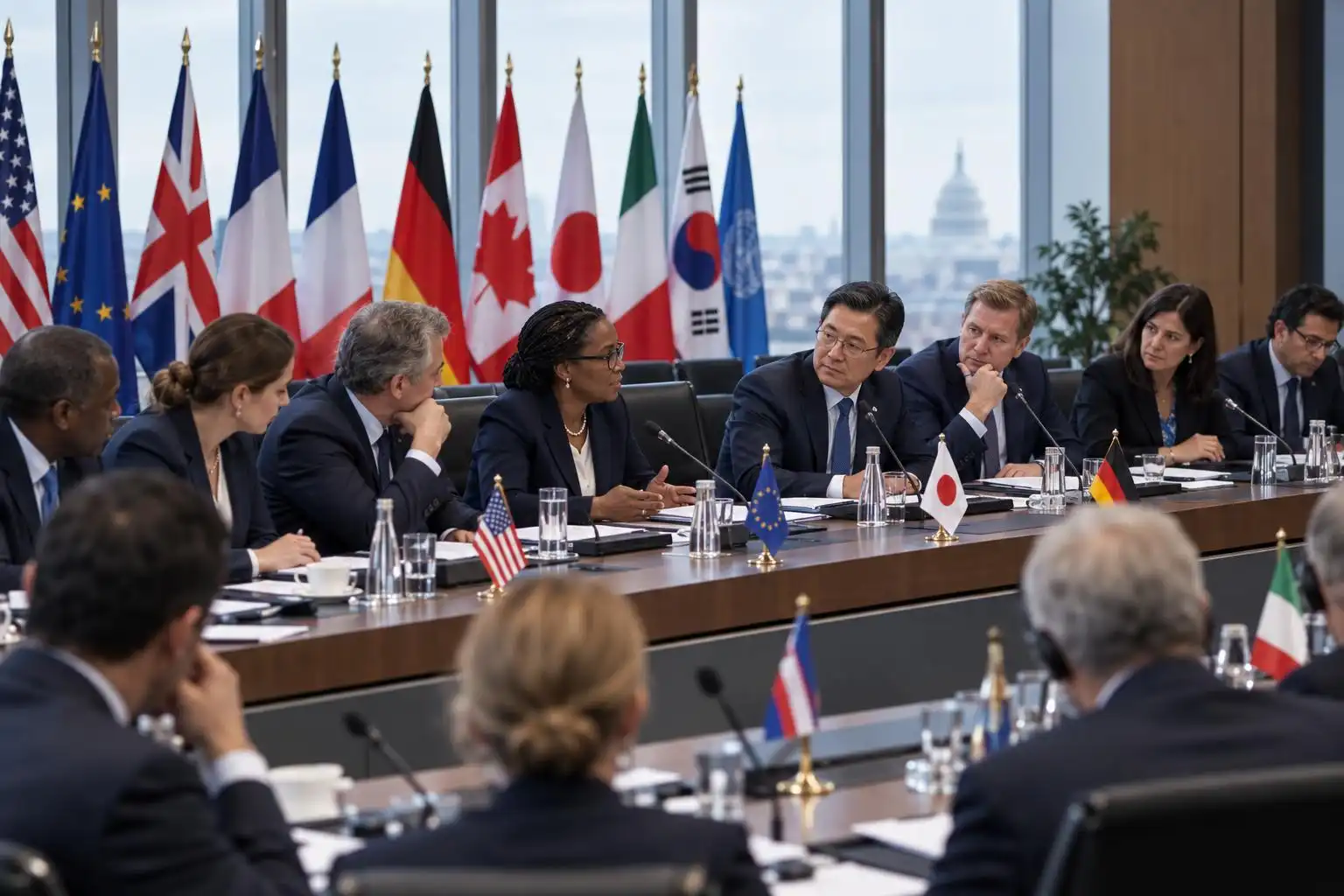
Spanish Prime Minister Pedro Sánchez cast the outcome as a rejection of policies that impoverish people, as well as hatred, sexism and climate denial. South African President Cyril Ramaphosa said Americans had spoken and voiced hope for a “new era in world relations.” Those are political readings and aspirations, not a common international verdict on what the new Congress will do.[3]
Iran sees a rebuke to the war
Iran’s parliament speaker and chief negotiator in talks with the United States, Mohammad Bagher Ghalibaf, wrote that Americans had said “NO TO WAR.” He coupled that interpretation with a warning to Washington. Iran’s Supreme Leader Mojtaba Khamenei offered a more guarded assessment: partisan changes in the U.S., he said, would not alter American hostility toward Tehran.[2]
The Tehran Times likewise linked the Republican defeat to President Donald Trump’s decision to attack Iran earlier this year. The conflict has dragged on and sent oil prices higher, bringing its costs into Americans’ daily lives. That helps explain why the election is being read abroad as a judgment on the war, even though the results alone cannot establish what motivated every voter.[1]
Ukraine’s hopes meet Europe’s caution
The Kyiv Independent framed Democratic control of Congress as a possible boost for Ukraine. A Russian state-run newspaper reached the opposite conclusion, speculating that Trump might turn his anger toward Europe after the Republican defeat. Both headlines describe anticipated consequences, not decisions already made in Washington.[1]
European Parliament Vice President Christel Schaldemose said the result could benefit support for Ukraine, the green transition and international relations. She added a caution: the European Union must continue strengthening its ability to stand on its own. For Ukraine’s backers, the election offers an opening, but not a substitute for decisions on aid and security.[3]
Allies watch for policy, not just politics
Japan stressed the importance of a strong U.S.-Japan alliance amid international uncertainty. Greece’s government spokesman said strategic agreements with Washington would remain strong regardless of the outcome. Their responses underscore the distinction between a dramatic election and a change in the commitments allies rely on.[2]
For now, the world’s reaction is a mix of celebration, caution and competing predictions. The consequential test comes next: whether the new Congress changes U.S. policy on war, trade and alliances—or whether expectations abroad run ahead of what Washington delivers.
References
- World reacts to Democrats’ midterm elections victory — https://www.npr.org/2026/11/04/nx-s1-6028664/world-reacts-midterm-elections
- ‘Seismic shift’: World reacts to US midterm election results — https://www.aljazeera.com/amp/news/2026/11/4/seismic-shift-world-reacts-to-us-midterm-election-results
- International politicians react to Democrats winning US midterms — https://www.reuters.com/world/china/international-politicians-react-democrats-winning-us-midterms-2026-11-04


Leave a Reply
You must be logged in to post a comment.