


President Donald Trump heads to Asia this week with a harder political backdrop than he faced on his last visit: his party has lost control of Congress in the midterms, and allegations involving Chinese spying are adding pressure to an already complicated U.S.–China relationship.[4] The trip will test whether Washington can keep trade negotiations moving while reassuring regional partners.
An Asia trip under new pressure
Trump is expected to meet Chinese President Xi Jinping and Russian leader Vladimir Putin during a trip that includes an APEC summit and a stop in the Philippines for ASEAN meetings, NPR reports. The White House also says he will sign a trade deal with Thailand while in the Philippines.[5]
The practical test with Beijing is whether last year’s Busan trade understanding can deliver more. Under that arrangement, the U.S. lowered some tariffs and China agreed to ease restrictions on rare-earth exports. Its implementation has been uneven; a White House official told NPR that rare earths are not arriving at the pace or volume Washington wants.[5]
Reuters describes the trip as overshadowed by Chinese spy allegations as well as the midterm defeat.[4] Those pressures make the meetings consequential, but their outcomes remain open: a summit appearance is not, by itself, a resolution of the trade or security disputes.
What regional partners will watch
The ASEAN gathering offers U.S. allies and partners a chance to assess Trump after the election. NPR reports that his interactions with leaders, including those of India and the host country, the Philippines, will be watched for signs of how his administration intends to approach the next two years.[5]
That makes the trip more than a sequence of leader meetings. A Thailand trade agreement would be a concrete result, while progress on rare-earth supplies would help show whether the U.S.–China understanding is working beyond summit statements.[5]
Fresh alarms around Iran
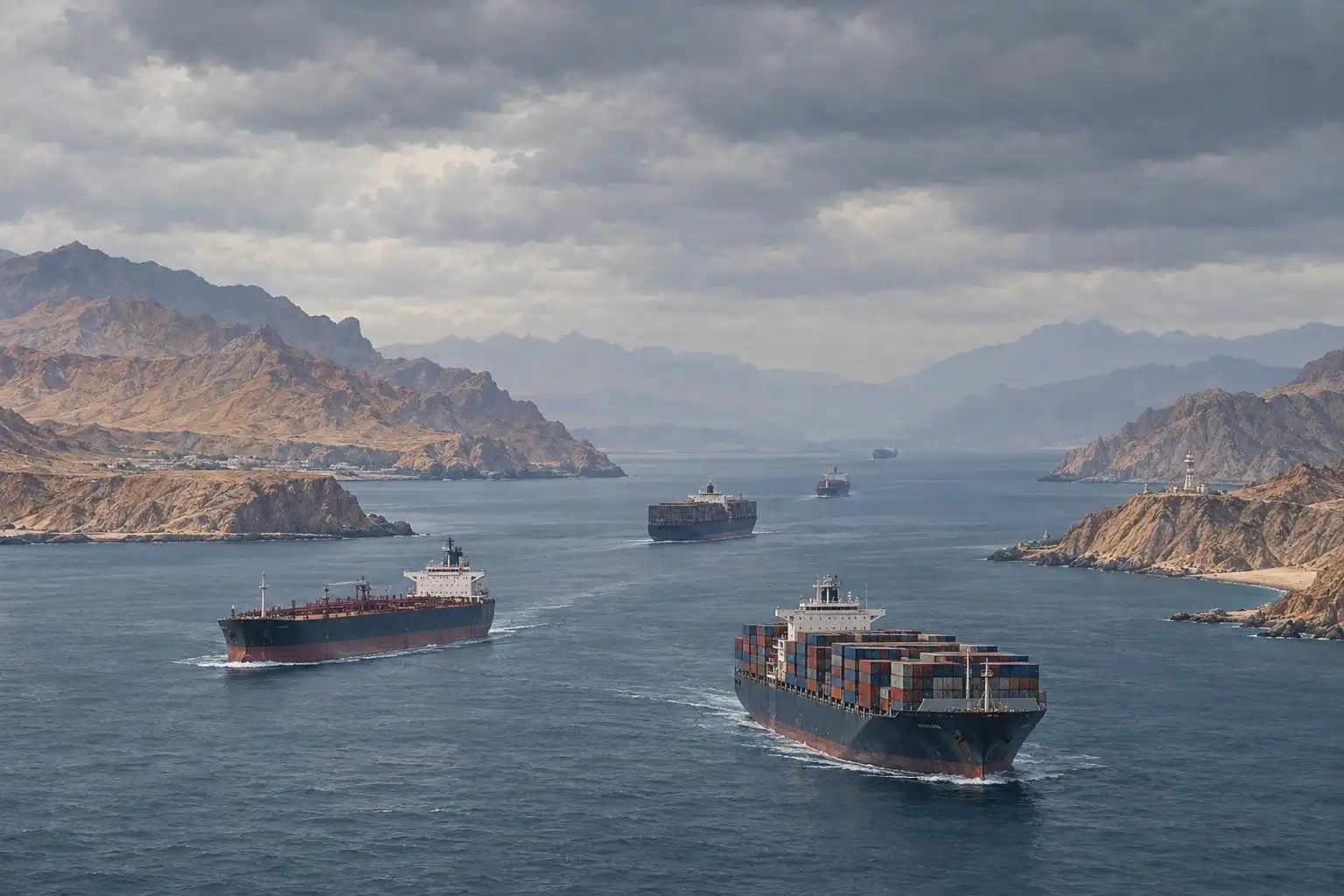
Meanwhile, developments in the Middle East are competing for attention. Al Jazeera reports that Iran says it has commandeered a U.S. surveillance drone over a southern island. Its live coverage also carries an Iranian army claim that another energy tanker is ablaze in the Strait of Hormuz.[2] Both are consequential claims; the material available here does not independently establish the circumstances of either incident.
Al Jazeera also reports that the USS Theodore Roosevelt has arrived in the Middle East, joining two other carriers in the U.S. Central Command area of responsibility.[2] The additional naval presence and the reported Hormuz incident raise the stakes for shipping and diplomacy, without establishing that a renewed U.S.–Iran war is imminent.
Ukraine talks remain in view
Russia’s war in Ukraine is another unresolved issue on the trip’s agenda. Al Jazeera reports that Russia is stalling talks and seeking to divide Europe.[2] With Putin among the leaders Trump is expected to meet, any public account of their discussions will face a straightforward question: whether it points toward a workable negotiation or merely another round of positioning.[5]
For now, the clearest measure of this week’s diplomacy will be what changes afterward—whether trade commitments are carried out, regional partners hear credible assurances, and talks on Ukraine gain traction.
References
- Breaking News, World News and Video from Al Jazeera — https://www.aljazeera.com
- Spy scandal and midterm defeat heat up Trump’s Asia visit — https://www.reuters.com/world/china/spy-scandal-midterm-defeat-heat-up-trumps-asia-visit-2026-11-16
- Trump meets with Xi and Putin amid Nvidia fallout — https://www.npr.org/2026/11/16/nx-s1-6041738/trump-xi-and-putin-china-nvidia


Leave a Reply
You must be logged in to post a comment.