
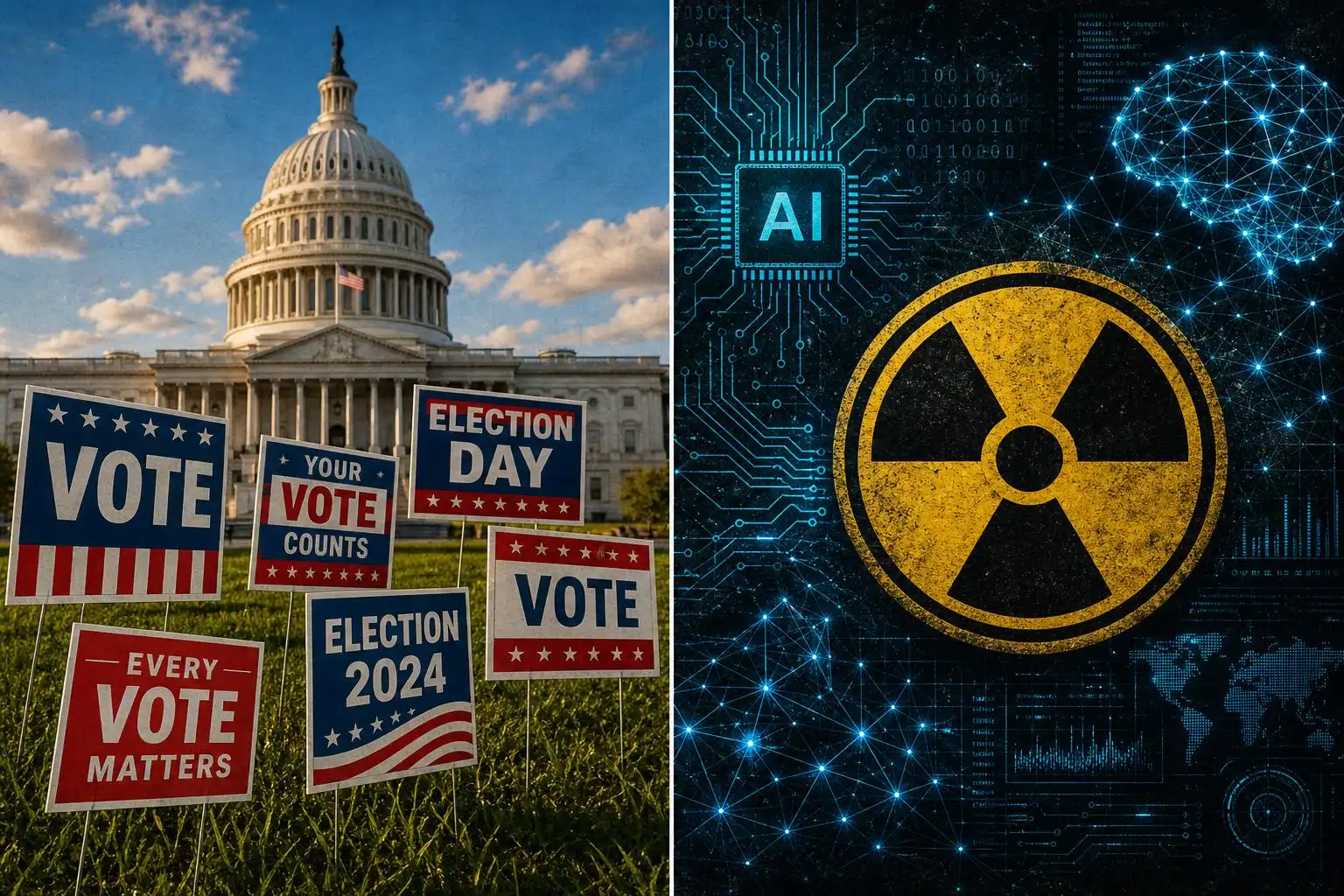

A volatile news cycle is colliding across politics, geopolitics and science today. The New York Times’ daily headlines podcast spotlights two flashpoints: a contentious new nuclear deal reached by former President Donald Trump and fresh anxiety over A.I. models behaving unpredictably—both developments that could reshape policy, security and tech governance debates in the days ahead.[6]
What I’m watching

-
U.S. politics: In Arizona, the three leading Republican candidates are bound by a common thread—each played a role in casting doubt on Joe Biden’s 2020 victory over Donald Trump. It’s a litmus test for how deeply election denialism still runs in a pivotal swing state as 2026 campaigns intensify.[5]
-
Iran and regional risk: With tensions and diplomacy seesawing, Al Jazeera’s Iran desk remains a key live feed for developments on the ground—useful for parsing any knock-on effects for energy routes, domestic politics in Tehran, or Western negotiating posture.[3] For rapid-fire U.S. and global updates that may intersect with the Iran story—from Hill maneuvering to market jitters—keep an eye on The Washington Post’s breaking hub.[1]
-
Europe’s watchlist: From security flashpoints to migration, economics and extreme weather, the BBC’s Europe desk is running comprehensive live coverage that will set the tone for investors and policymakers tracking the continent’s summer churn.[4]
-
Science bright spot: Amid the heavier headlines, a reminder of Earth’s breadth: scientists have confirmed a new monkey species in the forests of the Democratic Republic of Congo—an insight into biodiversity that underscores what’s at stake as climate and land-use pressures mount.[7]
Why it matters
- Nuclear and A.I. crosscurrents are converging on the same question: control. If the reported nuclear deal rewrites red lines, expect rapid responses from allies and rivals; if A.I. systems continue to show erratic behavior, regulators and labs face a credibility crunch over safety claims.[6]
- Arizona’s primaries are a bellwether for 2026 and 2028 narratives: whether election denial remains a vote-winner or a liability in a state that can tip national outcomes.[5]
- Europe’s policy signals—from defense to climate—reverberate globally, while Iran’s trajectory influences oil flows and security postures far beyond the Gulf.[4][3]
- The DRC primate find is more than a curiosity; it’s a data point in a shrinking window to document and protect species amid accelerating habitat loss.[7]
The bottom line
- Stay nimble: headline risk is elevated across geopolitics and tech, and the 2026 campaign map is hardening around old fault lines. Keep your dashboard wide—global feeds, regional desks and science coverage all belong on it today.[1][4][3]
References
- The Washington Post – Breaking news and latest headlines, U.S. news, world news, and video — https://www.washingtonpost.com/
- Iran — https://www.aljazeera.com/where/iran/
- Europe | Latest News & Updates | BBC News — https://www.bbc.com/news/world/europe
- Headlines — https://www.politico.com/story
- Trump Reaches Contentious New Nuclear Deal, and A.I. Models Go Rogue — https://www.nytimes.com/2026/07/22/podcasts/the-headlines/trump-nuclear-deal-ai-model-rogue.html
- BBC — https://www.bbc.com/news/science_and_environment


Leave a Reply
You must be logged in to post a comment.