
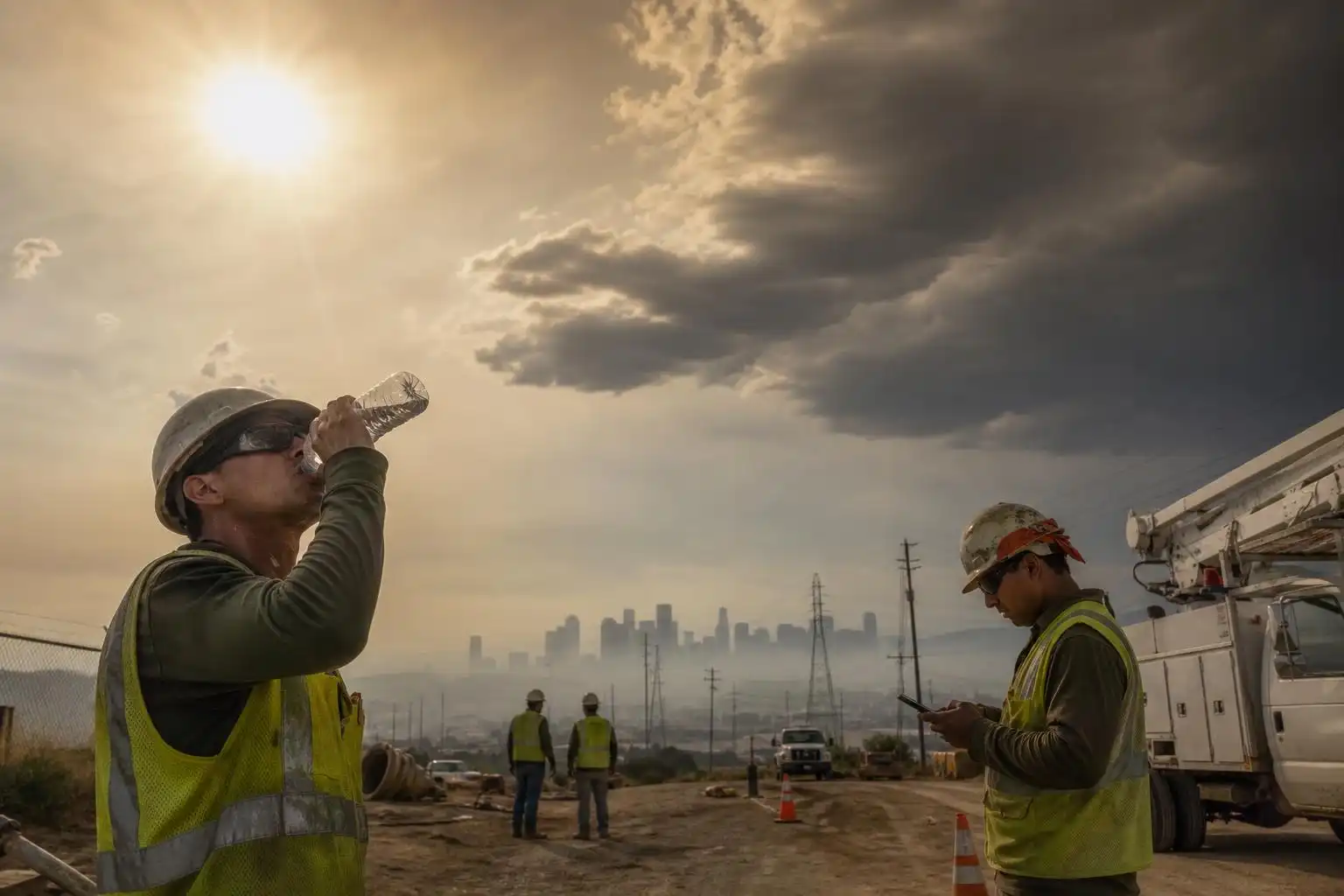

Extreme weather no longer stops at the factory gate, farm boundary, construction fence, or office door. Heat, wildfire smoke, floods, hurricanes, and severe thunderstorms are increasingly occupational hazards, raising difficult questions about prevention, liability, insurance, and who supports workers after an injury.
The shift is especially important because weather exposure is rarely distributed equally. Agricultural laborers, roofers, delivery drivers, utility crews, first responders, warehouse employees, and other outdoor or non-air-conditioned workers often face the greatest danger while having the least ability to change their schedules.
When the weather becomes part of the job
U.S. average temperatures have risen about 60% more than the global average since 1970, according to Environmental Protection Agency figures cited by Reuters. OSHA has proposed a federal heat standard under which specified conditions would trigger mandatory employer protections.[1]
That regulatory effort reflects a basic meteorological reality: heat illness is often predictable. Forecasts can identify dangerous combinations of temperature, humidity, sunshine, and limited overnight cooling days in advance, giving employers time to modify shifts, add breaks, provide water, and arrange cooler recovery spaces.
Yet temperature alone does not define the risk. A worker wearing heavy protective equipment in direct sunlight may experience dangerous heat strain at conditions that appear less alarming on a standard weather app. Acclimatization also matters; the first hot days of a season can be particularly hazardous because the body has not yet adapted.
Heat and smoke can cause cumulative harm
Some weather injuries are dramatic and immediate, such as a lightning strike or trauma during a tornado. Others develop through repeated exposure, making their occupational connection harder to document.
Wildfire smoke is a prime example. Research into California agricultural workers’ compensation claims from 2007 through 2020 found a substantial increase in injuries associated with smoke exposure, with cumulative wildfire smoke linked to hundreds of additional agricultural-worker injuries in 2020 alone.[1]
Fine particulate matter can penetrate deep into the lungs and aggravate asthma, cardiovascular disease, and other health conditions. But when symptoms emerge after several smoky shifts—or overlap with an existing illness—workers, doctors, employers, and insurers may struggle to establish when and where the harmful exposure occurred.
This is why exposure records are becoming as important as accident reports. Air-quality readings, shift locations, work duration, respiratory protection, heat indices, and break schedules can help reconstruct conditions long after smoke has dispersed or a heat wave has ended.
Storms create risks before and after impact
Severe weather also affects people whose jobs place them on roads, roofs, power lines, or cleanup sites. A May 16–19 outbreak brought numerous tornadoes, damaging winds, and large hail to parts of the central and eastern United States, illustrating the range of hazards that can unfold within a single storm system.[3]
For workers, the danger continues after the final warning expires. Utility crews may encounter unstable trees and energized lines, delivery drivers can face flooded roads, and cleanup teams may be exposed to contaminated water, mold, sharp debris, or damaged structures. Post-storm urgency can encourage long shifts just when heat, fatigue, and disrupted communications are increasing the chance of mistakes.
Employers should therefore treat warnings as operational triggers rather than general information. A tornado watch can prompt a review of shelter access and mobile-worker locations, while a warning should activate immediate protective action. No delivery deadline or outdoor task is worth keeping someone in a vehicle, temporary structure, or elevated work area during a tornadic storm.
El Niño could widen the disruption map
El Niño adds another layer of uncertainty because it shifts tropical rainfall and jet-stream patterns across large portions of the globe. Recent commentary about the developing event has warned of torrential rain and severe flooding along western South America and potentially parts of the western United States as El Niño peaks and later subsides.[2]
Those outcomes are not guaranteed for every location. “Super El Niño” is an informal description rather than a separate official category, and local effects depend on storm tracks, ocean temperatures outside the tropical Pacific, atmospheric circulation, and shorter-term weather patterns.
Still, a strong event can change the background odds enough to matter for workplace planning. Flood-prone facilities may need updated evacuation routes, farms may face abrupt swings in water availability, and transportation companies may need contingencies for washed-out roads, port delays, and landslides.
Insurance gaps are becoming a public problem
Europe offers a warning about the scale of the financial challenge. After a summer marked by drought, wildfires, and heat waves, the European Union announced plans for a climate insurance alliance intended to expand coverage for extreme-weather losses. EU figures indicate that only about one-quarter of the bloc’s climate-related economic losses are insured.[4]
That protection gap reaches well beyond damaged buildings. Weather disasters can interrupt wages, reduce productivity, shut schools, strain public services, and force small businesses to operate without power or reliable transportation. Workers may lose income even when they avoid physical injury.
Supply chains face similar cascading effects. An industry analysis published by Reuters Plus notes that extreme weather has become one of several persistent disruption risks and argues that technologies including artificial intelligence and radio-frequency identification can help detect trouble before it spreads downstream.[5] Technology can improve visibility, but it cannot replace safe staffing, redundant routes, realistic schedules, or the authority to stop work.
Preparedness must protect the person, not only the property
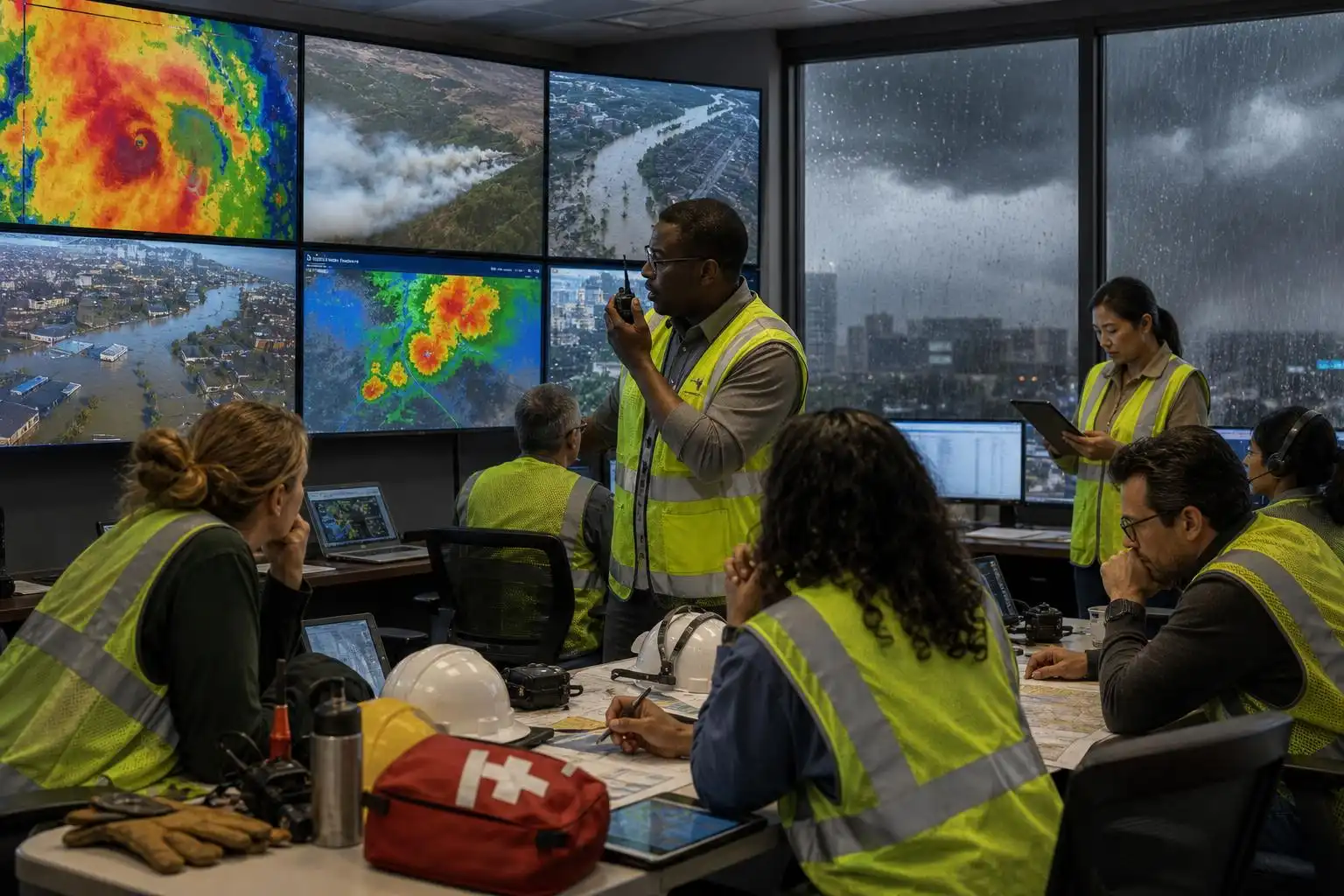
A practical weather plan should identify who makes stop-work decisions, where employees shelter, how mobile workers receive alerts, and how conditions are documented. Heat plans should include water, rest, shade or cooling, gradual acclimatization, and a buddy system for recognizing confusion, dizziness, fainting, or other warning signs.
During wildfire smoke, employers should monitor official air-quality information, reduce strenuous outdoor work when conditions deteriorate, improve indoor filtration, and provide properly selected respiratory protection when required. Flood policies should make clear that workers must never drive through water covering a road; depth, current, and pavement damage are difficult to judge from the driver’s seat.
Most importantly, workers need permission to act on hazards without fearing retaliation. A forecast has limited value if a driver cannot delay a route, a roofer cannot descend before lightning arrives, or a farmworker cannot take a cooling break.
Extreme weather is exposing gaps that were once treated as separate issues: forecasting, occupational health, workers’ compensation, insurance, and business continuity. They are now parts of the same risk system—and the most effective plans will measure success not only by how quickly operations resume, but by how many people return home safely.
References
- From heatwaves to hurricanes — Workers’ compensation in an era of extreme weather — https://www.reuters.com/legal/legalindustry/heatwaves-hurricanes-workers-compensation-an-era-extreme-weather–pracin-2026-09-17
- The incoming ‘super’ El Niño will create chaos around the world — https://www.theguardian.com/commentisfree/2026/sep/15/rise-global-temperatures-super-el-nino
- Severe Weather — https://weather.com/storms/severe?pg=1
- EU to launch climate insurance scheme after summer of extreme weather — https://www.reuters.com/world/eu-launch-climate-insurance-scheme-after-summer-extreme-weather-2026-09-16
- From tracking to predicting: How RFID and AI are transforming the final mile — https://www.reuters.com/plus/from-tracking-to-predicting


Leave a Reply