
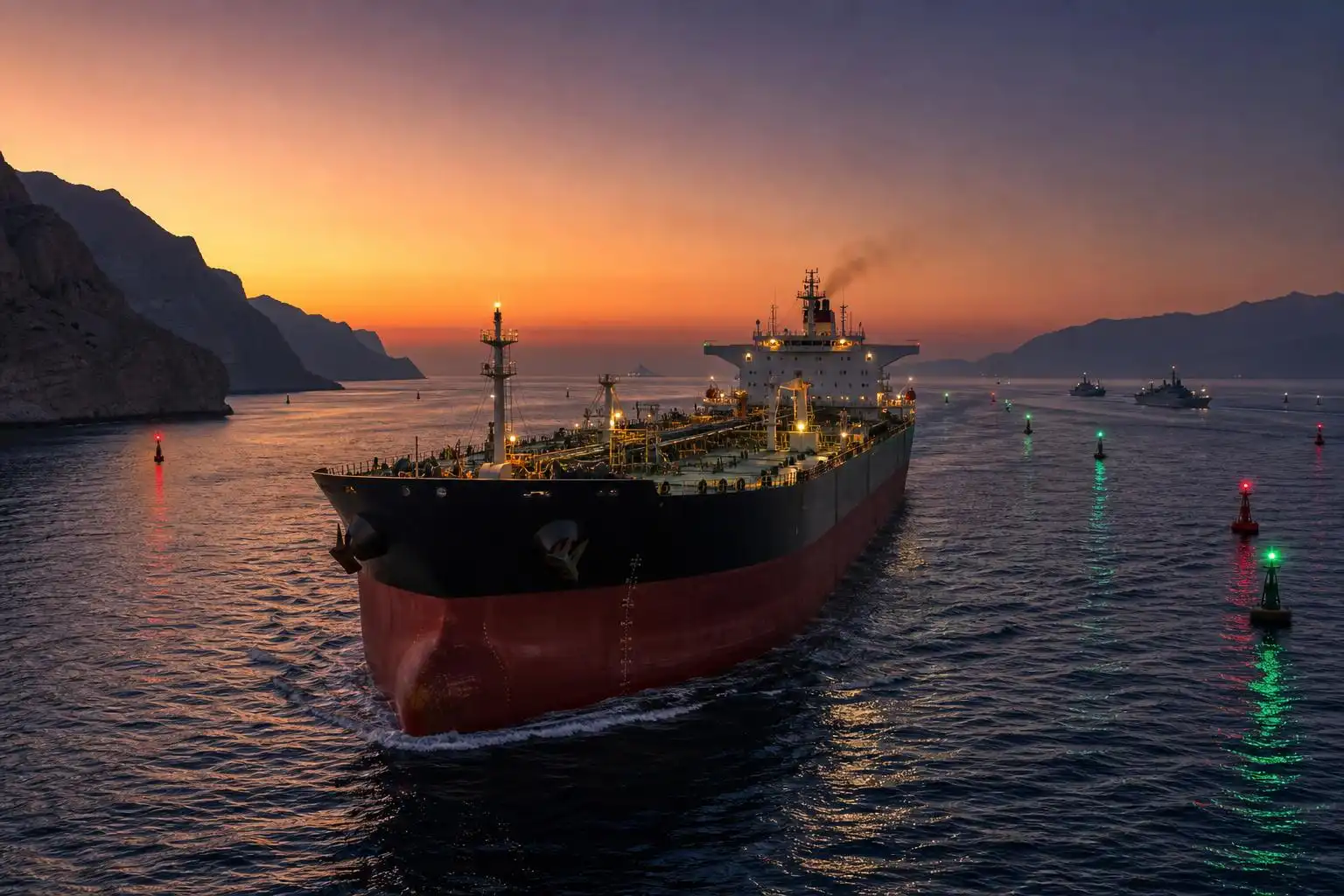

A fragile but potentially decisive turn in the Iran crisis is rippling from the Gulf to global markets and American politics. Washington and Tehran have agreed to extend a ceasefire and begin steps to reopen the Strait of Hormuz, drawing cautious international support as the UN’s nuclear watchdog says “now the technical work starts” on Iran’s program [4].
Early signs of change are already on the water. BBC Verify reports that three Iranian tankers laden with crude crossed what had been the U.S. blockade line in the Gulf of Oman, a tangible—if tentative—test of the new corridor that underscores both the opportunity to ease supply strains and the risk of backsliding if enforcement or diplomacy wavers [3].

Investors are reading the tea leaves. Market coverage has fixated on whether a clearer passage through Hormuz will cap recent energy volatility, how shipping and insurance costs might adjust, and what that means for equities and rates as traders handicap the durability of the truce and the pace of any nuclear verification process [2]. The near-term calculus: any incremental barrels reaching market could temper price spikes, but the geopolitical risk premium won’t disappear overnight.
The U.S. political reaction is sharpening. In a podcast episode framing Washington’s next moves, Sen. JD Vance issued a blunt warning to Israel in the wake of the agreement—an indicator of how GOP hawks and pragmatists are jockeying to shape the contours of America’s Middle East posture as the talks proceed [6]. That intraparty debate will matter for the White House’s leverage with both Jerusalem and Tehran, and for how Congress might try to constrain or accelerate any deal on enrichment thresholds and sanctions relief.
Beyond geopolitics, the same Times episode spotlights a domestic technology reality check: Waymo’s robotaxis aren’t going nationwide anytime soon. The hurdles—ranging from patchwork state rules to safety validation, scaling costs and public trust—illustrate why self-driving remains a city-by-city slog rather than a flip-the-switch rollout, with implications for automakers, chip suppliers and urban transport planning [6].
Sports are providing both distraction and a barometer of national mood. After a dream start on home soil, the U.S. men’s national team faces Australia in Seattle in its second World Cup match—a step-up test in a group that leaves little margin for error [7]. As fans debate lineups and fitness, The Athletic’s early tournament power ranking reshuffle—complete with surprise dips and risers—underscores how quickly reputations are being made and unmade in week one [8].
Why it matters
- Energy security: A sustained reopening of Hormuz would relieve a chokepoint responsible for a significant share of seaborne oil, with direct consequences for inflation, shipping costs and emerging-market stability [4] [3].
- Markets: If crude steadies and freight risks ebb, watch the rotation across airlines, chemicals, truckers and energy services—sectors that whipsaw with fuel curves and freight premiums [2].
- Policy trajectory: Vance’s posture foreshadows a season of congressional brinkmanship over Israel policy and any Iran nuclear contours, which could either buttress or undercut the negotiators’ runway [6].
- Tech reality check: The Waymo slowdown is a reminder that autonomy’s hardest miles are regulatory and social, not just technical—critical context for investors chasing AI-adjacent transportation bets [6].
What I’m watching next
- Implementation details: How quickly maritime deconfliction mechanisms stand up—and whether additional tankers follow this week without incident [4] [3].
- IAEA tempo: Milestones for access, monitoring and technical clarifications on Iran’s program will be an early stress test for the deal’s resilience [4].
- Market breadth: Do energy and transport names confirm any oil move, or does macro uncertainty keep traders defensive into quarter-end? [2]
- USMNT’s mettle: A result against Australia would steady American nerves and shape knockout pathways across a tournament already scrambling the form book [7] [8].
References
- [2] Global Market Headlines | Breaking Stock Market News — Reuters: https://www.reuters.com/markets/
- [3] Middle East — BBC News: https://www.bbc.com/news/world/middle_east
- [4] World reacts to US-Iran deal to extend ceasefire, reopen Strait of Hormuz — Al Jazeera: https://www.aljazeera.com/news/2026/6/18/world-reacts-to-us-iran-deal-to-extend-ceasefire-begin-negotations
- [6] JD Vance’s Blunt Warning to Israel, and Why Waymo Is Struggling to Go National — The New York Times (Podcast): https://www.nytimes.com/2026/06/19/podcasts/the-headlines/vance-iran-agreement-israel-waymo.html
- [7] USMNT vs. Australia World Cup mega-preview: Predictions, odds, must-reads and more — The Athletic: https://www.nytimes.com/athletic/7368799/2026/06/18/usmnt-australia-world-cup-preview-odds-predictions-lineups/
- [8] Ranking the top 50 players at the 2026 World Cup: Who were the winners and losers from week one? — The Athletic: https://www.nytimes.com/athletic/7372630/2026/06/18/world-cup-50-players-rankings/

Leave a Reply