
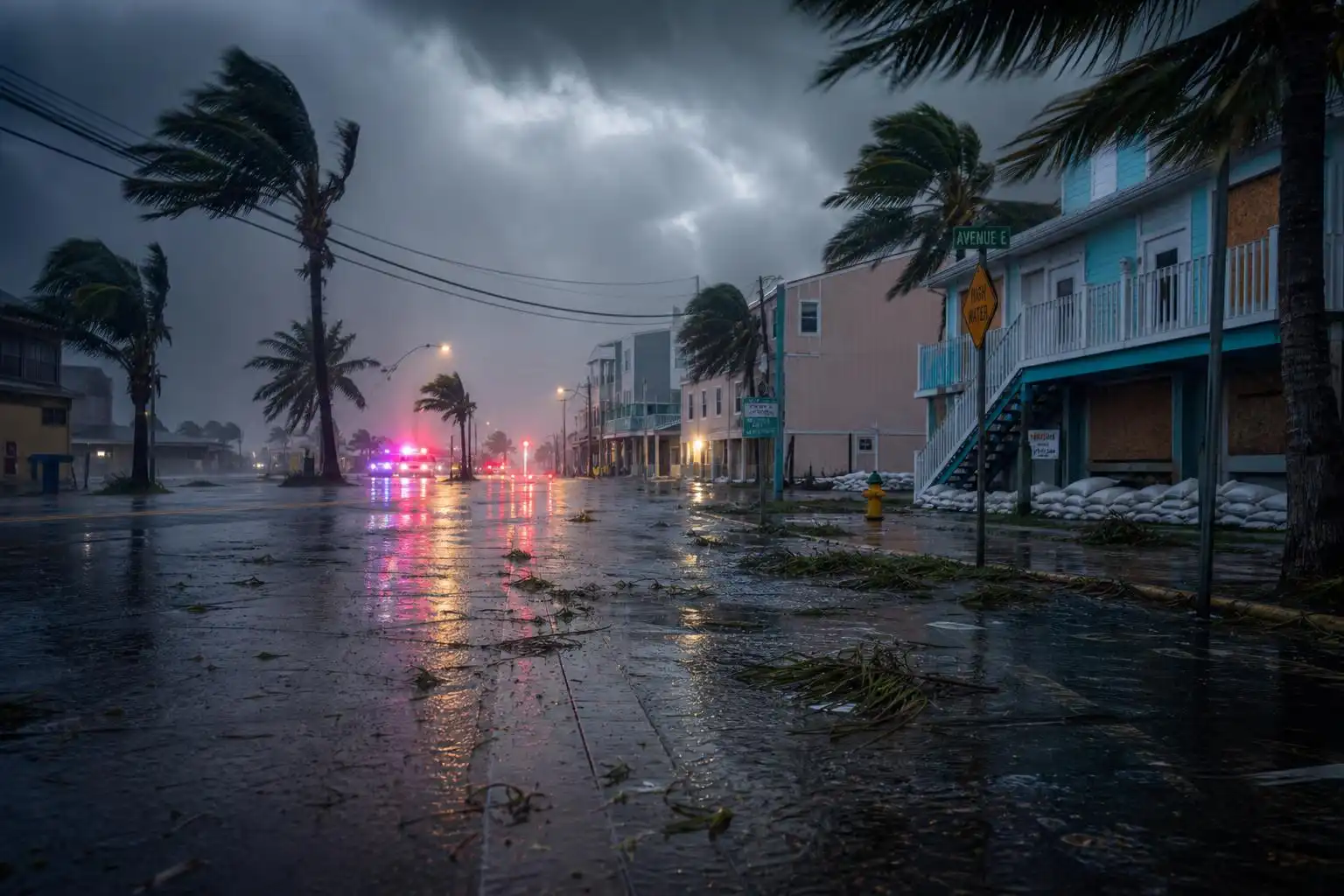

The first named storm of the Atlantic season did not need to become a major hurricane to create a serious hazard. Tropical Storm Arthur’s remnants have been sliding along the Gulf Coast with the kind of slow, moisture-loaded rainfall pattern that meteorologists watch closely: repeated bands of tropical rain over urban pavement, bayous, low-lying roads, and already-sensitive drainage networks.
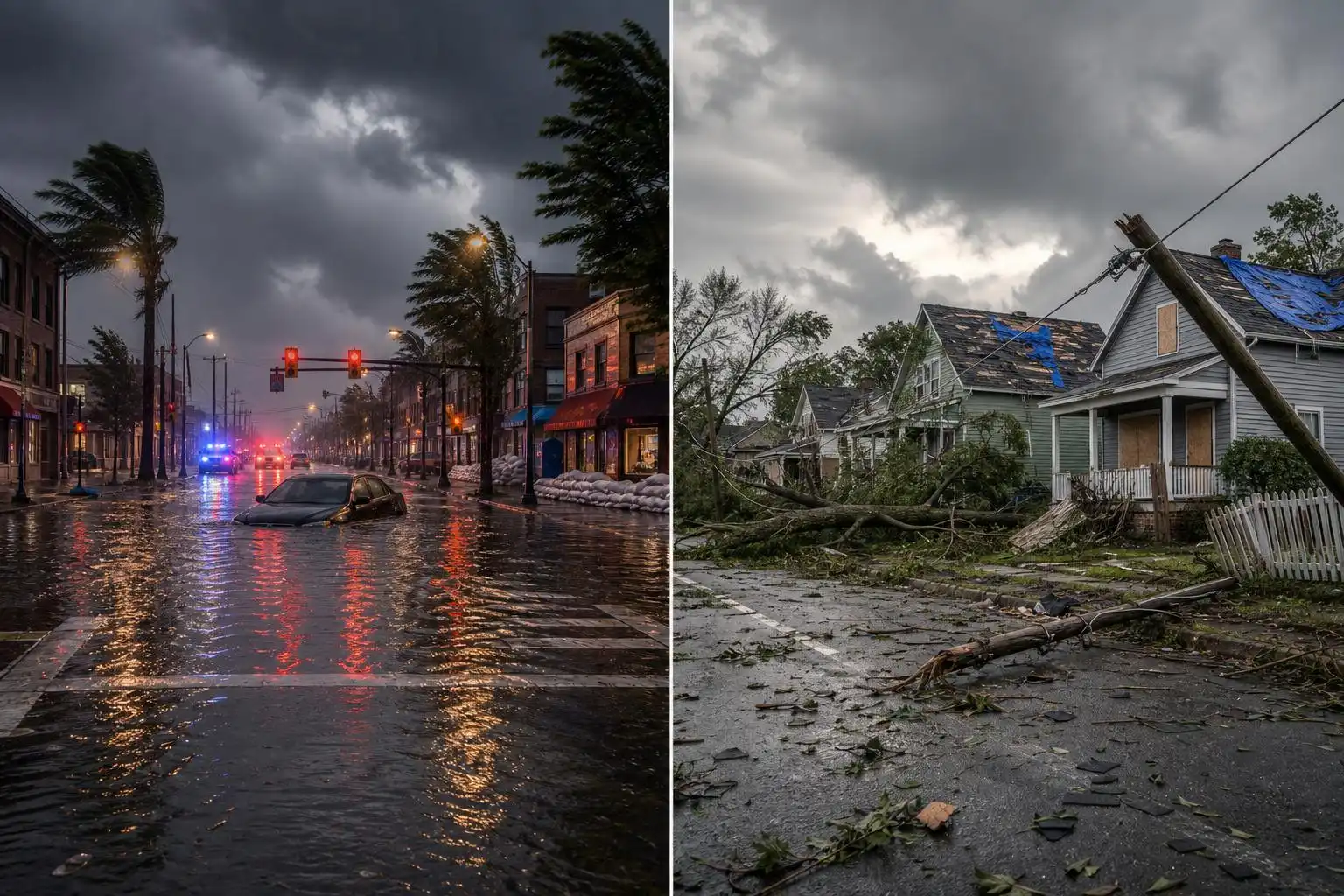
According to reports from the Gulf Coast, Arthur brought flash flood and tornado warnings to parts of the Southeast, while the Midwest was still cleaning up from a separate line of severe storms that tore through Illinois, Indiana, and northern Kentucky with possible tornadoes, downed trees, damaged homes, and power outages [[1]](https://apnews.com/article/severe-weather-gulf-coast-midwest-e2a4a7131a85faf929f35d37bb75a742). That pairing—tropical flooding in one region, tornadic wind damage in another—is a good example of how June weather can stack multiple hazards across the map at the same time.
Arthur’s main danger is water, not wind
Arthur’s structure has not been the classic “big wind” story. Instead, the storm’s most dangerous feature has been its ability to pull deep tropical moisture into the Gulf states and wring it out over several days. National Hurricane Center Director Michael Brennan warned that Arthur’s main threat would be a “prolonged, multiday, heavy rainfall event” capable of producing dangerous to life-threatening flash flooding [[2]](https://www.theguardian.com/us-news/2026/jun/17/tropical-storm-arthur-atlantic-hurricane-season).
Forecast rainfall totals of 5 to 10 inches were expected across parts of the region, with isolated amounts near 20 inches possible [[2]](https://www.theguardian.com/us-news/2026/jun/17/tropical-storm-arthur-atlantic-hurricane-season). Those numbers matter because rainfall impacts do not scale gently. Five inches can flood poor-drainage streets. Ten inches can overwhelm bayous, small streams, and urban stormwater systems. Twenty inches, especially if it falls over the same basin in a short window, can become catastrophic.
The Houston area was among the places facing flash flood warnings, adding extra concern because the city was also hosting a World Cup match between Portugal and the Democratic Republic of the Congo [[2]](https://www.theguardian.com/us-news/2026/jun/17/tropical-storm-arthur-atlantic-hurricane-season). A covered stadium can protect spectators from rain once they are inside, but the larger risk often sits outside the venue: flooded access roads, stranded vehicles, delayed emergency response, overwhelmed transit, and visitors unfamiliar with local flood-prone routes.
Why tropical remnants can be so efficient at producing floods
Tropical systems are essentially moisture engines. Even after a storm weakens, its circulation can continue transporting warm, humid air inland. When that air is forced upward—by frontal boundaries, coastal convergence, daytime heating, or the storm’s own rainbands—it condenses into heavy rain. If the storm slows or rainbands “train” over the same communities, totals can climb quickly.
Urban areas are especially vulnerable. Concrete, asphalt, rooftops, and compacted soils reduce infiltration, sending more water into streets and drainage channels. In a tropical downpour, rainfall rates can exceed what storm drains were designed to handle. That is when a familiar commute can turn into a life-threatening situation within minutes.
Storm surge and tide effects can worsen the situation near the coast. Arthur was also expected to push water inland along normally dry shoreline areas, while Gulf swells created dangerous surf and rip current conditions [[2]](https://www.theguardian.com/us-news/2026/jun/17/tropical-storm-arthur-atlantic-hurricane-season). When high coastal water slows the drainage of rivers, canals, and bayous, freshwater flooding can linger longer than residents expect.
The Midwest shows the other side of June severe weather
While Arthur soaked the Gulf Coast, the Midwest dealt with a different kind of storm threat. A strong line of thunderstorms swept through parts of Illinois, Indiana, and northern Kentucky, producing possible tornadoes, damaging homes, and knocking down trees and power lines [[1]](https://apnews.com/article/severe-weather-gulf-coast-midwest-e2a4a7131a85faf929f35d37bb75a742).
These systems often form along sharp boundaries where warm, humid air meets stronger winds aloft. If instability is high and wind shear is sufficient, thunderstorms can organize into lines or rotating supercells. The hazards then spread beyond tornadoes: straight-line winds can cause damage comparable to weak tornadoes, and falling trees can be deadly even when a storm never produces a confirmed funnel.
From a community standpoint, this matters because recovery overlaps with new risk. Crews clearing trees and restoring power may be working in heat, humidity, and additional thunderstorm chances. Families whose roofs were damaged may have to protect homes from more rain before repairs can begin. Extreme weather rarely ends when the warning polygon expires.
A global pattern of heavy rain, heat, and rapid swings
Arthur is not occurring in isolation. Severe thunderstorms and flooding have recently affected parts of Europe and East Asia as well. Hong Kong recorded hourly rainfall totals above 70 millimeters only days after another high-level rain warning, while wind gusts near 50 mph were observed in Tai O [[3]](https://www.theguardian.com/environment/2026/jun/19/weather-tracker-severe-thunderstorms-europe-east-asia-heatwave-france). Meanwhile, France has been dealing with unusual heat, with temperatures in the mid-to-high 30s Celsius and forecasts reaching as high as 41°C in the coming days [[3]](https://www.theguardian.com/environment/2026/jun/19/weather-tracker-severe-thunderstorms-europe-east-asia-heatwave-france).
That combination—intense rainfall in one region, extreme heat in another—is increasingly familiar. A warmer atmosphere can hold more water vapor, roughly 7% more for every 1°C of warming, giving heavy rainfall events more fuel when storms develop. At the same time, hotter background conditions increase evaporation and can intensify drought stress between rain events.
Recent research highlighted the danger of “hydroclimatic whiplash,” where rivers and watersheds swing rapidly between very wet and very dry conditions [[4]](https://www.theguardian.com/environment/2026/jun/17/rising-temperatures-may-increase-flood-risk-through-river-whiplash-study-finds). These swings can strain traditional water management. A reservoir system optimized for drought storage may be caught off guard by sudden flood inflows; a flood-control strategy that rapidly releases water may worsen dry-season vulnerability if rains abruptly shut off.
The human side: children, infrastructure, and repeated shocks
The heaviest burden often falls on people with the fewest options: families without reliable transportation, elderly residents in flood-prone housing, outdoor workers, medically vulnerable people, and children whose schools and roads become unsafe. UNICEF recently reported that half of the world’s children are now exposed to at least three overlapping climate hazards, including floods, droughts, extreme heat, fires, heatwaves, river floods, sand and dust storms, coastal floods, and tropical storms [[5]](https://www.theguardian.com/environment/2026/jun/16/half-of-worlds-children-exposed-to-at-least-three-climate-hazards-unicef-says).
That finding is not just a climate statistic. It is a warning about bridges, school routes, clinics, power grids, and clean water systems. In one example cited by UNICEF, a washed-out bridge left children facing dangerous river crossings during monsoon season, with heavy currents, debris, illness, injuries, and learning disruptions becoming part of daily life [[5]](https://www.theguardian.com/environment/2026/jun/16/half-of-worlds-children-exposed-to-at-least-three-climate-hazards-unicef-says).
In the Gulf states, the same principle applies on a different landscape. Flooded roads can separate neighborhoods from hospitals. Power outages can make heat and humidity more dangerous. Schools, shelters, and sports venues may be structurally sound, but the surrounding transportation network determines whether people can reach safety.
Safety reminders as Arthur’s rain continues
For residents and visitors along the Gulf Coast, the most important rule is still the simplest: never drive into floodwater. It takes far less moving water than most people realize to lift or sweep away a vehicle. At night, the danger increases because washed-out roads and submerged underpasses are harder to see.
- Turn around, don’t drown. If water covers the road, choose another route.
- Keep phone alerts enabled. Flash flood warnings, tornado warnings, and emergency alerts may be issued with little lead time.
- Know your higher ground. Identify nearby elevated routes before flooding begins.
- Avoid beaches during high surf. Rip currents can be life-threatening even for strong swimmers.
- Treat tornado warnings seriously. Move to a small interior room on the lowest floor, away from windows.
- Check on neighbors. Older adults, people with disabilities, and families without vehicles may need help before conditions deteriorate.
Arthur is an early-season reminder that tropical storms do not need major-hurricane winds to become dangerous. In many inland and urban communities, water is the hazard that causes the greatest disruption and the greatest number of close calls. As the atmosphere warms and rainfall extremes intensify, the line between “a rainy couple of days” and a serious flood emergency can become very thin.
References
- Tropical storm remnants pound Gulf states with heavy rain after tornadoes hit the Midwest – AP News
- Atlantic hurricane season opens with Tropical Storm Arthur inundating Gulf coast – The Guardian
- Weather tracker: Severe thunderstorms sweep Europe and east Asia – The Guardian
- Rising temperatures may increase flood risk through river ‘whiplash’, study finds – The Guardian
- Half of world’s children exposed to at least three climate hazards, Unicef says – The Guardian

Leave a Reply